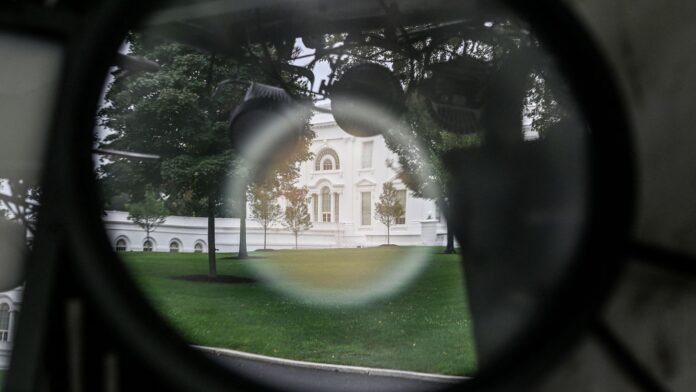
WASHINGTON – The bill for the latest chapter of the Gaza genocide arrived Tuesday with a round number: $2.8 billion, transferred through the Foreign Military Financing program and allocated entirely by American taxpayers. What it buys is forty thousand bombs, including twenty thousand two-thousand-pound munitions the Biden administration had paused over documented mass casualty concerns, now approved for delivery to Israel under Donald Trump’s signature.
Senator Chris Van Hollen of Maryland said he would work to block the sale. The government receiving the weapons is “led by a wanted war criminal,” he told reporters, a reference to the International Criminal Court’s arrest warrant for Prime Minister Benjamin Netanyahu. “Sending bombs paid for by American taxpayers” to such a government, Van Hollen said, is something he intends to oppose.
The Trump administration’s approval reverses one of the few concrete restraints the Biden White House had placed on Israel’s conduct in Gaza. In 2024, Biden delayed a shipment of two-thousand-pound bombs after the United Nations documented their use in strikes on densely populated areas, including ones that killed dozens of civilians sheltering in a single structure. When Trump returned to office, the hold was lifted within weeks. Tuesday’s package, the largest single sale of these munitions in recent memory according to Al Jazeera, which first reported the details, makes that reversal permanent and massive.
The package has three components. Twenty thousand MK-84 general-purpose bombs form the core: nine-hundred-kilogram unguided aerial munitions capable of producing blast radii lethal across a wide area. Alongside them, twenty thousand BLU-117s, a thermally coated naval-storage variant of the same MK-84, are included. The third element is the I-2000 Penetrator warhead assembly, designed to destroy hardened underground structures. Together they form a strike package suited to the kind of sustained, intensive air campaign Israel has conducted in Gaza for nearly three years.
The financing mechanism amplifies the concern. Foreign Military Financing is not a commercial sale in the conventional sense. Washington allocates the funds; Israel uses those funds to purchase American-made weapons from American defence contractors. The money flows, in effect, in a circle: out of the United States Treasury, through Israeli procurement channels, back to American manufacturers. Critics have long described FMF arrangements as a way to frame unlimited military support as a trade transaction.
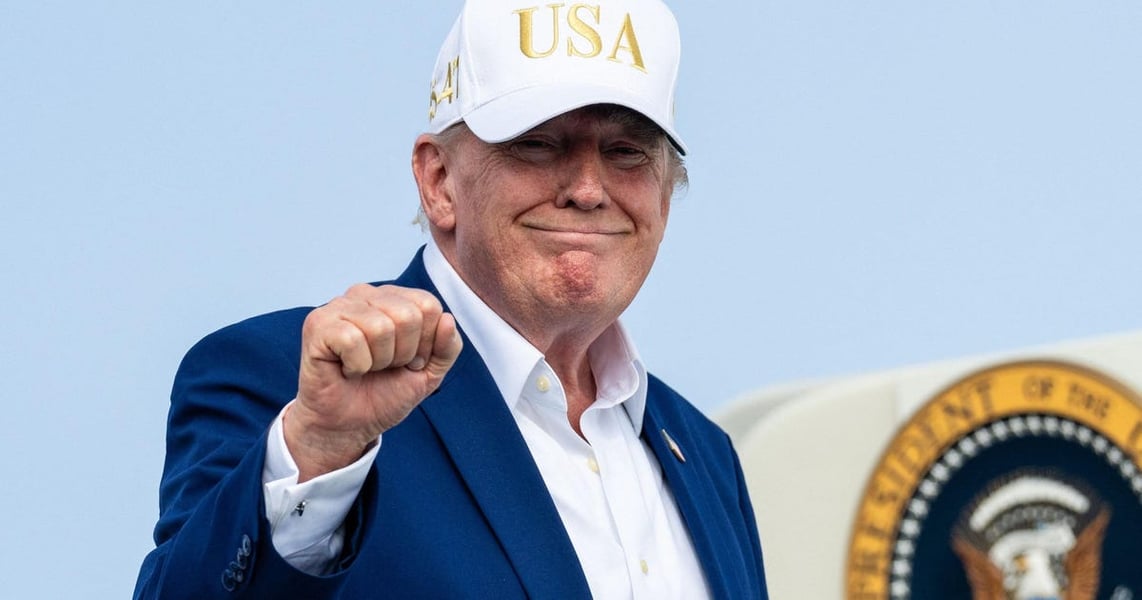
Van Hollen’s pledge to intervene is the loudest congressional response so far, but the mechanism for that intervention remains unclear. Under the Arms Export Control Act, large foreign military sales require formal congressional notification and a review period during which lawmakers can introduce a joint resolution of disapproval. As of Tuesday, it had not been confirmed whether the administration completed that notification before the sale was publicly reported, a question Van Hollen’s office was pressing to answer.
The timing of deliveries has not been announced. The I-2000 Penetrator warheads are designed specifically for hardened, underground targets. Gaza’s tunnel network is Israel’s stated rationale for much of its ground campaign. What the warheads cannot do is avoid the hospitals, schools, and shelters that sit above that network, in the same concentrated geography. Haaretz first reported the package details on September 15; Al Jazeera confirmed and expanded on the reporting the following day.
The ICJ arrest warrant for Netanyahu, cited by Van Hollen, was issued in November 2024. It covers allegations of using starvation as a weapon of war and deliberately targeting civilians. The sale approved Tuesday does not respond to those allegations and does not condition the transfer of weapons on Israeli compliance with international humanitarian law. Whether such conditions were considered and rejected, or never considered at all, the administration has not said.
What is confirmed is the scale: forty thousand of the most destructive conventional bombs in the American arsenal, approved for transfer to a government whose leader is under an international arrest warrant, in the third year of a conflict international bodies have designated a genocide. Senator Van Hollen says he will try to stop it. Whether the Senate will act on that pledge, or whether the sale proceeds unchallenged, remains the open question this decision leaves behind.