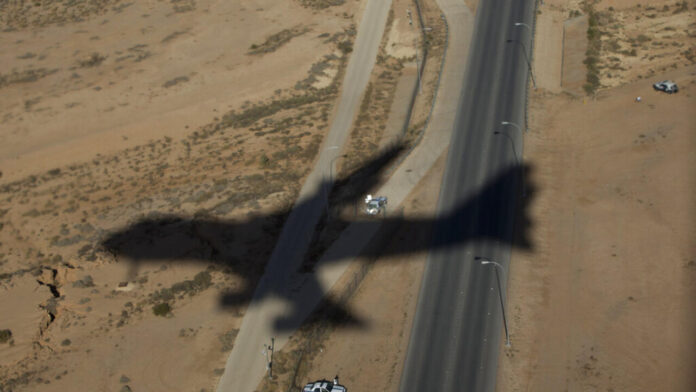
NEW YORK — The planes are already in the air. Benjamin Netanyahu, the Israeli prime minister who carries an International Criminal Court arrest warrant for war crimes in Gaza, lands in New York on Monday evening for a twenty-four-hour visit. By Tuesday, Masoud Pezeshkian, the Iranian president whose country has been at open war with the United States for seven months, will be in the same building.
They will not meet. They will not speak through intermediaries in any announced format. But on September 24, the afternoon Netanyahu addresses the General Assembly — and, the day before, when Pezeshkian takes the same podium — the United Nations will become the only place on earth where the leaders of every active war in the world’s most volatile region occupy the same floor.
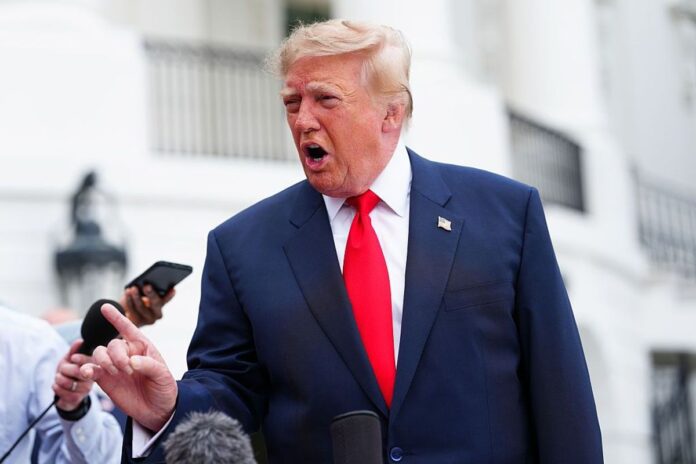
The 81st session’s High-Level General Debate runs from September 22 through September 28. American President Donald Trump speaks first, on Tuesday afternoon, expected to frame the Iran war’s status and Gaza as evidence of a reshaped American foreign policy. The session is led by Bangladesh’s Khalilur Rahman, elected in June as president of the 81st General Assembly, who presides over an institution that has been unable to pass a binding ceasefire resolution on either the Gaza genocide or the US-Iran conflict since the wars began.
The arrest warrant hanging over Netanyahu’s visit is real, issued by the ICC’s Pre-Trial Chamber in November 2024 for alleged war crimes and crimes against humanity in Gaza. In New York this week, it is also legally inert. The United States is not a party to the Rome Statute and recognizes no obligation to surrender any leader to the Court. The UN Headquarters Agreement, in force since 1947, explicitly prohibits any impediment to the transit of government representatives invited to attend sessions of UN bodies. The city’s mayor, Zohran Mamdani, had called publicly for Netanyahu’s arrest — a statement that drew international attention and, from the Israeli government, a demand for Trump’s personal guarantee of safe passage, which the White House provided. Mamdani’s call was politically significant; it was legally meaningless. The federal government controls immigration and treaty obligations, and it has exercised neither against Netanyahu. He will speak at the General Assembly on the afternoon of September 24 and leave New York the same night.
One day earlier, Pezeshkian will address the same hall. The Trump administration granted visas to the Iranian delegation — Pezeshkian and Foreign Minister Abbas Araghchi among them — less than a week before the session opened, NBC News reported, with travel restrictions and prohibitions on purchasing luxury goods attached. The decision to allow Iran’s leaders into New York seven months into an active war signals either a channel that neither government has publicly acknowledged or the residual machinery of a multilateral institution that operates on its own logic regardless of bilateral hostilities.
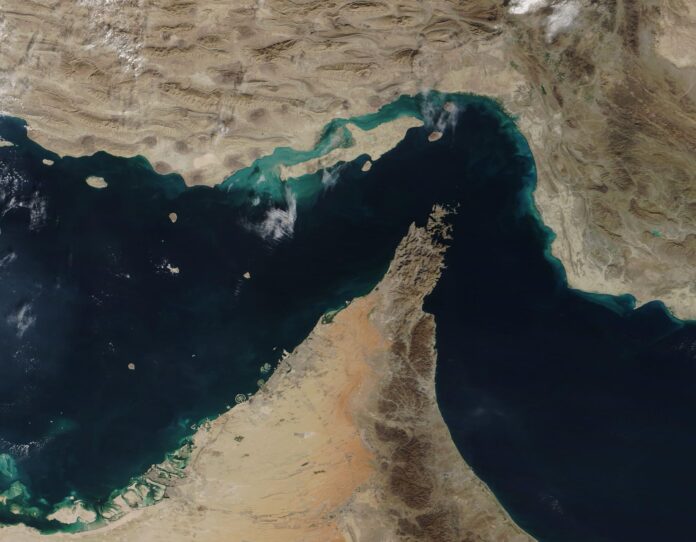
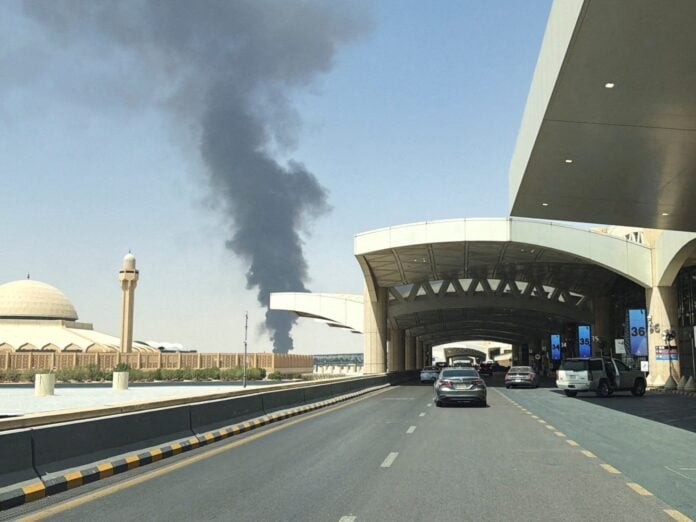
What Pezeshkian says from the podium will be among the most closely watched speeches of the week. Iran has not publicly signaled any shift in its conditions for negotiations. The Strait of Hormuz remains largely closed to commercial shipping. Iran’s parliament speaker Mohammad Baqer Ghalibaf signaled this week that the Strait’s status is contingent on meeting Tehran’s terms — a position unchanged since the chokepoint’s partial closure began. Houthi forces, whom Iran backs, sealed the Bab al-Mandab strait earlier this month, completing what analysts described as a dual-chokepoint strategy to constrain maritime traffic from both ends of the Arabian Peninsula. Saturday’s Houthi missile strike on Riyadh, which set a fuel depot burning near King Khalid International Airport, demonstrated that pressure is still escalating, not tapering.
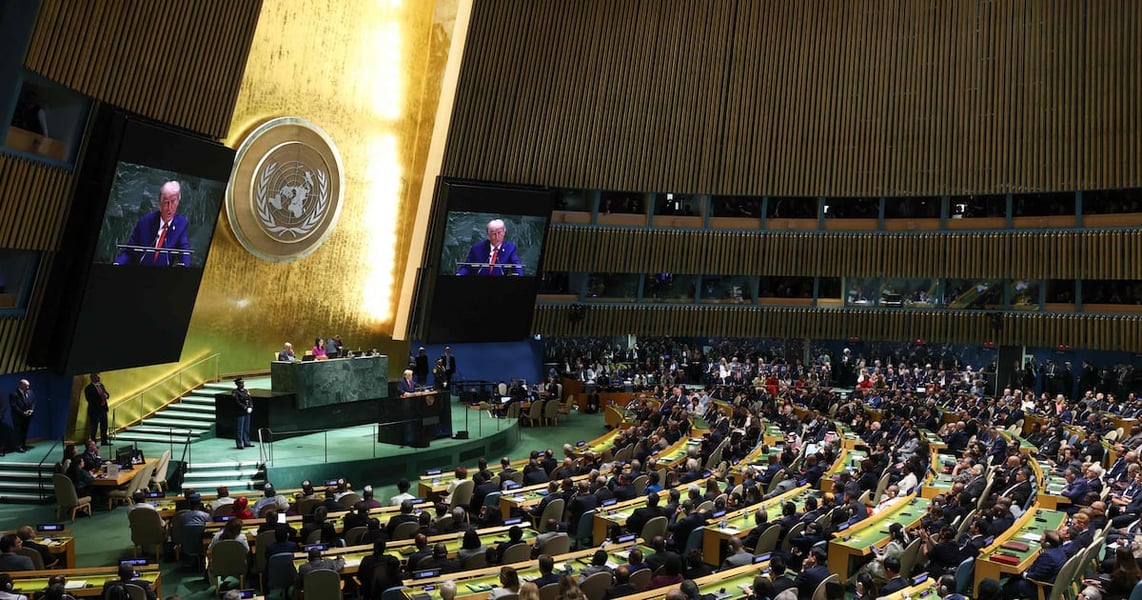
Guterres speaks this week knowing it is his last General Debate as secretary-general. His term ends on December 31. His successor has not been named; the Security Council selection process is underway but has not produced a candidate the permanent five have publicly aligned behind. The succession race runs in the background of a week already dense with the unresolved crises his tenure has failed to resolve.
The General Assembly is likely to produce speeches rather than settlements this week. Its structure makes that almost inevitable: enforcement authority rests with the Security Council, while three of its permanent members are either direct participants in—or significant enablers of—the conflicts under discussion.
In that sense, the General Debate is an annual record of what governments say to one another when no binding mechanism requires them to act on those words.
The participants this week include the president of a country at war, the prime minister of a country facing genocide allegations, the leader of a government that has armed opposing sides in several active conflicts, and the secretary-general of an institution that has watched these crises unfold without the power to stop them.
The unanswered question is whether anything said inside the building between September 22 and September 28 will change what happens outside it.