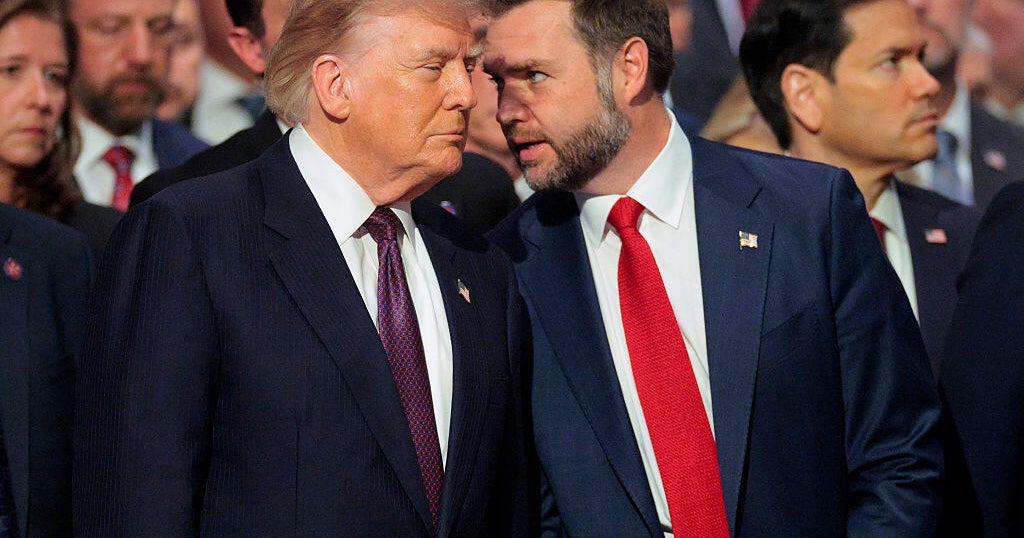

DALLAS — The Republican National Committee billed it as a first in American political history: a midterm convention featuring two nights of speeches at the American Airlines Center, designed to demonstrate party unity behind President Donald Trump ahead of November’s elections. Instead, opening night exposed the extent of the party’s difficulty in bringing its own members into the fold.
Forty-five Republican candidates and sitting members of Congress chose not to attend. Susan Collins of Maine, whose Senate reelection race is among the most closely watched contests of the cycle, was absent. Tom Barrett and Zach Nunn, two of the country’s most vulnerable House incumbents, were also elsewhere.
Brian Fitzpatrick, a Pennsylvania Republican who has spent three terms cultivating a reputation as an independent voice, offered the simplest explanation when asked about the absences. “Our bosses are back home,” he said. He did not elaborate on what that meant for a convention intended to showcase Republican unity.
Trump delivered the keynote address on the first evening and is scheduled to return Wednesday alongside Vice President JD Vance, who will deliver the closing address. The convention runs from 3 to 9 p.m. Central time each night, a compressed schedule designed to generate prime-time television moments without requiring lawmakers to spend several days away from their districts.
For nearly four dozen Republicans, even that abbreviated commitment proved too much.
The political backdrop is an approval rating that, by historical standards, makes Trump a significant liability in competitive districts and states. A Reuters/Ipsos survey published last month put Trump’s national approval at 33%, while 64% of Americans said they disapproved of his performance. The Texas Politics Project placed his approval at 43% in the state hosting the convention.
The president, in other words, is underwater even on the home turf where his party chose to stage its showcase event.
Much of the hesitation has been sharpened by trade policy. Trump’s Canada tariff escalation this spring put Republican Senate candidates in an uncomfortable position, and that strain has not eased since. The Senate Finance Committee, where members from trade-dependent states quietly drafted a letter requesting a suspension of the levies before November, became a symbol of the gap between the White House and the lawmakers who must defend its policies at home. The letter was never sent.
Juan Ciscomani of Arizona and Maria Elvira Salazar of Florida, both in competitive seats representing constituencies where trade policy matters directly, were among those who found other obligations on Tuesday. David Valadao of California, who has survived two cycles by navigating carefully between Trump’s base and a heavily Latino district, also did not attend. John Cornyn, the senior senator from the host state of Texas, sent his regrets. Melania Trump was absent as well, for reasons that were not publicly disclosed.
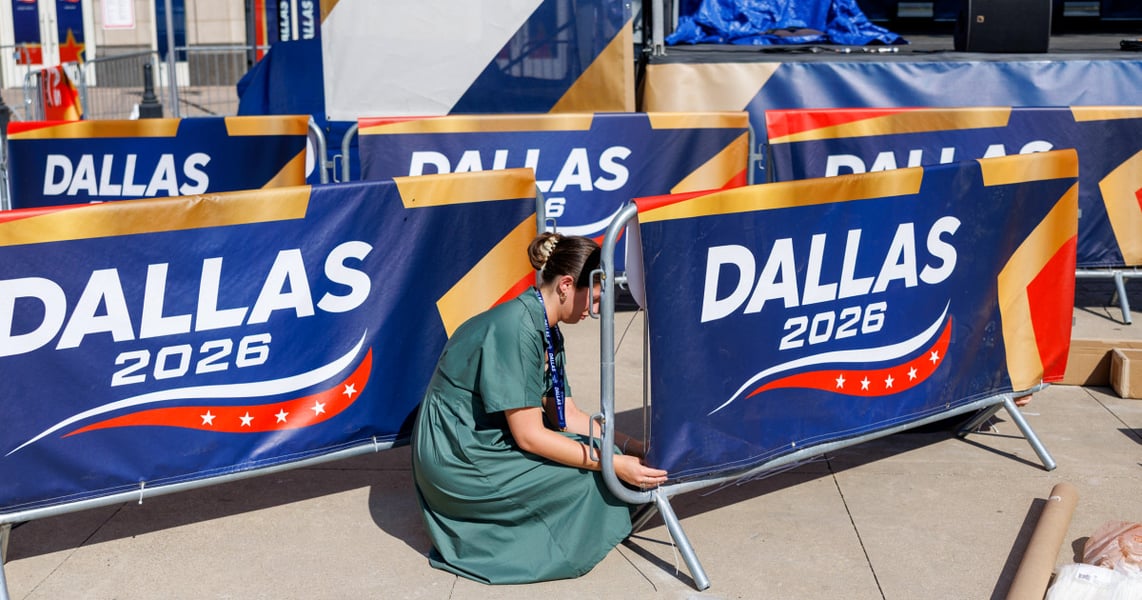
The Texas angle carries its own weight. The state is hosting this convention, and yet its senior senator stayed home, while the party’s most contentious midterm Senate race has generated controversies of its own. Ken Paxton’s campaign drew national attention last week over an AI-generated deepfake targeting his Democratic opponent, an episode that few inside the arena were eager to revisit on opening night.
The RNC described the convention as unprecedented, which it is. No major American party has attempted to hold a formal midterm gathering of this scale. NBC News reported that Trump’s opening address covered the midterm stakes, Iran, and tariffs, moving through his standard list of grievances before turning to the campaign ahead. The theory behind the convention was not complicated: give candidates a platform, give the president a national stage, use the two nights to impose message discipline before the final push to November.
Republican officials declined Tuesday to characterize the absentees as anything beyond lawmakers with full schedules. No one on stage named them. Trump spoke at length about his record, the stakes of the midterms, and the opposition he said was determined to undo his agenda. The speech ran long. The empty seats did not fill up.
Whether Wednesday’s closing night, with Vance at the podium, produces a different impression may depend less on what is said from the stage than on what the members who did attend bring back to their districts. Trump’s midterm strategy has relied on base mobilization in safe districts rather than persuasion of the swing voters who actually decide competitive contests. The arithmetic of those races does not change because of a convention. November is eight weeks away. For forty-five Republicans, that math was apparently reason enough to be somewhere else.