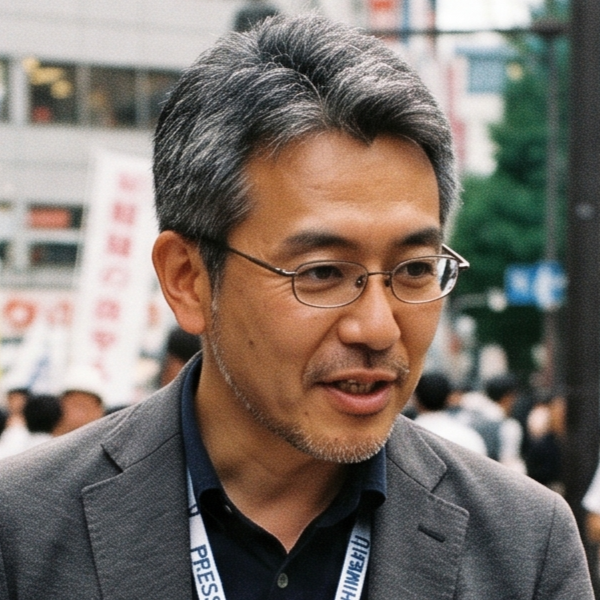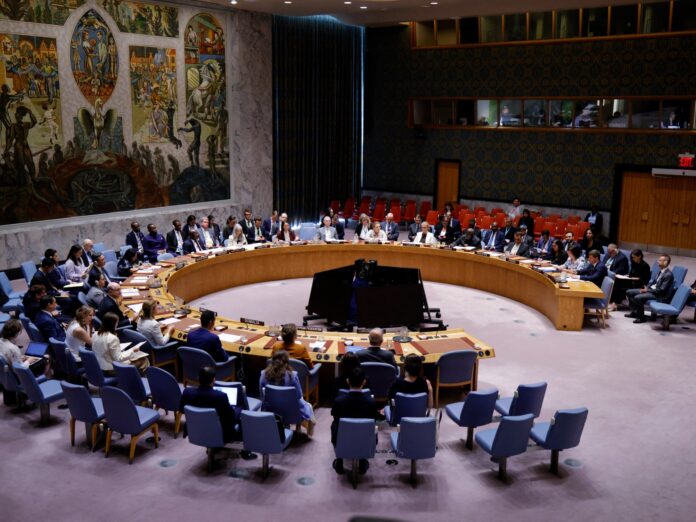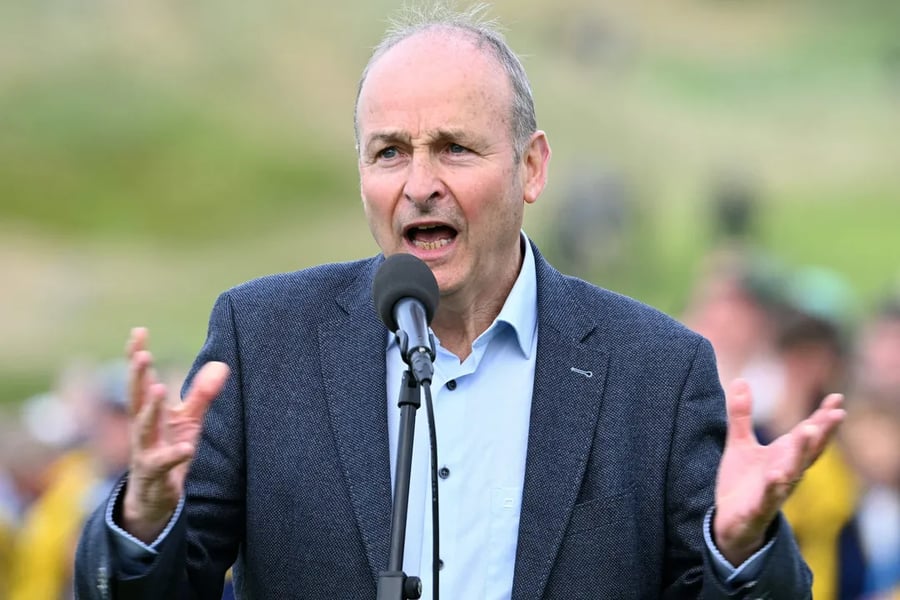

BAGHDAD — Mohammed Shia Al-Sudani addressed the General Assembly in September 2026 as the prime minister of a state whose security architecture includes, simultaneously, American military advisers operating under a bilateral security agreement and armed militias that take operational direction from Iran’s Islamic Revolutionary Guard Corps Quds Force. He called for dialogue. He called for political solutions. He endorsed no ceasefire framework submitted by any party. He left New York having said, in effect, nothing — which was the only thing he could say.
Iraq is the only country in the diplomatic perimeter of this war whose governing coalition literally depends on parties affiliated with militias that report to Tehran. The Fatah Alliance — the political arm of the Popular Mobilization Forces, the Hashd al-Shaabi — holds seats in the Council of Representatives that Al-Sudani cannot govern without. Those militia commanders take their operational guidance not from the Iraqi Ministry of Defence but from IRGC Quds Force networks that coordinated strikes on US positions in Syria and Jordan in 2023 and 2024. Al-Sudani’s government is the administrative umbrella for both structures simultaneously.
Iran’s written ceasefire conditions, submitted to Steve Witkoff in the margins of the General Assembly session, included a demand that the United States withdraw military forces from the region. That demand is one that Kata’ib Hezbollah and Asa’ib Ahl al-Haq — two PMF factions with direct IRGC ties — have been making of Al-Sudani’s government since 2020, when the Council of Representatives passed a non-binding resolution calling on US troops to leave. Endorsing Tehran’s terms at UNGA would have aligned Al-Sudani publicly with the domestic faction that most urgently wants him to oust the Americans — and would have immediately strained the US security relationship that funds and equips the Iraqi military’s conventional forces.
Endorsing Israel’s counter-terms would have been politically fatal in a different direction. Israel’s ceasefire roadmap, rejected publicly in New York, included the dismantlement of Iranian proxy infrastructure across the region by name — which meant, among other things, the armed factions that operate as official Iraqi state security forces. No government that depends on Fatah Alliance votes can publicly endorse its own security apparatus being described as a target for dismantlement by a foreign power.
The approximately 2,500 US military personnel remaining in Iraq under the framework of the 2008 Status of Forces Agreement and its successor arrangements are the structural reason Al-Sudani has not formally expelled American forces despite five years of PMF pressure to do so. The US military relationship provides air power, intelligence, and logistical support that the Iraqi Army’s conventional units cannot replicate independently. It also provides a deterrent against the kind of ISIS reconstitution that cost the Iraqi state Mosul in 2014. Al-Sudani knows that expelling US forces to satisfy the PMF’s Iran-linked leadership would leave the conventional military exposed in a way that ultimately threatens the state itself.
Gulf leaders who sat in the same General Assembly session understood that Iraq’s silence was not the same as the Gulf states’ silence. Saudi Arabia, the UAE, Qatar — these are governments choosing not to commit to a ceasefire position that might cost them a relationship. Iraq is a government that cannot commit to a position in any direction without destabilizing the coalition that keeps it in office. The silence means something different when the speaker is structurally trapped rather than strategically cautious.
Russia and China’s veto of ceasefire resolutions in the Security Council the day before Al-Sudani’s speech had already cleared the multilateral space. What remained was bilateral, and Iraq’s bilateral relationships run in incompatible directions. Iran supplies the electricity that keeps Baghdad’s grid partially functional during summer peaks. Iran is Iraq’s largest trade partner. The Iraqi dinar’s stability is partly a function of Iranian gas import payments denominated in dollars — a transaction that the US Treasury has periodically sanctioned and periodically tolerated, depending on the administration’s approach to Iraqi energy dependency.
The ceasefire question at UNGA exposed something that Iraqi governments have been managing since 2005: the distinction between formal sovereignty and operational reality. Iraq formally controls its territory. In practice, the PMF parallel command structure maintains a capacity for violence that the Iraqi state cannot suppress without a civil conflict it would almost certainly lose. Al-Sudani manages this by keeping the PMF inside the tent — formally integrated into the state’s security services — while hoping that formal integration will eventually produce institutional loyalty. That process is incomplete and may never complete in the way Al-Sudani needs it to.
Israel’s rejection of ceasefire terms without nuclear preconditions had narrowed the diplomatic space before Al-Sudani arrived. But even in a more open diplomatic environment, Iraq’s structural position would have produced the same speech. A prime minister whose governing coalition includes the political wing of Iranian proxy forces, and whose military is enabled by American logistical support, cannot publicly align with either side of a war between those two sponsors without destroying the equilibrium that keeps him in office.
Oil prices had dropped below $100 a barrel earlier that week. Iraq, as OPEC’s second-largest producer and a state whose budget is approximately 90 percent dependent on oil revenues, has a direct fiscal stake in the war’s trajectory. A prolonged conflict keeps the war premium intact; a ceasefire compresses it. Al-Sudani’s finance ministry needs oil revenue; Al-Sudani’s governing coalition needs the PMF’s political support; Al-Sudani’s military needs American logistics. These three needs are not compatible with a single ceasefire position.
What Al-Sudani did not say in New York was, in its way, a complete statement of Iraq’s condition twenty years after the fall of Saddam Hussein. The country that was invaded to eliminate weapons of mass destruction it did not have is now the state most thoroughly penetrated by two rival powers — neither of whom controls it, both of whom constrain it — fighting a war on its doorstep. The silence at UNGA was not diplomatic. It was constitutional.