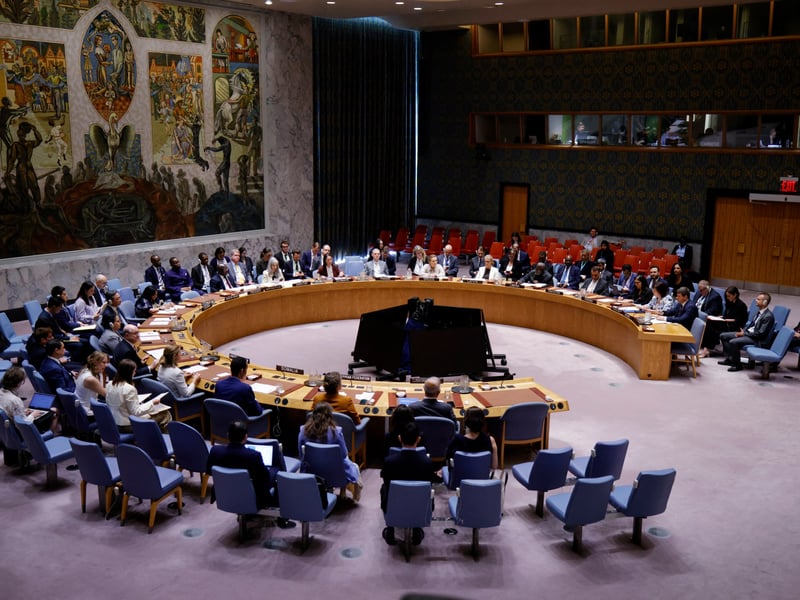

BERLIN/NEW YORK — Germany’s representative at the United Nations Security Council on Wednesday did not co-sponsor, and did not vote for, the Western counter-resolution that France and the United Kingdom pushed to a floor vote on Iran’s nuclear obligations. Germany abstained. France and Britain voted yes. The resolution was vetoed. But the abstention is the part that matters.
It is the first time Germany has formally separated from France and the United Kingdom on an Iran Security Council vote since the E3 format — the three Europeans on the Council — began coordinating as a bloc on Iran policy in 2015. The vote did not pass. The headline of the session will be the veto. Germany’s abstention is the footnote in the wire service coverage and the signal that Tehran, Moscow, and every European foreign ministry will spend the coming days decoding.
When Russia and China vetoed the Western resolution and simultaneously gave Iran’s written ceasefire roadmap their formal endorsement, the diplomatic weight in the room shifted toward Tehran’s framework. Germany’s abstention, read alongside that veto, suggests Berlin concluded that co-sponsoring a resolution designed to fail was not in its interest. Whether that calculation reflects tactical pragmatism or a deeper strategic repositioning is the question Berlin has not yet answered.
Germany has the most to gain among European powers from a functional economic relationship with Iran. Post-2022, with the Russian energy relationship severed and Russian gas transit through Ukraine suspended, Germany has been in a sustained search for alternative hydrocarbon suppliers. Iran sits on the world’s second-largest natural gas reserves. German industrial buyers have not been quietly unaware of that geography. Every sanctions waiver discussion in Brussels since 2022 has involved quiet German pressure for carve-outs that might leave a door open for future Iranian energy arrangements. Berlin is not negotiating that option in public. It is preserving it.
Chancellor Olaf Scholz has not made a public statement explaining Wednesday’s vote. His foreign minister, in a brief comment to reporters outside the General Assembly hall, said Germany “remains committed to Iran’s full compliance with its international obligations” and added that Berlin “sees value in preserving diplomatic space.” That is not an explanation. It is a formulation chosen not to close any doors — which, in diplomatic language, usually means a door has already been opened in a direction the speaker is not yet prepared to name.
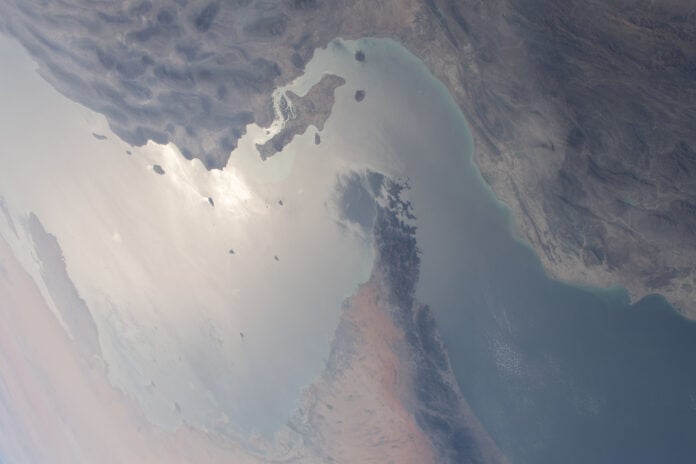
Iran’s written 60-day ceasefire roadmap, handed to US envoys in New York on Tuesday, does not address the nuclear file directly. It addresses Hormuz transit and secondary sanctions. The Western counter-resolution France and Britain pushed focused exclusively on Iran’s NPT obligations, with no mention of a political end-state — the element Tehran has consistently cited as a precondition for substantive engagement. Germany’s abstention may reflect a judgment that the Western resolution was designed to produce a veto rather than a negotiation. Lending Berlin’s name to it served no discernible German interest.
Iranian President Masoud Pezeshkian addressed the General Assembly on Tuesday and framed his government’s ceasefire proposal as a test of whether the West was prepared to treat Iran as a legitimate diplomatic actor. Germany’s abstention on Wednesday, whatever its technical reasoning, lands in Tehran as a confirmation that the EU’s Iran position is no longer monolithic. That is precisely the diplomatic environment Iran has spent years trying to create.
France and the United Kingdom have a different calculus. Both are US treaty allies with active military engagements in the region. Both face domestic pressure on national security credibility. Co-sponsoring the resolution aligned them with Washington’s position and with demands for Iranian NPT acknowledgment before any ceasefire framework is legitimized. Berlin faces none of those pressures at the same intensity. Germany’s rearmament drive has been focused on the eastern European front, not the Middle East. Scholz has no governing coalition partner demanding a hard line on Iran.
At the United Nations General Assembly this week, the rapid sequence of bilateral meetings and framework discussions has produced more diplomatic movement in four days than the preceding six months. Germany’s abstention will not feature prominently in the summary assessments. But the E3 format, the tripartite European coordinating mechanism on Iran that produced the JCPOA negotiations in 2015, is now visibly incomplete. France and the United Kingdom voted as a pair. Germany was somewhere else.
There is no formal European Union foreign policy position on Iran’s September ceasefire roadmap. The European External Action Service has not issued a statement. EU foreign policy chief Kaja Kallas has said only that Europe “supports a diplomatic path forward” — the same formulation Germany’s foreign minister used, which is not a coincidence. The EU’s Iran position is exactly as unified as its least unified member wants it to be. On Wednesday, that member made its preference visible. No one in Brussels has yet explained what the E3 format means when two of its three members are going in one direction and the third is not.