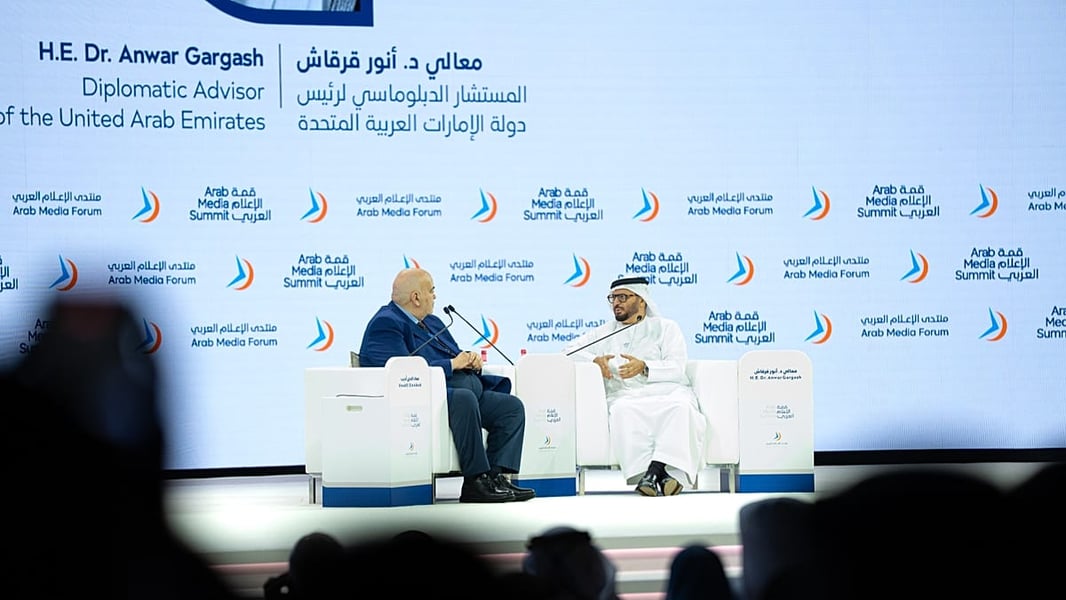

NEW YORK — The United Arab Emirates urged Arab governments on Monday to open direct diplomatic talks with Iran, arguing that Washington’s channel can no longer serve as the sole foundation for Gulf–Tehran relations.
Anwar Gargash, the UAE president’s diplomatic adviser, made the appeal at an Al-Monitor forum held alongside the United Nations General Assembly’s high-level week. He called for Arab states to maintain their own standing relationship with Tehran, operating in parallel with U.S. mediation rather than through it.
The proposal reflects Gulf governments’ desire for a durable regional channel that would remain functional despite changes in American foreign policy.
“There is a need for a new mindset toward Tehran,” Gargash told the forum, according to Al-Monitor. Arab governments, he argued, should be talking directly to Iran about regional stability, development, and security, without waiting for Washington to carry the message.
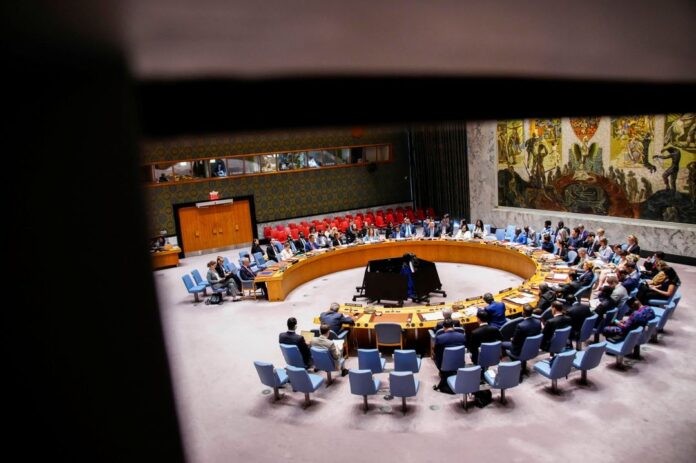
The timing was deliberate. UNGA’s high-level week is the one moment each year when every relevant foreign minister and head of state occupies the same two-mile radius in Manhattan. Gargash chose an Al-Monitor panel, not a bilateral statement or a joint communique, to put the call on the record. The forum setting was public, the audience regional and international, and the message was clearly intended for an audience beyond the room.
What gives the UAE credibility to make this argument is specific. In March 2025, Abu Dhabi served as the conduit for a letter from Trump to Tehran, the first direct communication between Washington and Tehran in years. That episode was quiet, handled with discretion, and little discussed at the time. Gargash’s statement on Monday was none of those things. He was now saying publicly that UAE’s intermediary role should not be treated as an anomaly but as a template, and that Gulf states broadly should build and maintain their own direct line to Iran rather than depend on Washington’s permission structure to initiate contact.

He was careful to avoid any suggestion that the UAE was departing from its American alignment. He said trust with Iran “will take years to rebuild” and that relations must be maintained regardless. The distinction between maintaining contact and extending trust matters. The Iran war fire pause had held for nine consecutive days as of Monday, with no Iranian strikes on Gulf host states recorded. In that gap, Gargash argued, Arab states had a practical window to demonstrate that direct engagement was possible.
The backdrop to his remarks included expanding American diplomatic activity in New York. Trump’s meeting with GCC leaders this week has widened to include Iraq and Jordan, an acknowledgment that the regional architecture around Iran extends beyond the six Gulf Cooperation Council states. Oil markets registered the UNGA diplomatic calendar in their own way: crude prices fell on expectations that high-level conversations in New York might reduce the risk premium the Iran war had built into every barrel.
Saudi Arabia’s position is the variable that Arab mediation advocates cannot fully account for. Riyadh and Abu Dhabi are close partners but they are not identical. The Saudi calculus on Iran is complicated by Houthi attacks on oil infrastructure and by the kingdom’s deeper institutional suspicion of Iranian proxy networks. Whether Riyadh formally endorses the UAE’s framing, Arab states building their own direct channel with Tehran, or quietly backs it without public commitment is the question Gargash’s forum remarks leave open.
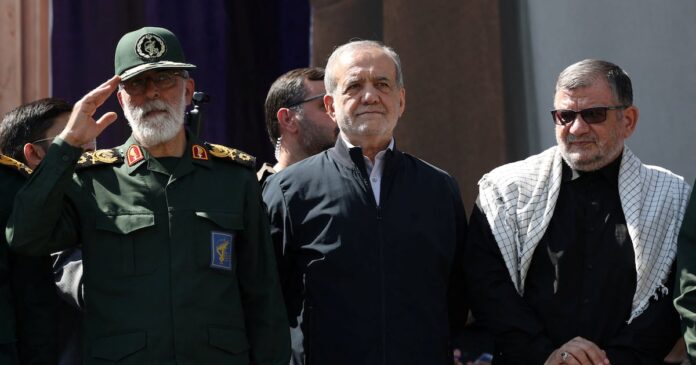
On the Iranian side, the calculation is different again. Iranian president Masoud Pezeshkian made his own UNGA appearance this week. Tehran has signaled openness to diplomatic engagement under the right conditions, but Iran’s parliament has also advanced legislation threatening nuclear treaty withdrawal if the country’s nuclear position is further pressured, a signal that hardline factions are operative regardless of the tone reformist leadership takes in New York. Whether Tehran reads a UAE-led Arab dialogue initiative as an opportunity or as a pressure maneuver is not yet clear.
What Gargash’s remarks do establish is that Abu Dhabi is prepared to say plainly, in a public setting with an international audience, that the status quo, Arab states watching Washington and Tehran negotiate while waiting on the margins, is not a framework the UAE intends to accept indefinitely.
Whether Iran will engage, and whether Saudi Arabia will formalize its support, remain open. The fire pause will not hold forever. What the UAE has done, at the most-watched diplomatic gathering of the year, is stake a public position that it intends to be more than a message carrier.