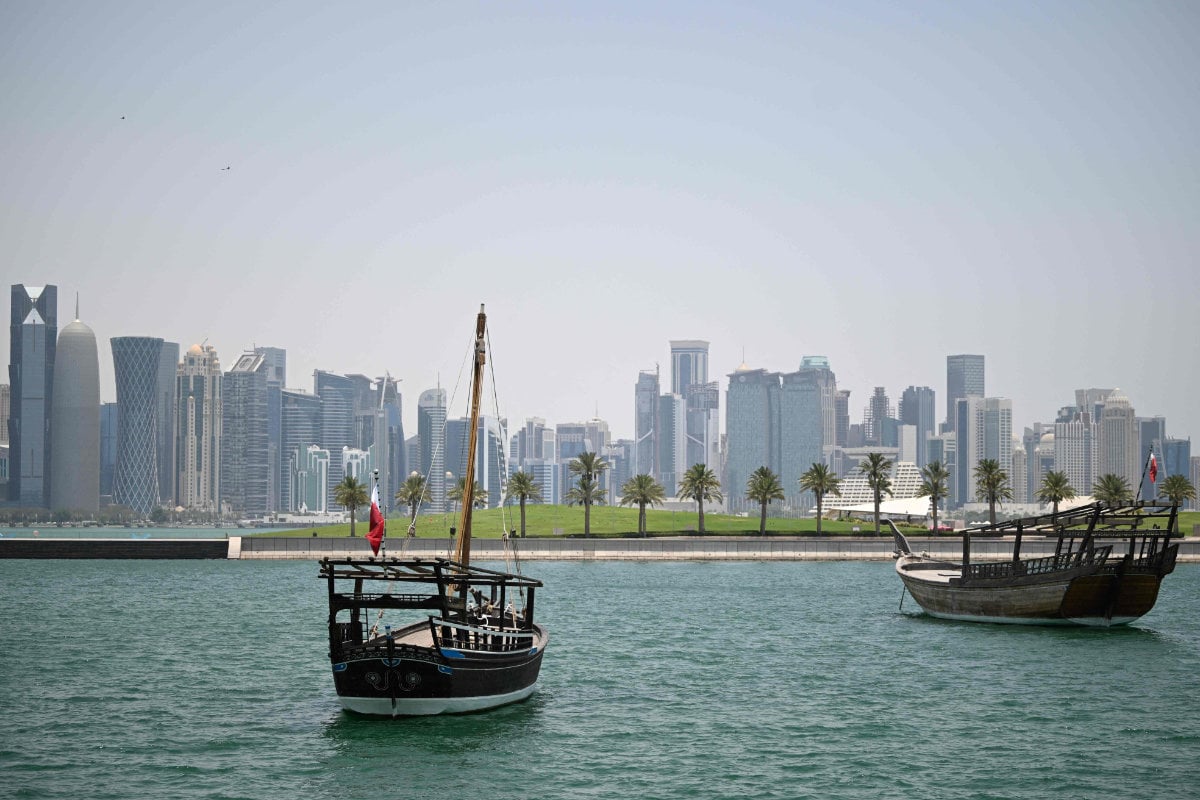

DUBAI – The sky over Doha flared past midnight. AFP journalists in Qatar’s capital watched missile interceptions streak across the city as residents received emergency alerts to stay indoors. Simultaneously, citizens in the United Arab Emirates were told to seek shelter from incoming Iranian missiles and drones. Sirens sounded across Bahrain. Kuwait’s military confirmed it was intercepting an ongoing attack.
The coordinated barrage across four Gulf states on Saturday was the most geographically expansive Iranian salvo against its neighbors since the war began, and it carried a specific provocation: Iran had declared the Strait of Hormuz closed “until further notice” just hours before, drawing a third round of US retaliatory airstrikes on Iranian port cities.
For the UAE, the night of July 12 was without precedent in this conflict. Abu Dhabi has absorbed Iranian strikes before, including a May drone strike near the Barakah nuclear plant that hit an electrical generator outside the facility’s inner perimeter. But those attacks were handled through military channels and communicated officially, without the government urging civilians to hide. On Saturday, the UAE crossed into public emergency language. The distinction matters.
The trigger was an IRGC strike on a Cyprus-flagged container ship inside the Strait of Hormuz. US Central Command said the vessel sustained “significant engine-room damage,” with one civilian crew member reported missing. Iran’s Revolutionary Guards claimed the ship had violated their designated navigation routes. Washington launched airstrikes on Iranian targets in response, and Tehran answered by widening its strike campaign across the Gulf.
Doha’s exposure was acute. Qatar hosts the Al Udeid Air Base, one of the largest US military installations in the region, while simultaneously serving as the venue for diplomatic exchanges between Washington and Tehran. AFP journalists on the ground reported watching interceptions “lighting up the night sky,” a vivid account of the war’s reach into a capital that has positioned itself as a mediator. Qatari officials, alongside UAE and Egyptian counterparts, called for restraint and renewed diplomacy even as their sky was lit with countermissiles.
Bahrain’s position was no less exposed. The island nation, home to the US Navy’s Fifth Fleet, sent air raid sirens across its territory as Iranian missiles approached. Bahrain’s foreign minister had addressed the UN Security Council nine days earlier with a tally of 808 Iranian attacks against the country. The July 12 barrage added to that count without altering the diplomatic deadlock that has followed each preceding exchange.
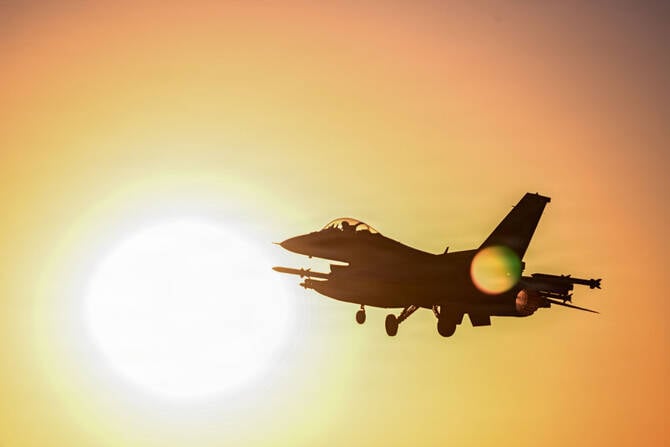
Kuwait’s military confirmed intercepting ongoing attacks. Kuwait, whose territory hosts a significant US presence, has been a consistent IRGC target since the war spread into the Gulf. Its air defenses have generally held.
Iran’s choice to distribute strikes across all four states simultaneously, rather than concentrating on one, carries a strategic signal the IRGC did not need to articulate. Spreading damage across multiple US-aligned Gulf capitals limits the ability of any single country to position itself as the primary grievant. If every neighbor absorbs roughly comparable disruption, no one government emerges with special standing to demand accommodation from Washington or Tehran.
The UAE’s political position is the most layered of the four. According to reporting that Abu Dhabi subsequently denied, the UAE agreed earlier this year to unlock billions in frozen Iranian assets in exchange for a halt to attacks on its territory. Iran’s parliament delivered a public warning to the UAE just two days before Saturday’s barrage, an unusually direct threat against a country that has tried to manage this conflict through quiet back-channels.
Saudi Arabia condemned “repeated Iranian violations” in the sharpest language Riyadh has used since the ceasefire between the US and Iran collapsed, Arab News reported. That framing was notable given that Saudi Arabia itself blocked US military access to its territory for four days in May and has attempted to maintain armed neutrality throughout the conflict.
Iran’s Hormuz closure announcement deepens the economic dimension of the crisis. The Strait carries roughly a fifth of the world’s oil supply. A formal closure declaration is less a physical barrier; no announcement can seal a maritime passage of that width. Rather, it is a statement of intent: vessels Tehran designates as non-compliant can be struck. Shipping traffic through Hormuz had already collapsed before Saturday, with only five vessels crossing in a 24-hour period last week against a prewar baseline of 130 daily crossings.
What Abu Dhabi does with Saturday night depends on decisions that have not been made public. The UAE has spent this war trying to hold a middle position: hosting US forces, maintaining private contacts with Tehran, absorbing military strikes without civilian-facing escalation, and channeling capital that Iran needs. That posture was sustainable as long as the attacks remained confined to military targets and the government could process the risk without alarming its population. A public shelter order represents a threshold Abu Dhabi has now crossed, one it cannot uncross by simply issuing an all-clear.