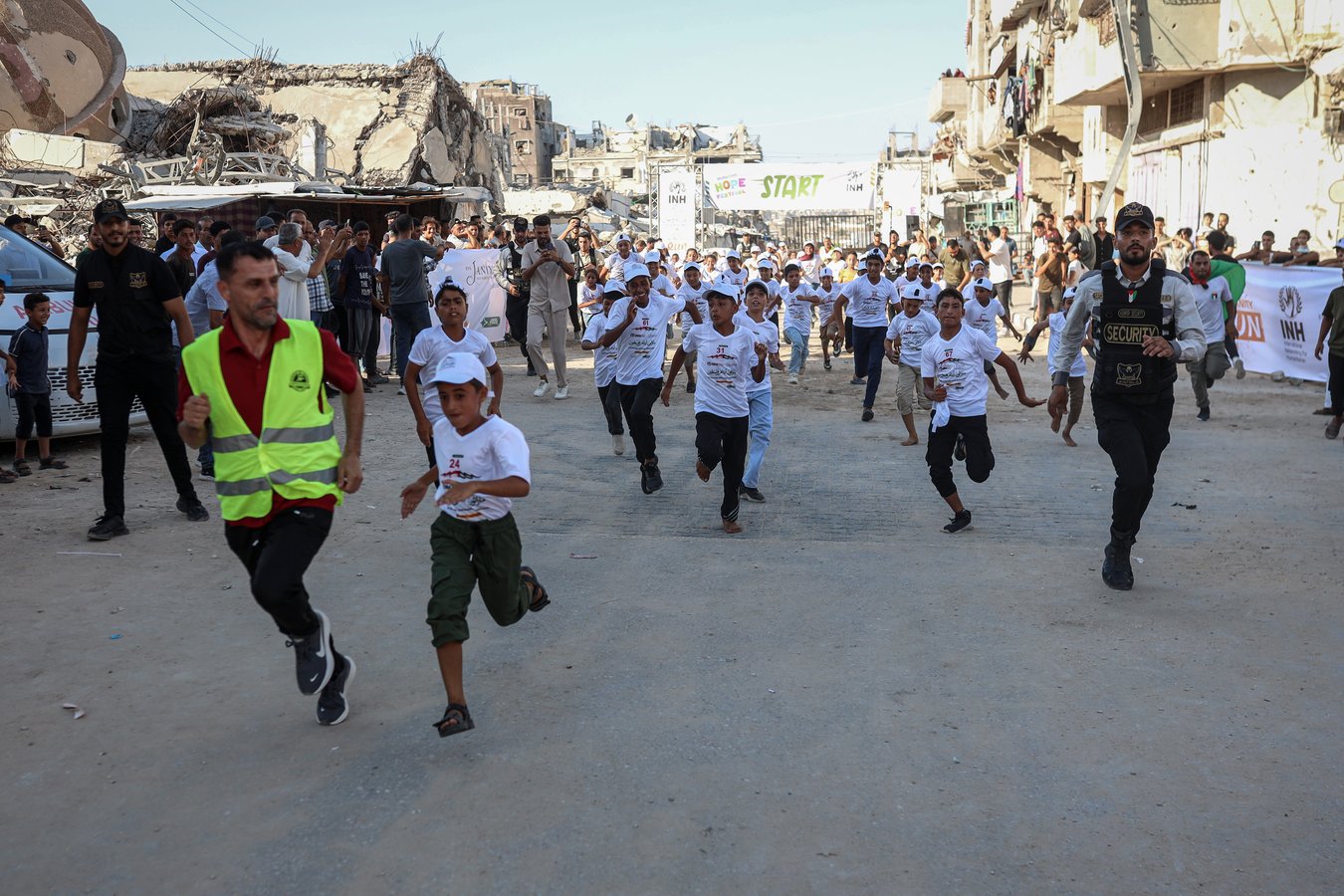

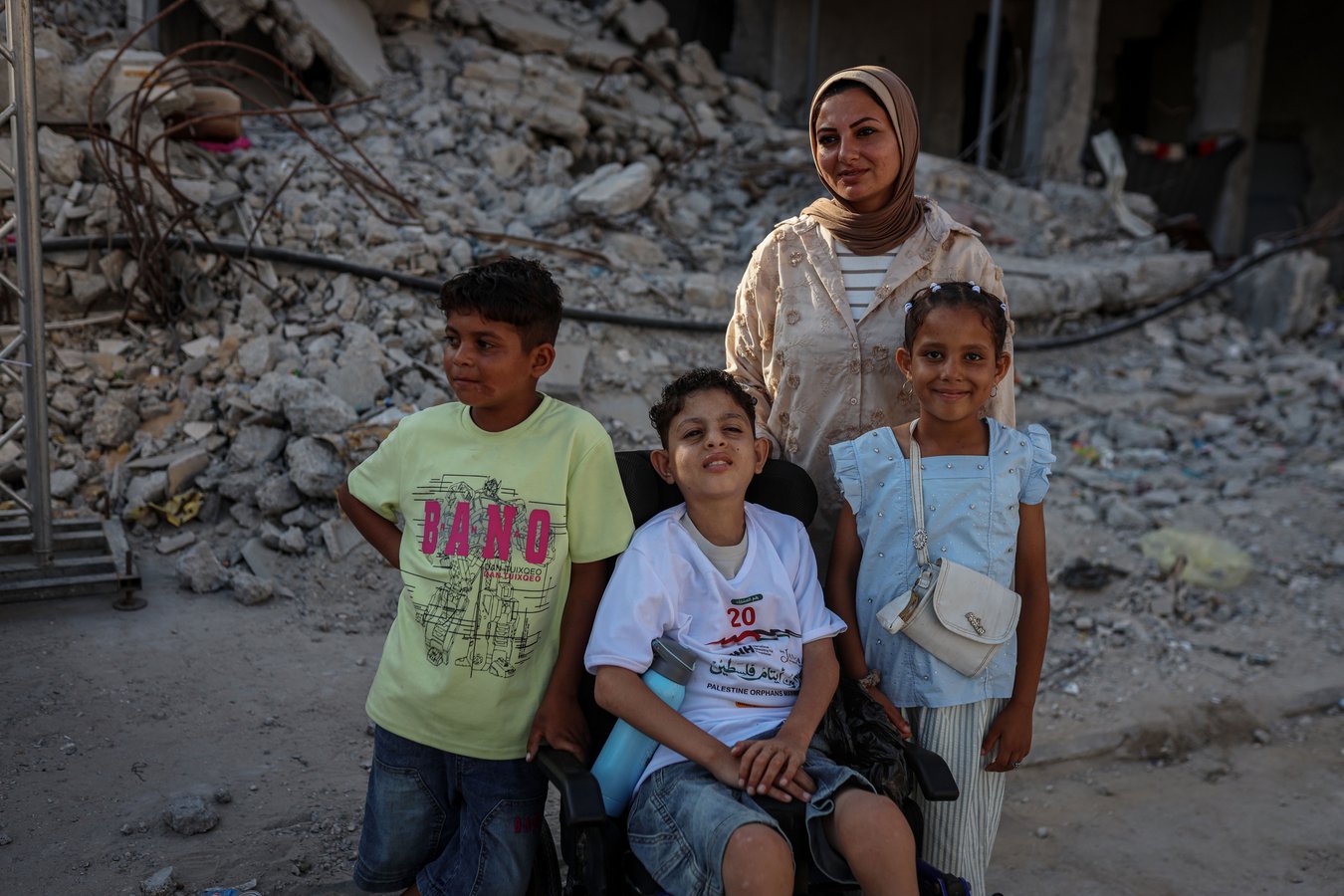
KHAN YOUNIS, Gaza – Saif Hijazi does not run anymore. Israeli shelling paralyzed the 13-year-old in January 2025, a year after the same war killed his father, Rami, in a strike on their home. On Friday, Saif sat in a wheelchair at the edge of a running track in Khan Younis while other children, many of them also orphaned by the genocide, raced in a marathon organized to force the world to look at what had happened to them.
The event, organized by International Networking for Humanitarian Indonesia, was not large by any conventional measure. But the number it invoked was: more than 58,000 children in Gaza have lost one or both parents since October 2023, Al Jazeera reported. In a territory where the Gaza Health Ministry has counted more than 73,000 dead, this generation of orphans represents a crisis within the catastrophe, one that ceasefire negotiations have largely treated as background noise.
“I miss my father every day,” Saif said. “He used to take care of everything.”
His mother, Warda, 33, is now the sole provider for three children. She described what the genocide has left behind: not just grief, but the accumulated debt of daily survival in a destroyed society, falling entirely on a widowed woman in her early thirties in a place with no functioning economy. “Everything has become my responsibility,” she said. “Their food, their medicine, raising them, and trying to make up for the love and care they lost.”
Her accounting is not unique. Samah Abu Amra, 43, lost her husband during the first year of the war. She is raising five children now. “Life is extremely difficult,” she said, “and the situation is beyond what anyone can bear.”
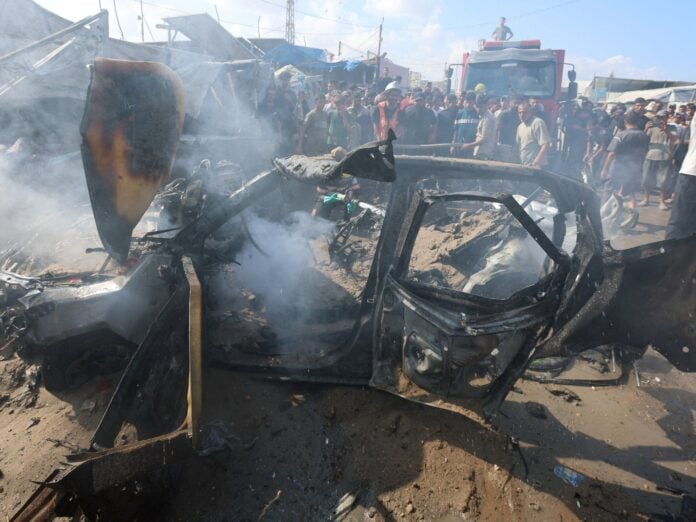
According to figures cited at the event, approximately 17,000 children in Gaza are currently unaccompanied or separated from their families entirely. More than a million children require some form of psychological or protective intervention. These numbers pre-date the most recent Israeli strikes, which have continued this week without pause. Israeli forces also killed at least seven people across Gaza and destroyed a medical supply warehouse at the Al-Aqsa Martyrs Hospital, even as international attention focused on the threatened US-Israeli bombardment of Iran’s energy infrastructure. Palestinian families in the enclave have learned to hold parallel news cycles in their heads: the diplomatic maneuvering in distant capitals, and the strikes that arrive regardless.
Mohammed Yassin, representing INH Indonesia, said orphaned children are “always among the most affected groups in wars” and called for sustained international attention rather than the episodic focus that crises like Gaza typically receive. The pattern of Israeli military operations across Palestinian territories has shown no sign of abating: what distinguishes Gaza’s orphan crisis is the concentration of loss, in a territory with nowhere to flee, where surviving families have remained inside the zone of destruction throughout.
The marathon in Khan Younis was an attempt to generate attention through a form that travels. But the event also exposed the gap between awareness and remedy. The psychological support that orphaned children need is not available in functional quantities in Gaza. The financial systems that might transfer aid to widowed mothers like Warda Hijazi do not work reliably. Organizations positioned to help are operating in rubble, and the border crossings that would bring in sustained assistance have been subject to Israeli military control throughout the war.
What the event produced was a record. It put names beside a statistic that is usually cited and then moved past. Saif Hijazi in his wheelchair. Warda Hijazi calculating what she cannot afford. Samah Abu Amra watching five children who no longer have a father. These are not incidental details of a conflict; they are the direct product of a military campaign that international courts and UN bodies have increasingly described in the language of genocide.
The 73,000 death toll cited by Gaza’s Health Ministry does not include those who have died from disease, malnutrition, or medical neglect caused by the siege. Independent estimates put the real figure substantially higher. Friday’s marathon added a specific register of absence to this accounting: 58,000 children who wake up in what is left of Gaza having lost the person who was supposed to protect them.
Negotiators working on ceasefire and disarmament frameworks have focused on Hamas’s military capacity, Israeli withdrawal conditions, and the pace of hostage releases. The question of what happens to Gaza’s 17,000 unaccompanied children if a deal is reached, and who is responsible for them, has not appeared as a defined deliverable in any publicly documented negotiating position. The marathon organizers did not claim to have an answer to that question either. What they did was insist on the question itself, in a place where 58,000 answers are still growing up.