
MOSCOW – The security guard at Balzi Rossi died trying to stop the woman at the door. She was carrying an explosive device, Russian authorities said Saturday, and when the bomb detonated on Kudrinskaya Square in central Moscow that evening, the guard was among three people killed. Twenty-one others were wounded in what Russia’s National Anti-Terrorism Committee confirmed was a deliberate attack using an improvised explosive device.
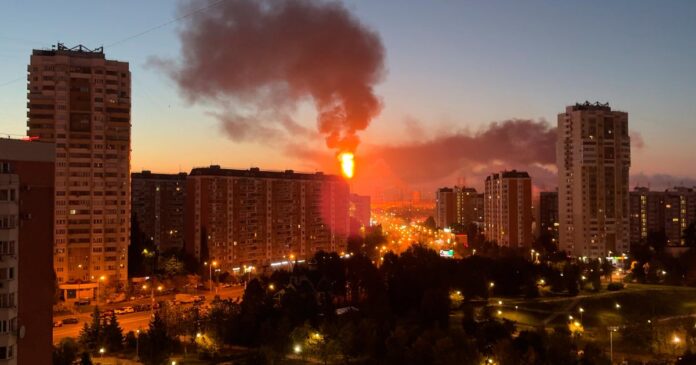
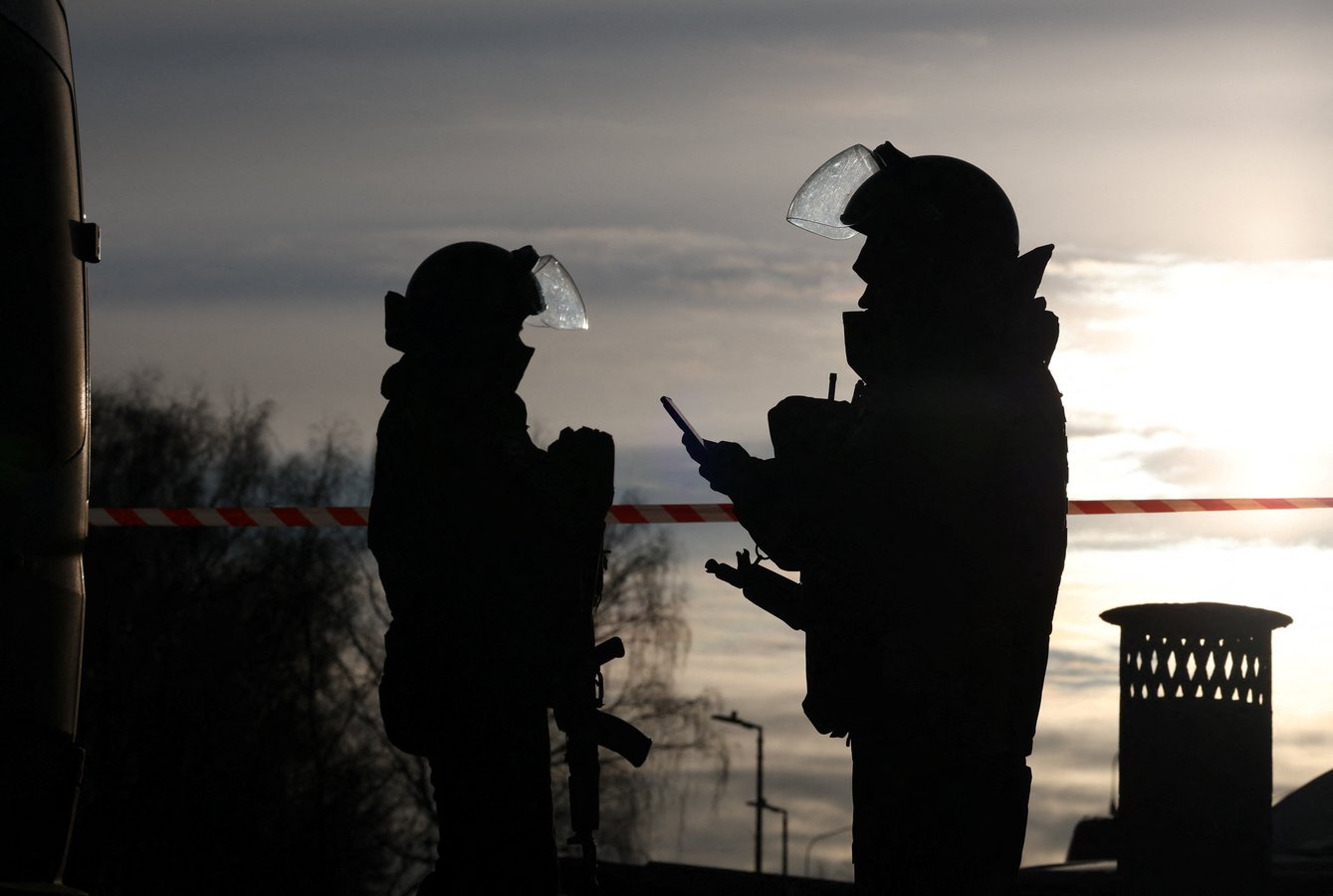
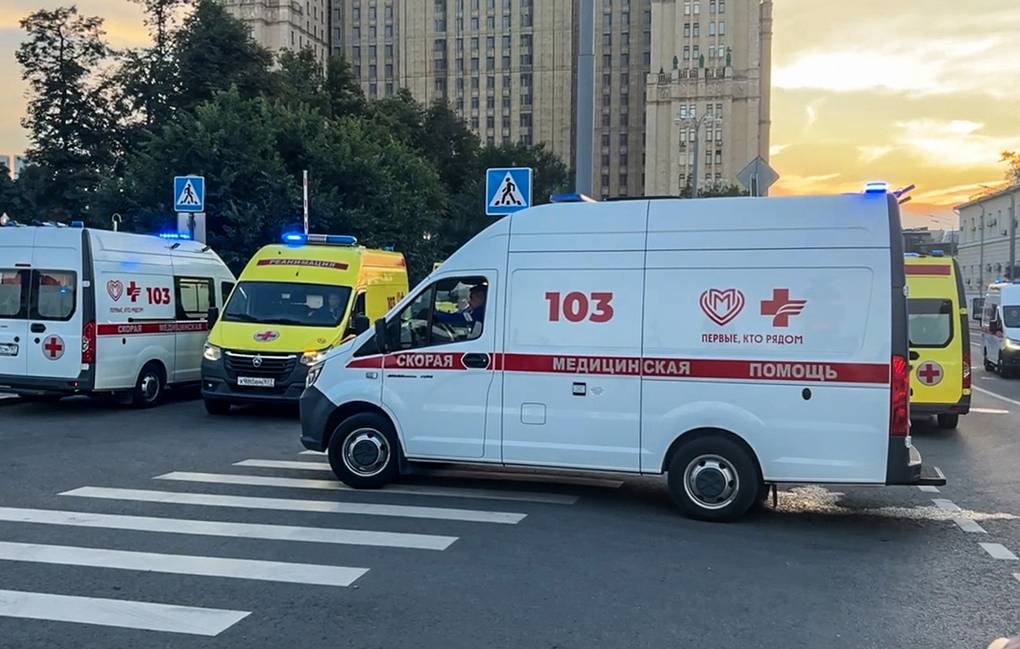
The blast occurred at 7:55 p.m. Moscow time on August 1, at a restaurant occupying the ground floor of one of the seven Stalinist high-rises that ring Moscow’s historic center. Kudrinskaya Square’s tower, one of Stalin’s Gothic skyscrapers completed in the early 1950s, houses apartments, offices, and the restaurant whose entrance the security guard was defending. The explosion ripped through the evening crowds; police and Russia’s National Guard, the Rosgvardiya, sealed off the area within minutes, closing nearby metro station entrances and blocking traffic on Barrikadnaya Street.
Moscow’s Interior Ministry initially reported three killed and fifteen wounded. Russia’s National Anti-Terrorism Committee’s statement, issued later Saturday and reported by TASS, revised the injured toll to 21 and specified for the first time that the cause was not a gas accident but a deliberate act. “A woman brought an improvised explosive device to the eatery,” the committee said. The three dead were the security guard who died attempting to prevent her from entering, the woman herself, and one restaurant visitor caught in the blast.
Initial coverage on Russian state television described the explosion as a gas canister detonating. The Baza Telegram channel, which monitors Russian emergency services, attributed it to a gas failure in the restaurant kitchens. Neither account survived the NAC statement. The committee’s confirmation that a device had been carried to the scene meant the explosion was classified from the outset as a terrorist or criminal act, and the Investigative Committee, Russia’s federal criminal agency, dispatched criminologists and investigators to the site.
ASTRA, a Telegram channel tracking Russian security incidents, cited unnamed witnesses as saying the restaurant had been hosting a birthday celebration for a military general at the time of the blast. Russian authorities neither confirmed nor denied the claim. The NAC statement provided no indication of whether the attack was targeted at a specific individual or group, and the identity and organizational affiliation of the woman who brought the device were not disclosed as of Saturday night.
Ukraine did not claim responsibility for the bombing. Ukrainian authorities typically do not claim operations inside Russian territory even when they do carry them out. The Ukrainian military has conducted drone and missile operations against Russian energy infrastructure throughout the Russian operation in Ukraine, including on Saturday: Ukrainian drones sank a Rosatom ship in the Black Sea and struck three Russian oil refineries in a combined campaign targeting Russian infrastructure. The Moscow bombing appeared to differ in method and character from those operations, and no security authority publicly linked the two.
Moscow has been partially shielded from the direct violence of the war. Drone attacks from Ukraine have reached the capital since 2023, but most have been intercepted or caused limited damage. The city’s experience of mass-casualty attacks at civilian venues is rooted not in the current conflict but in events from earlier decades: the 1999 apartment bombings that killed nearly 300 people, and the 2002 Dubrovka theater siege, both attributed to Chechen militants. The most recent comparable event was the March 2024 massacre at Crocus City Hall northwest of Moscow, in which gunmen killed more than 140 people at a concert; four men of Central Asian origin were convicted and sentenced to life. Russian authorities attributed that attack to an affiliate of Islamic State operating from Afghanistan.
No such attribution had been established for Saturday’s bombing. The NAC said search and investigative measures were underway to establish the full circumstances of the attack. Russia’s FSB, the main domestic security service, was not mentioned by name in early official statements, though it typically coordinates with the NAC on terrorism investigations.
The Balzi Rossi restaurant, an Italian dining establishment in the Kudrinskaya Square skyscraper, had operated for decades and occupied a prominent position in Moscow’s central dining scene. The Stalin-era towers of which its building is one have been landmarks of the capital for seventy years; Saturday’s explosion was the first major violent incident directly linked to one of the seven buildings. Diners who fled the explosion reported hearing a single sharp blast with no warning, followed immediately by the appearance of police and Rosgvardiya officers.
Pressure on Russia’s security services has been considerable in recent months. Russian air defenses intercepted more than 21,000 Ukrainian drones in July, the Defense Ministry reported, a pace that stretched air defense assets even as ground forces continued operations in eastern Ukraine. The Moscow bombing, if confirmed as a terrorist act, would add domestic security demands to a government already managing an escalating external conflict.
Moscow’s Department of Transport postponed the Second Night Cycling Festival, which had been scheduled for Saturday evening, in response to the explosion. Transport links near Barrikadnaya metro station remained disrupted late into the night, and security perimeters extended several blocks from Kudrinskaya Square into surrounding neighborhoods.
What the attack was meant to accomplish, who organized it, and why a woman carrying an explosive device walked to the entrance of a Moscow restaurant on a Saturday evening in August remained unanswered as the night wore on. The National Anti-Terrorism Committee said only that the investigation was continuing.