
NAIROBI – At dawn on Saturday, fighters advanced from the direction of Sheraro in western Tigray, and three years of careful silence collapsed into gunfire. Whether the bullets came first from Ethiopian federal forces or from the armed wing of the Tigray People’s Liberation Front depends entirely on which commander you ask, but that question matters less now than a larger one: whether the November 2022 Pretoria peace agreement that ended Africa’s deadliest recent war ever had the strength to survive this moment.
It did not.
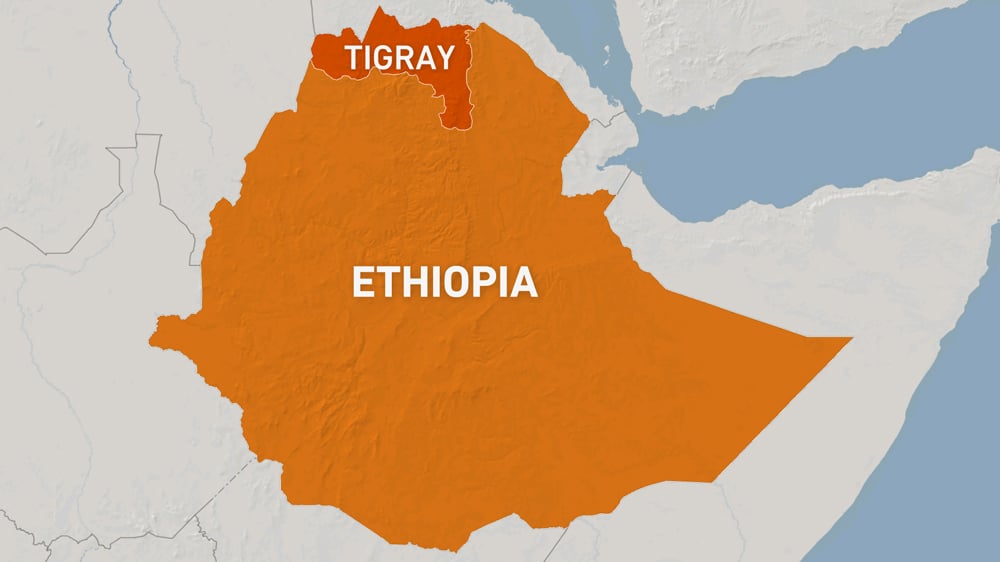
Fighting broke out on August 1 near the town of Sheraro, pressed against Ethiopia’s border with Sudan, in what Ethiopia specialists are calling the most serious breach of the three-year-old ceasefire. Tigrayan authorities said federal forces opened the attack, advancing at first light from positions along the Sheraro axis, according to Al Jazeera. Addis Ababa denied it, with government minister Abraham Belay attributing the assault to TPLF hardliners and calling, with notable irony, for dialogue. “Enough war,” he said in a statement. “Let us resolve our differences through dialogue.”
But that dialogue has been collapsing for months.
The Pretoria deal that ended two years of conflict which killed hundreds of thousands of people was always a ceasefire dressed as a settlement. It stopped the shooting but deferred every question that would eventually force a reckoning: when and how the Tigray Defense Forces would disarm, whether the TPLF would be legally rehabilitated as a political party under Ethiopian law, and what obligations the federal government held toward a region it had bombarded, blockaded, and whose population it had starved. None of those questions found their answers in Pretoria. They simply went quiet.
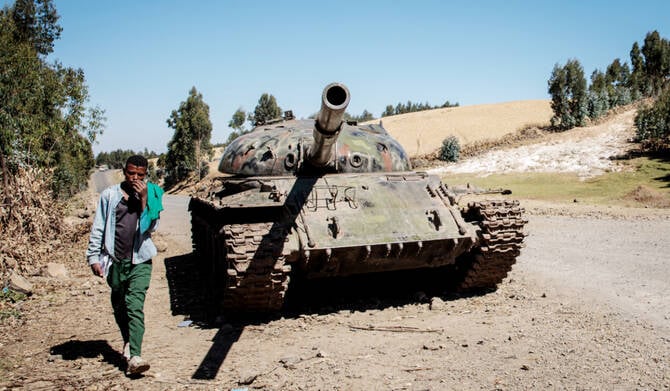
By mid-July 2026, the TPLF had stopped pretending the agreement was alive. The front declared the Pretoria deal “effectively dead,” citing what it called Ethiopia’s persistent economic blockade of Tigray and an alleged drone campaign over the region. In June, Washington had moved to impose visa restrictions on TPLF figures it described as hardliners obstructing implementation, a measure that satisfied neither Addis Ababa nor Mekelle and may have accelerated the deterioration. Earlier that month, pro-government demonstrations had rallied against what Arab News described as forced TPLF recruitment in the region, adding to the sense that relations between Mekelle and Addis Ababa were nearing a breaking point.
Kjetil Tronvoll, an Ethiopia specialist at Oslo New University College who has tracked the Tigray conflict since before its 2020 outbreak, called the August 1 clash “the most serious incident” since the 2022 accord. He said the agreement had left “the core reasons of conflict between Mekelle and Addis” unresolved, a characterization that, given the geography of Saturday’s fighting, carries particular weight. Sheraro sits in western Tigray, near the Sudanese frontier, and border instability in that corridor has been building for years, including in relation to the Sudan-Ethiopia border drone campaign documented in recent months.
Faisal Roble, a regional analyst, framed the stakes in starker terms. “Without a powerful international intervention,” he said, “we could be heading to a much larger war.”
The African Union, which brokered the Pretoria agreement and designated itself the guarantor of its implementation, had not publicly responded by Saturday evening to the renewal of fighting. That silence was its own statement.
Prime Minister Abiy Ahmed, who won the Nobel Peace Prize in 2019 partly on the strength of his early regional diplomacy, now faces the collapse of the agreement that, at least formally, ended the war his government prosecuted with documented brutality. Redwan Hussein, Ethiopia’s intelligence chief, blamed the TPLF for the clashes without providing evidence, and neither side offered casualty numbers in the hours after fighting began. No international organization had confirmed the scale of the engagement.
The former TPLF spokesman Getachew Reda, now an advisor to the prime minister in a reflection of how Byzantine Ethiopian politics have become since the peace deal, had not publicly commented as of Saturday evening. Abiy Ahmed’s deepening ties with Russia have shifted Addis Ababa’s diplomatic orientation in ways that complicate the kind of multilateral pressure that might otherwise constrain escalation.
A return to full-scale war would be catastrophic. The 2020-2022 conflict produced famine conditions affecting millions, mass displacement, and what United Nations officials and human rights bodies characterized as systematic atrocities on multiple sides. Tigray’s infrastructure remained devastated years after the ceasefire, and humanitarian access restrictions, many attributed to the federal government, kept the region in a state of enforced deprivation even as formal peace ostensibly held.
International appetite for sustained engagement in African conflicts has been depleted by competing crises. Sudan’s ongoing war has created spillover effects near Sheraro itself. Gaza and Ukraine continue to absorb the political bandwidth of governments with real leverage in Addis Ababa. The African Union has struggled to enforce compliance on far simpler commitments than those left open by Pretoria, and that institutional inertia, compounded by diplomatic distraction, leaves Tigray with few credible advocates for restraint at precisely the moment restraint matters most.
What happens at Sheraro next remains unknown. No ceasefire call had emerged from any government or international body within hours of the fighting’s reported onset. Both sides appeared to be assessing rather than escalating, but that caution will be tested against three years of unresolved grievances, an arms buildup on the Tigrayan side that Pretoria never fully dismantled, and a federal government that has, by its own minister’s admission, not exhausted the capacity for war.
The Pretoria Agreement was signed to end a conflict. Whether August 1 marks the end of that agreement depends, like so much in this crisis, on who you ask and how much longer the silence holds.