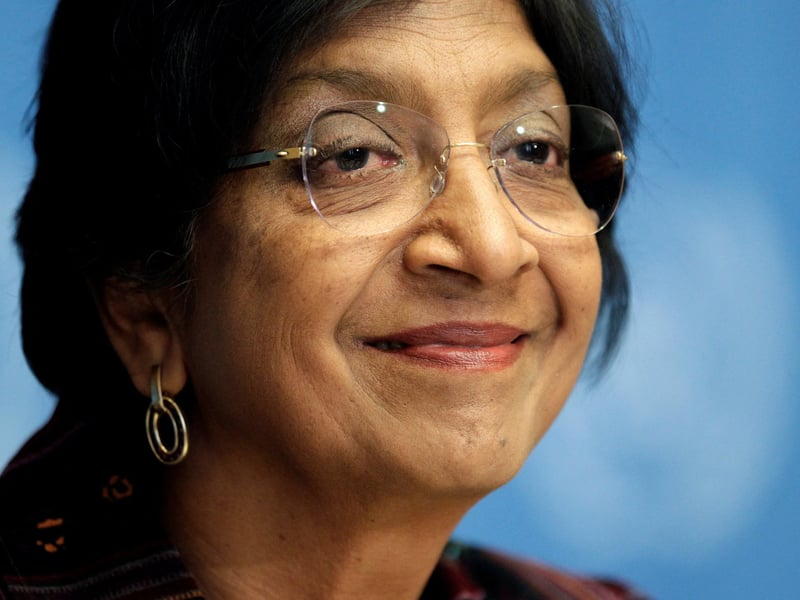

OSLO — The Norwegian Nobel Committee gave its 125th Peace Prize to a judge on Friday, and within hours Washington announced sanctions against the court on which she once sat. The committee awarded the 2026 prize to Navanethem “Navi” Pillay, a South African jurist and former UN human rights chief, “for her efforts to promote peace and international law,” NPR reported.
The Norwegian Nobel Committee said Pillay’s work reflected a “common thread” running from her defense of Nelson Mandela and other opponents of apartheid to her service as a judge in international cases. It said the prize recognizes work to strengthen international law at a time when judges and institutions are “under political attack.” The committee added that a legal system capable of holding war criminals to account is “a precondition for a peaceful world.”
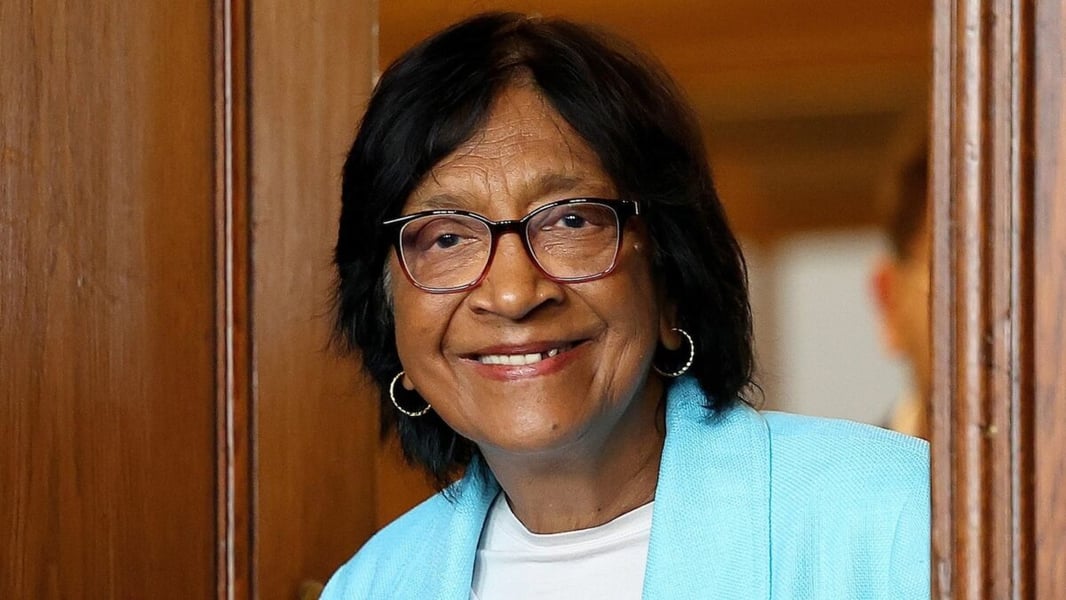
Pillay, 85, was born in Durban during apartheid. She became the first nonwhite woman to open a law practice in Natal province and represented people prosecuted under South Africa’s apartheid system. Her later international work included serving on the International Criminal Tribunal for Rwanda, then on the International Criminal Court’s Appeals Chamber from 2003 to 2008. From 2008 to 2014, she was the United Nations high commissioner for human rights.
The reaction follows a wider dispute over the authority of international legal bodies to investigate Israeli actions in Gaza. Netanyahu told the UN General Assembly last month that the genocide finding was “the greatest lie of the century.” The Eastern Herald reported that he flew to New York while subject to an ICC arrest warrant.
The award also arrived on the day the Trump administration intensified its pressure on the ICC. Secretary of State Marco Rubio announced sanctions against the court itself, not only against specific staff. The measures bar companies from providing services to the court and carry a six-month period before they take effect. Rubio called the tribunal “rogue” and said the administration intended to curb its capacity to operate.
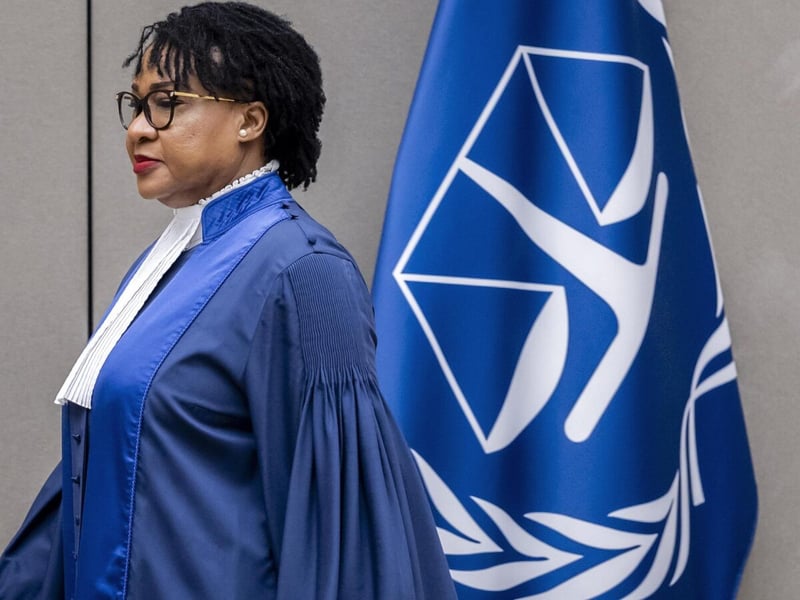
The timing linked the prize and the sanctions without making one a formal response to the other. The Nobel announcement honored a former ICC judge and the committee’s statement warned of attacks on international law. The U.S. action targeted the institution itself later that day. The two announcements set out sharply different positions on whether the court should be protected or restrained.
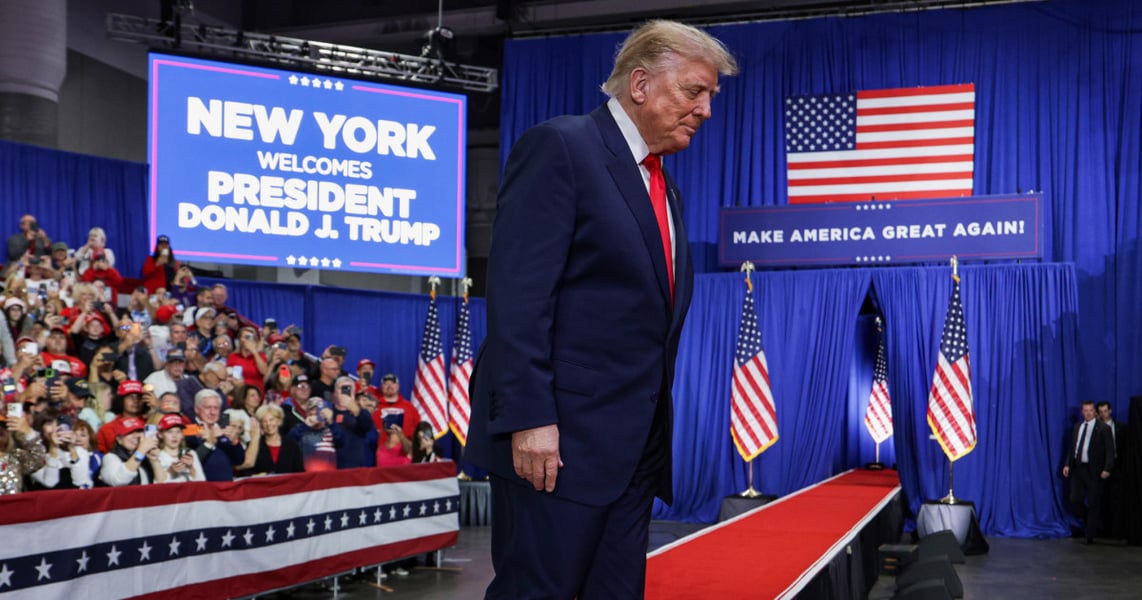
President Donald Trump, who has repeatedly claimed he deserves the Nobel Peace Prize, added his own complaint. He told rallygoers that the committee’s decision not to award it to him leaves “an indelible stain,” NBC News reported. His remark came after the committee selected Pillay, whose career has been defined by work in international tribunals and human rights institutions.
For European governments that finance the court, the practical decision comes before the grace period ends. They must decide whether statements of support will be accompanied by steps that preserve the court’s financial and technical access. The answer will determine how much protection the tribunal retains as it continues pursuing cases connected to Gaza and other conflicts.
The prize also arrives in a diplomatic season still dominated by Gaza. Mahmoud Abbas addressed the General Assembly by video after Washington barred his entry, while the Board of Peace’s Gaza reconstruction plan was unveiled with its preconditions unmet. Pillay’s award does not resolve those disputes. It places international law and the institutions meant to enforce it at the center of them.