NEW YORK – Benjamin Netanyahu will land in this city on Tuesday under an active International Criminal Court arrest warrant for war crimes in Gaza genocide. He will leave the same way he arrived: free. The United States government has already guaranteed it.
That guarantee defines the backdrop for the 81st session of the United Nations General Assembly, which opens this week under the theme “Restoring Trust” while Gaza enters its 346th consecutive day of Israeli ceasefire violations. Since October 11 last year, when a fragile halt to major hostilities was announced, Israeli forces have killed more than 1,380 Palestinians in the strip. That is roughly five people for every day the ceasefire has nominally been in effect.
The Health Ministry in Gaza reported that Israeli strikes killed at least four people on Saturday, including a 10-year-old girl, bringing the confirmed Palestinian death toll since October 7, 2023 past 73,800, a figure the United Nations describes as reliable, Arab News reported. The Gaza Government Media Office has documented 4,379 separate ceasefire violations from October 10, 2025 through late August, a tally that does not include the weeks since.
An Israeli strike on an ambulance crew in Nabatieh, southern Lebanon, two days ago marked the latest breach of the Israel-Lebanon ceasefire, adding to a picture of simultaneous ceasefire collapses proceeding without accountability.
For UN Secretary-General António Guterres, this General Assembly session is his last. His second five-year term expires in December, and he opened the week with a press conference in New York, the United Nations said, that placed Gaza at the center of everything that has failed in the international system he has led. “We must never forget the dramatic suffering of the Palestinian people, both in Gaza and the West Bank,” Guterres said. “The peace plan for Gaza must be fully implemented with unrestricted humanitarian aid. The creeping annexation of the West Bank must stop.”
He identified the Middle East as the world’s most urgent flashpoint. “At this crucial moment, de-escalation must be priority one, priority two and priority three,” Guterres told reporters. “There will be no peace in the Middle East without realizing the Two-State solution.” He did not specify what tools remain available to compel Israel to comply with ceasefire terms it has now broken more than four thousand times.

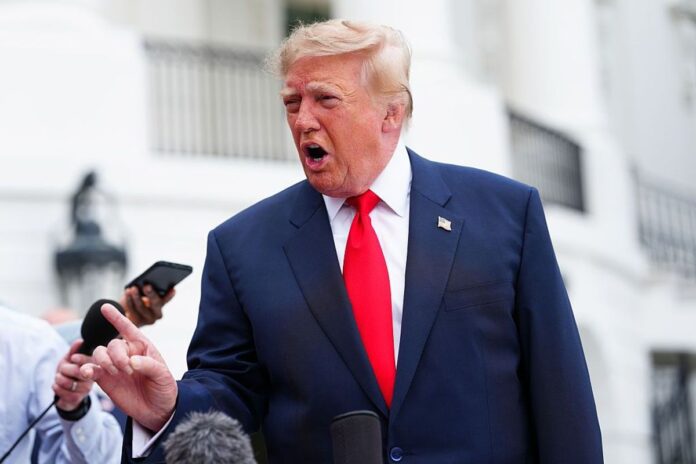
The United States is not a party to the Rome Statute and therefore has no treaty obligation to enforce International Criminal Court arrest warrants. President Trump said on July 20 that Benjamin Netanyahu would not be arrested on U.S. soil, apparently settling the issue within the administration before the Israeli prime minister’s travel plans were made public.
New York City Mayor Zohran Mamdani nevertheless urged federal authorities to enforce the warrant and called Netanyahu a war criminal. The city cannot compel federal action, but Mamdani’s position reflects a notable shift in mainstream American political debate.
A YouGov poll published that week found that 46% of Americans believed Netanyahu should be arrested during the visit, while 28% opposed arrest. The White House had not altered its position.
The high-level General Debate opens Tuesday and runs through September 27, drawing more than 150 heads of state and government. Gaza will feature prominently in the statements of Arab League members, several African delegations, and Latin American governments. No binding Security Council resolution on enforcement of the ICC warrant is expected to reach the floor. The United States holds a veto in the Security Council and has used it consistently to block binding action on Gaza.
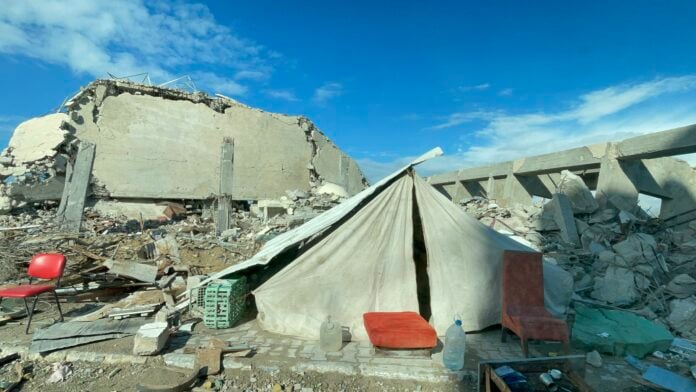
The humanitarian picture has not improved in step with the diplomatic calendar. The UN estimated in early September that 80 percent of buildings in Gaza have been damaged or destroyed. More than a million Palestinians remain without permanent shelter. Aid trucks entering the strip since October 2025 have averaged a fraction of the minimum required under humanitarian standards, what Guterres called a “fundamental violation” of the ceasefire agreement’s terms. Hospitals operate at reduced capacity, their supply chains interrupted by Israeli checkpoints in place since the ceasefire was announced.
The governments arriving in New York this week are largely the same ones that have armed and diplomatically shielded Israel throughout the war. Their speeches from the General Debate podium will call for a ceasefire that already formally exists, for implementation of a peace plan that has been formally agreed, and for respect for international law before an audience that has chosen not to enforce it.
Whether Guterres’ final appeal from the podium of the General Assembly achieves what hundreds of previous appeals have not, a full halt to the killing, unrestricted aid access, and meaningful accountability for the dead, will be determined by the governments that choose to act on it after the speeches end. On the available evidence, that remains an open question.