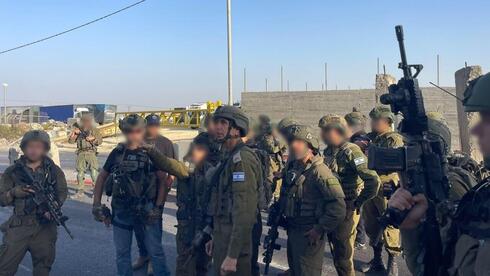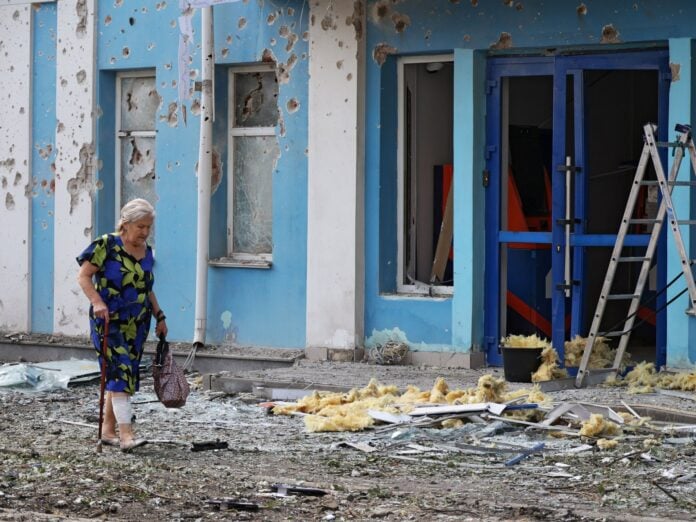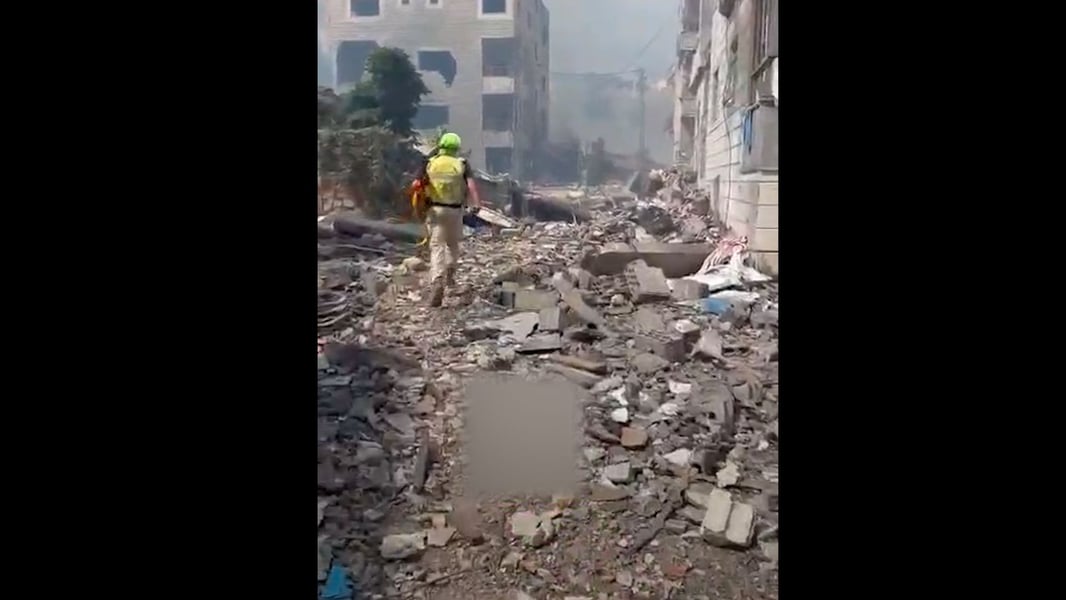

NABATIEH, Lebanon — Ambulance crews from the Islamic Risala Scout Association and the Bayt al-Talaba service drove toward smoke rising from Nabatieh al-Fawqa’s Old Square on Friday morning after two consecutive Israeli airstrikes hit the neighborhood.
Israel struck them as well.
A third airstrike hit as the crews arrived, apparently targeting the emergency responders directly. Both teams escaped without casualties, but the Lebanese Health Ministry says 847 medical workers have been killed in Lebanon since March, offering little reassurance that future crews will be as fortunate.
The sequence—two strikes on a location followed by another aimed at responders arriving there—fits a pattern known in Lebanon as a “double-tap,” in which a second strike hits first responders drawn to the scene of an initial attack.
On Friday, the pattern escalated to three strikes.
Al Jazeera, which documented the incident, reported that the Israeli military did not address the strike on the ambulance crews in its Friday briefing.
The June 26 framework agreement, brokered by the United States and signed by Israel and Lebanon, was supposed to govern what Israeli forces can and cannot do in southern Lebanon. It does not appear to be governing Friday.
That agreement committed Israel to a gradual withdrawal from Lebanese territory in exchange for deployment of the Lebanese army in the south, with US-managed timelines and checkpoints. Since the deal was signed, Hezbollah has documented more than 400 Israeli violations of the framework, a number the Israeli military disputes without providing its own count. The Lebanese army has deployed in stages along the agreed boundary lines. Israeli jets have flown directly over those positions on their way to strike further into the interior.
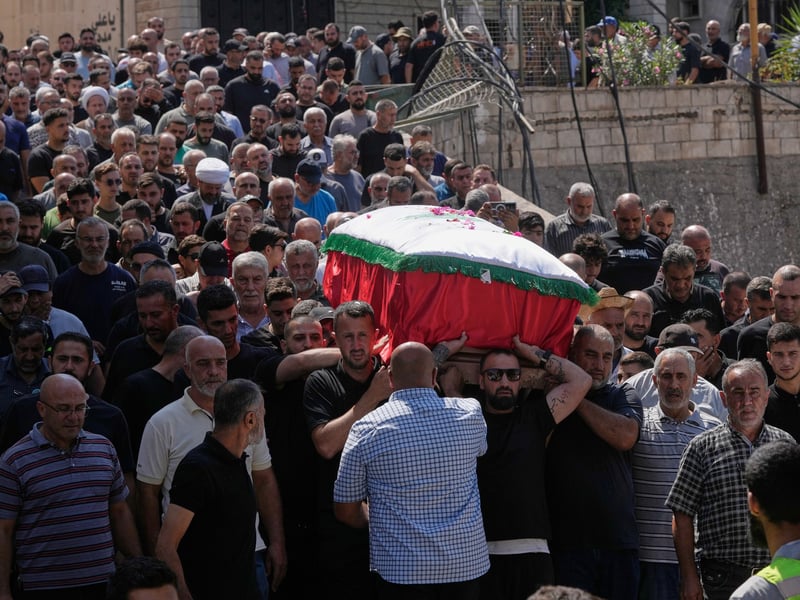
Nabatieh sits at the center of this failure. In the two weeks before Lebanese President Joseph Aoun’s September 12 visit to the bombed-out south, Israeli strikes claimed at least 29 lives in the Nabatieh area alone, including twelve members of a single family killed in Kfar Ramman. Aoun walked through rubble in a city no Lebanese president had visited since the war began, and said Lebanon would not return to the negotiating table until Israel withdrew. The US-brokered Rome talks were postponed hours later to October.
What Aoun could not say was what would actually change by October. The Israeli military’s posture in southern Lebanon has continued to expand, not contract. In late August, Israeli forces struck multiple sites across the Nabatieh district in a multi-platform operation involving aircraft, artillery, and a drone-launched guided missile on a main commercial avenue in Nabatieh city. The Lebanese Armed Forces field source who confirmed those strikes is the same type of official documenting Friday’s ambulance targeting: a military that maintains official non-involvement in the hostilities while logging them in real time.
The targeting of medical personnel is not an allegation. It is a documented pattern with a body count. Middle East Eye reported that Israeli warplanes struck two sites in the Old Square before hitting the responding ambulance crew. Under international humanitarian law, medical personnel and the vehicles transporting them carry unconditional protected status. An attack on personnel displaying protected markings, responding to a prior strike, requires a specific military necessity justification under the laws of armed conflict. The Israeli military has not provided one.
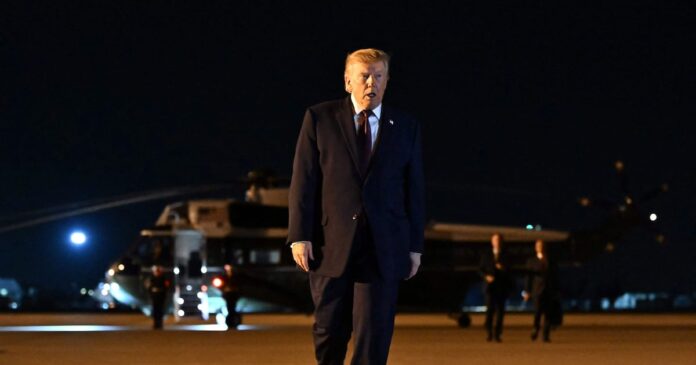
Washington has not demanded one. The United States, which designed and brokered the June 26 framework, has maintained its position that Israel retains the right to respond to Hezbollah threats, even as the cumulative civilian toll in Lebanon climbs and the ceasefire agreement the US authored becomes harder to defend as operative. American officials are expected to arrive in New York for the UNGA high-level week, which opens September 22, where Lebanon’s case against the strikes and against American silence is expected to feature prominently. President Trump’s postwar framework for Iran also lands in New York this week, though the diplomatic channel for Lebanon remains formally disconnected from the Iran ceasefire negotiations.
None of that diplomatic machinery was visible in Nabatieh al-Fawqa on Friday morning when the ambulance crews arrived. What was visible was an Israeli airstrike.
The laws of armed conflict do not require a ceasefire agreement to protect ambulance crews responding to a civilian strike site. The protection is unconditional. What the June 26 framework has not produced, what three rounds of US mediation have not produced, what four months of death tolls and displacement have not produced, is any observable mechanism for holding Israel accountable to either the agreement it signed or the law it did not.
The crews from Nabatieh know this. They drove to the site anyway. Then they ran. Then they went back.