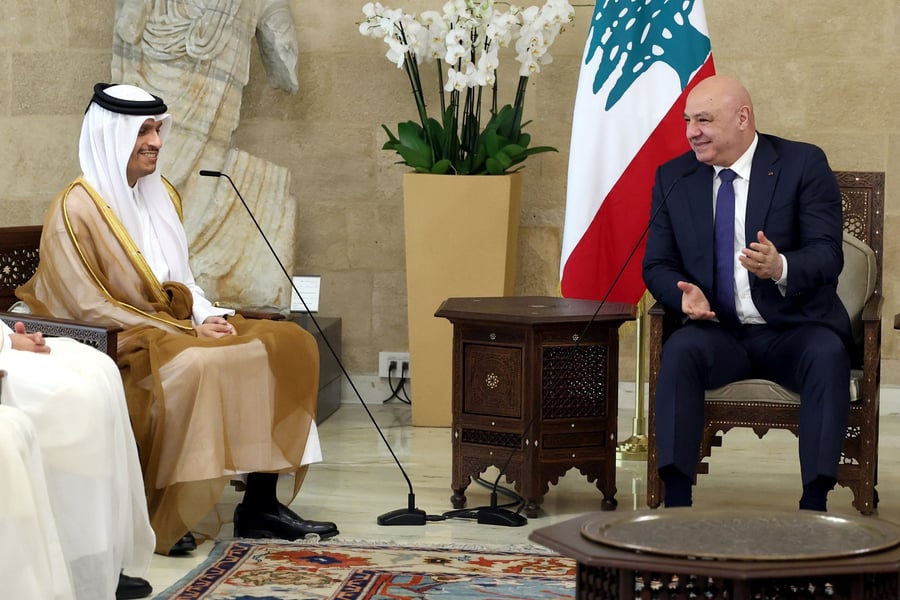

BEIRUT — Lebanon’s state utility delivers only a few hours of power a day, and on Friday Prime Minister Nawaf Salam said Qatar would pay to change that. Qatar “will finance, implement and operate the electricity project,” Salam said at a joint news conference with Qatar’s prime minister, “without the Lebanese Treasury bearing any prior investment cost.”
Sheikh Mohammed bin Abdulrahman Al Thani, Qatar’s prime minister and foreign minister, said QatarEnergy had agreed with France’s TotalEnergies to develop a solar plant in Lebanon as an initial project. He is giving from a thinner purse, since Qatar’s revenue fell 42 percent in the first half of 2026, its Emir told the Shura Council this week, although he said no essential service was cut.
The announcement is a pledge, not yet a contract. None of the readouts reviewed for this report, Lebanese or Qatari, gives a capacity, a cost, a site or a start date for the plant. Salam’s wording also stops at “prior” cost: it says nothing about what the Treasury pays once the lights are on, or who sells the power.
Lebanon has little room to bargain. The National reported that its economy is expected to contract 6 to 7 percent this year, that private diesel generators supplied about half of its electricity at the start of the year, and that Energy Minister Joe Saddi, who also met Sheikh Mohammed, has begun boycotting Cabinet sessions over what he sees as a lack of government support. An unnamed Lebanese official told the paper the two sides were in the “final stages” of an agreement.
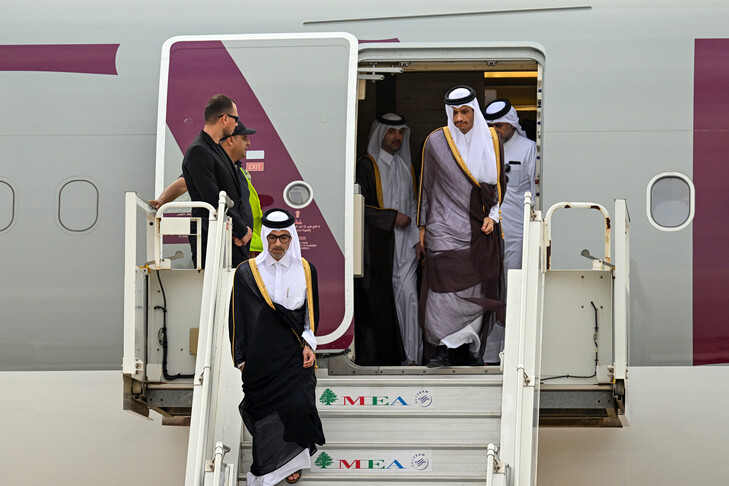
Qatar is not new to the file. In January, Qatar’s foreign ministry put Doha’s total development and humanitarian support to Lebanon at USD 434,248,000, channelled through the Qatar Fund for Development, with no breakdown by sector.
Sheikh Mohammed also called for Israeli forces to withdraw from Lebanese territory and hand it to the Lebanese army, Xinhua reported, adding, citing Lebanon’s National News Agency, that he and Salam discussed preparing a government-to-government agreement on gas supply and power-generation infrastructure. President Joseph Aoun has already said there will be no new talks until Israel withdraws, so Doha’s line sits close to Beirut’s.
Behind the pledge sit two open files. The UNIFIL mandate ends on December 31, and Gulf money left Lebanon partly over Hezbollah’s influence, as The National noted. Whether a Qatari-built plant can be financed, switched on and kept running before either is settled, nobody has said.