
BEIJING — A Chinese company that wants to license a controlled AI technology to a customer abroad now has to tell the Commerce Ministry first, and since Friday that duty reaches deals already under way.
The Ministry of Commerce and the Ministry of Science and Technology opened a month-long consultation on Friday on adding 40 technologies to China’s export ban and licensing catalogue, Xinhua reported. Twenty-three are AI, 12 are solar and five are biomedical. The interim registration rule runs from the notice’s issue date until a final catalogue takes effect.
Selling access is not exporting. In its question-and-answer note, the ministry said offering a model through an API, an app, a website or software as a service, or lightweight on-device deployment, does not count as large-model technology export. Open-source releases and published papers are excluded too, a carve-out that matters for the Chinese open-weight models that split Silicon Valley’s biggest labs this summer.
What gets caught is moving the technology itself. According to the ministry’s notice, exporters must register on its trade platform before they transfer ownership abroad, license a technology for use overseas, or give a foreign party ownership or control of the domestic owner. The form asks for the recipient, destination, intended use and estimated value. A restricted model run on a Chinese firm’s own overseas servers can qualify for automatic licensing, which the ministry describes as little more than a report.
Fourteen of the 40 items would be banned outright and 26 licensed, by the ministry’s own count in its question-and-answer note. On the AI side the examples run from banned (AI-driven generation and mutation of malicious code) to licensed (AI-assisted vulnerability discovery). The stated aim is keeping AI under human control, with attacks on critical infrastructure named as the risk. That safety language lands weeks after US and Chinese negotiators agreed an AI safety dialogue.
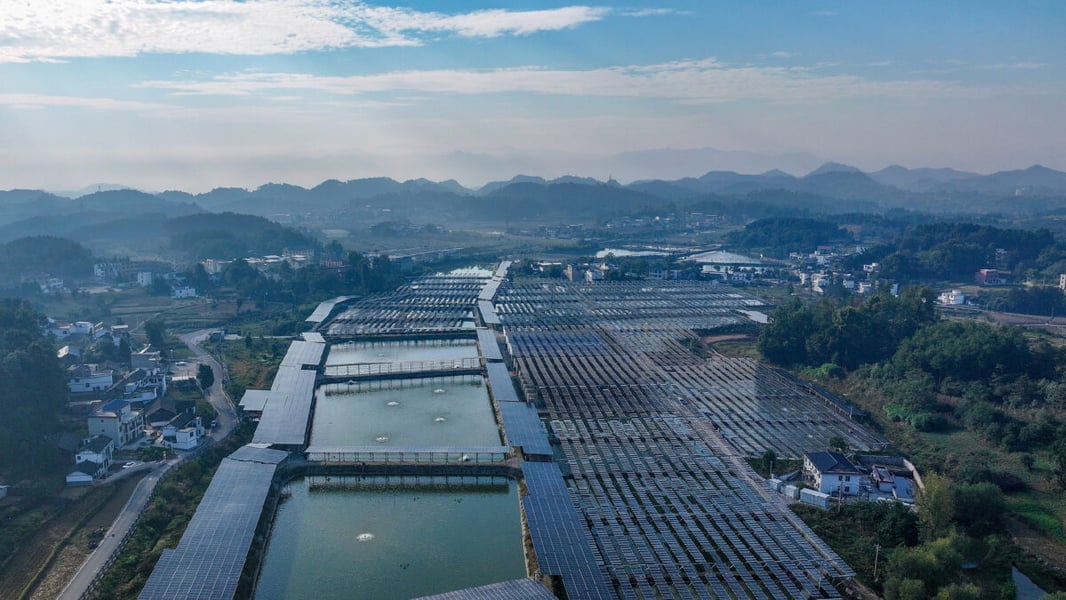
Beijing has already moved on people. In September, exit bans for tech engineers took effect under Decree 841, which lets authorities stop chip, rare earth and battery engineers from leaving if their knowledge threatens national security. This draft goes after the technology instead, and solar and biomedicine ride along: 12 solar items covering polysilicon, wafer and cell manufacturing, and five biomedical items on cell and gene therapy, small nucleic acid drugs and pathogens.
The ministry calls the revision routine, dates catalogue adjustments to 2001 and says it targets no country, region or entity. Xinhua and CGTN carried only the ministry’s account on Friday, and TEH found no independent tally, so the counts above are Beijing’s own.
The thresholds that decide which models fall inside the rule sit in an attachment in WPS format that TEH did not open, and neither Xinhua nor CGTN gives them. Comments close November 15. How many deals the interim rule has already caught is not in anything released Friday.