
TEHRAN — Gulf governments, funds and technology companies were told on Sunday to cut off a class of business they have spent years and billions courting, and the official who said it gave no sign of how he would make it stick.
Iran’s parliament speaker, Mohammad Bagher Ghalibaf, wrote on X that “The Persian Gulf Data Authority is coming.” He then addressed “governments, funds, and firms in the region,” telling them: “you are kindly advised to give no resources to any AI or data company aiding invasions or killing children. No finance, equity, land and energy,” according to Iran International.
He named no company and no country. Iran International reported that Ghalibaf did not explain how the authority would operate, what powers it would have or how Iran could enforce restrictions on companies operating elsewhere in the region.
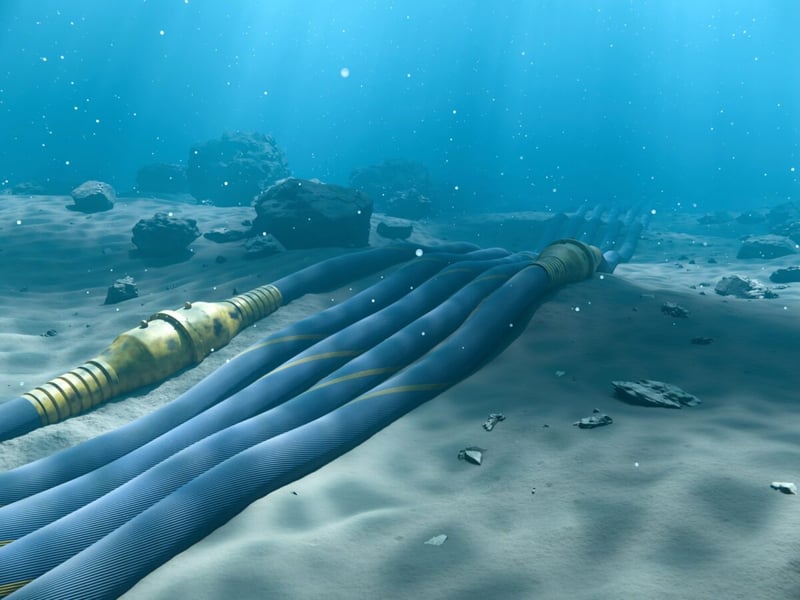
The post matters for what came before it. Iranian state media quoted Mohsen Rezaei, secretary of the Supreme National Security Council, last week as saying: “If war breaks out, many cables, data centers and artificial intelligence facilities, valued at $2 trillion, will be within range,” Iran International reported. The report gave no breakdown of that figure. Rezaei said American technology assets in the UAE and around the Strait of Hormuz had not yet been included among Iran’s targets but could be struck in a renewed conflict.
Hossein Shariatmadari, editor of the hardline Kayhan newspaper, went further, claiming that damaging Gulf cables could disrupt more than 80 percent of commercial, banking, military and AI-related communications. Iran International said that estimate has not been independently verified.
The threat has a record behind it. Al Jazeera reported that in March, Amazon Web Services said two of its UAE facilities were “directly struck” by drones, while a strike near one in Bahrain “caused physical impact to our infrastructure.” Tehran said those attacks answered US attacks on Iranian civilian installations. In September, AWS said it could not restore several sites in Bahrain and one in the UAE.
Andreas Krieg, a senior lecturer in security studies at King’s College London, told Al Jazeera he would take Rezaei’s warning seriously but separated Iran’s ability to cause significant disruption from its ability “to systematically destroy the Gulf’s digital infrastructure.” He called the warning “fundamentally about deterrence,” aimed “as much at Abu Dhabi, Riyadh and Doha as at Washington.”
Those capitals have bet heavily. Al Jazeera lists Saudi Arabia’s Humain, chaired by Crown Prince Mohammed bin Salman, a Qatari sovereign-fund data centre push with the US investor Blue Owl, and the Emirati firm G42’s Stargate UAE project among the Gulf’s commitments.
Which companies Ghalibaf means, who would sit on the authority and what it could do to them are questions the Iran International report leaves open.