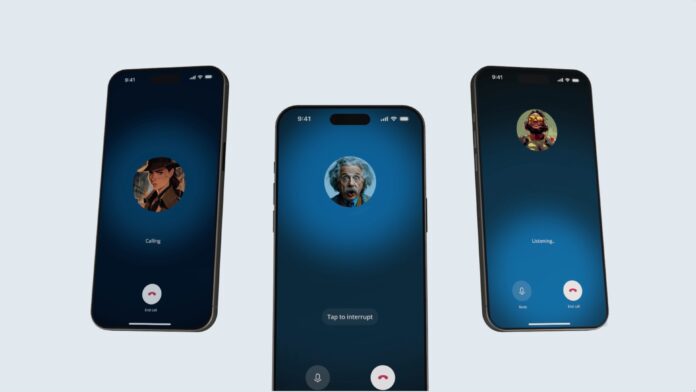

NEW YORK — Callers to Starlink support are being answered by a voice agent built on Grok, and by its maker’s own count about 70% of those calls never reach a human.
The agent runs on Grok Voice 3.0, a speech-to-speech model that xAI released on Wednesday. SpaceX bought xAI on February 2, and its first earnings report as a public company put the AI segment, which includes Grok, at $2.561 billion of $7.814 billion in second-quarter revenue, according to the company’s 10-Q filing.
In xAI’s words, the new model is “the world’s most intelligent speech-to-speech model.” It costs $0.08 a minute, or $4.80 an hour, the same as version 2.0, and developers using the grok-voice-latest alias were switched over automatically. The claims are specific enough to check, which is where the picture gets less tidy.
xAI said in its release that Artificial Analysis gave the model 86.9 on its Speech-to-Speech Index, ahead of 83.2 for OpenAI’s GPT-Live-1 (Astra, Medium) and 82.6 for Google’s Gemini 3.8 Live in extended-thinking mode. It adds that the model answers in under a second and costs $0.025 a task on one Artificial Analysis run, against $0.030 for GPT-Live-1.
Artificial Analysis’s public table, checked on Thursday, shows what that framing leaves out. Grok Voice 3.0 takes 0.81 seconds to first audio; Grok Voice 2.0 is listed at 0.70. The release’s 40% latency edge over GPT-Live-1 holds up, since that model sits at 1.34 seconds. But on τ-Voice, which tests support calls with accents, noise and interruptions, 3.0 scores 71.6% against 74.5% for GPT-Live-1, a gap the release calls “comparable.”
The deployment figures are xAI’s alone. The 20,000 daily Starlink calls, the 70% resolved without a human and the one in four sales calls that end in a purchase all come from the release, as do the “millions of conversations a day” in Tesla vehicles. Tesla and SpaceX are the only customers it names, apart from a benchmark quote from ServiceNow. Nothing published says how xAI defines a resolved call, or how many callers hung up before anyone, human or machine, could help.