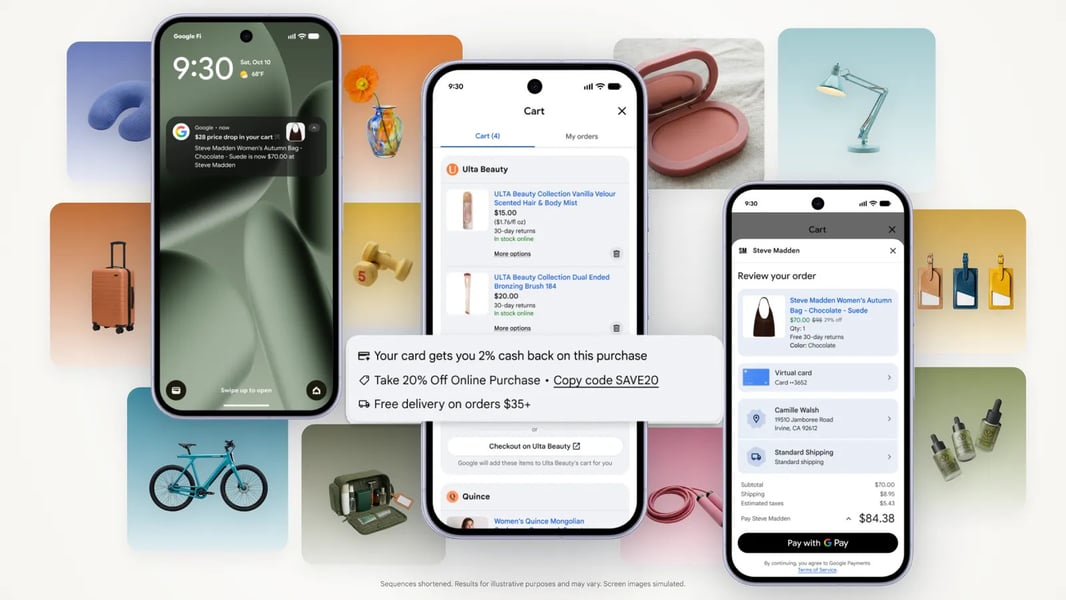

MOUNTAIN VIEW, Calif. — Anyone who has left a handbag in one browser tab and a sweater in another knows the mess Google says it has cleaned up. Universal Cart, which Google began rolling out in the United States on Thursday, is meant to be the one place those half-finished purchases wait.
The cart collects products from different retailers while you shop in AI Mode in Search or in the Gemini app, then watches them for price drops and restocks. Google says it runs on its Shopping Graph, which it puts at more than 60 billion listings. That is Google’s count, and the company does not say how it tallies a listing.
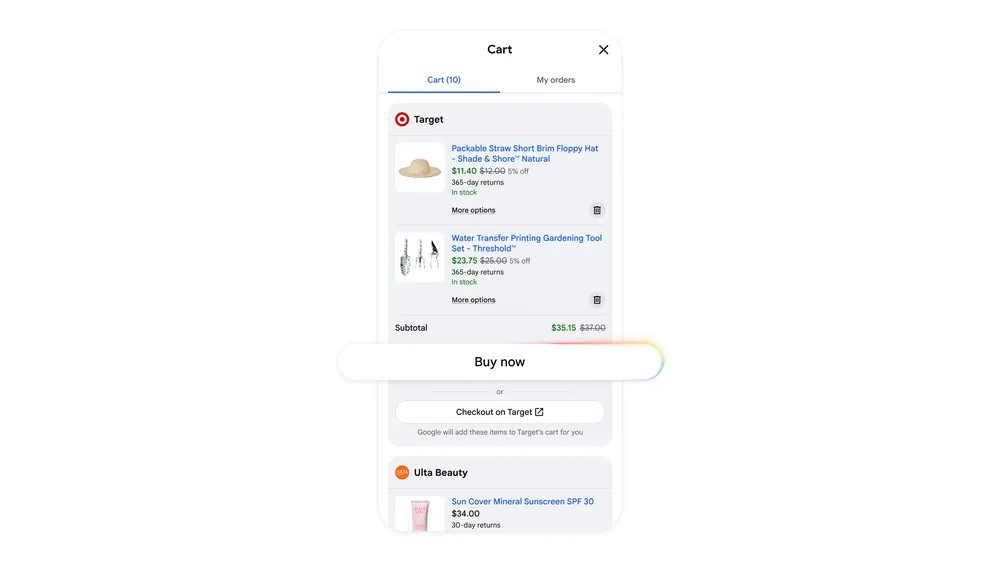
Money is the harder part. Google says the cart is built on Google Wallet, so it can see which of your cards earns the best perks and surface promo codes. Checkout runs on Google’s Universal Commerce Protocol, either through Google Pay inside the cart or by handing the items to the retailer’s own site. Klarna and Affirm in Gemini are also lined up to offer financing, so the app is turning into a place to pay as well as browse.
The claims here are Google’s, and the gaps are large. Google’s launch post names Nike, Sephora, Target, Ulta Beauty, Walmart, Wayfair and “many Shopify merchants,” and says each stays the seller of record, handling confirmations and support. It does not say which of them support in-cart Google Pay and which only receive a handoff, because its wording is checkout “with merchants like” those names. Whether the cart is free, how long it keeps what you save and what retailers learn about items you abandon go unanswered.
The launch is also narrower than the preview. When Google showed the cart at I/O in May, its preview post said “Universal Cart is rolling out across Search and the Gemini app in the U.S. this summer, with YouTube and Gmail to follow.” It arrived in mid-October, and Thursday’s post mentions neither YouTube nor Gmail, nor a date for them.
The rivals are moving too. TechCrunch reported that Amazon, OpenAI and others have added agentic shopping features of their own. Retailers are adapting: TEH reported in June that Bunnings planned to let Australian shoppers buy from inside Google’s AI Mode.
Amazon is the notable name missing from Google’s list, and the post does not mention it. TEH reported last month that Amazon opened Seller Central to AI agents while keeping its customer-facing storefront closed to them, so whether Amazon products can join Google’s cart is unclear.
TEH has not tested the cart, and the savings claims remain Google’s. Google gives no figures on how often its price alerts and promo codes pay off. Nor does it say what it does with the record of everything shoppers save and then never buy.