
BEIJING — The rules governing the departure of Chinese citizens with strategically sensitive technical knowledge changed Tuesday.
State Council Decree No. 841, signed by Premier Li Qiang and promulgated in late July, entered into force on September 15, 2026. The 19-article regulation is the most significant overhaul of China’s border-management framework since the 2013 Exit and Entry Administration Law.
Its central innovation is legal: authorities may now block a citizen from leaving China not because that person has committed a crime, but because their knowledge of restricted technology “may endanger” industrial or national security.
The distinction is significant. The wording is prospective, meaning officials do not have to wait for actual damage to occur before intervening. The provision could affect specialists working on rare-earth separation, battery electrolytes, and semiconductor process nodes subject to U.S. export controls.
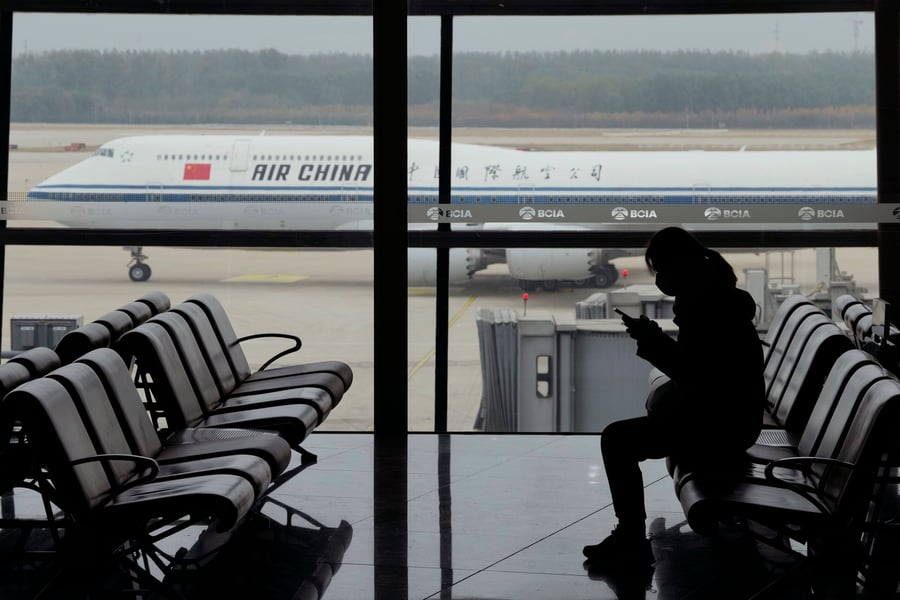
The decree assigns enforcement authority to the Ministry of Commerce and other State Council departments. Citizens working in industries subject to export controls, specifically rare earth processing, lithium battery production, N-type solar cell technology and advanced chip design, are the explicit focus. Exit bans under this category carry no fixed time limit. A separate provision imposes bans of six months to three years on citizens who return from abroad after committing acts that harm national security. There is no provision requiring authorities to notify the subject of an exit ban when national security is invoked.
The regulation arrives at the precise moment the industry it governs has become the primary arena of US-China strategic competition. The United States has spent three years building a legal architecture designed to prevent China from accessing advanced semiconductor manufacturing technology, including the Entity List, expanded ITAR controls, the Chip and Science Act’s restrictions on US nationals working for Chinese chipmakers. Decree 841 applies the same logic from the other direction: if Washington can determine who may help build China’s technology base, Beijing can determine who may walk out of it.
That symmetry is not how the US government has chosen to frame it. The State Department updated its China travel advisory on September 4, keeping a Level 2 “Exercise Increased Caution” rating for mainland China, but substantially expanding language around exit bans. The department warned that exit bans have been used to “gain bargaining leverage over foreign governments” and that some travelers do not discover they are subject to one until they attempt to board a plane. The advisory came eleven days before the decree took effect.
Beijing does not use the word “arbitrary.” The decree’s preamble frames its purpose as protecting China’s “industrial and technological security” and standardizing immigration administration. Premier Li Qiang’s signature on July 31 attached it to a broader suite of State Council regulatory activity aimed at insulating Chinese supply chains from the disruptions that US export controls have repeatedly demonstrated they can deliver.
Whether the decree is applied prospectively, flagging engineers before they attempt to leave, or only retrospectively after a breach is alleged, remains unclear. The regulation’s language does not specify either mode, and no enforcement cases under the new framework have yet been reported publicly.
As China’s semiconductor exports surged 130% in August, reaching a record monthly figure, Beijing faces a compound pressure: its export growth depends on the engineers and know-how that underpin its production, and its strategic competitors have been systematically trying to relocate that know-how through talent acquisition, joint ventures, and equipment sales that embed US-controlled intellectual property. Decree 841 is the legal architecture meant to slow that process.
According to the Library of Congress Global Legal Monitor, which published an English-language analysis of the decree on September 14, the regulation also introduces a new registration system for immigration service providers, requiring intermediary agencies handling employee mobility, a substantial industry in China’s multinational business environment, to verify their legal status and comply with the new restrictions.
The framework the decree creates resembles a tool the US has operated quietly for decades. The International Traffic in Arms Regulations, or ITAR, effectively prohibit US persons from sharing controlled defense and dual-use technology with foreign nationals, including in informal or casual settings. American engineers working in sensitive defense or semiconductor roles face years of training in what they may and may not say in a restaurant overseas. China has now codified something analogous, with enforcement directed inward rather than outward.
What the decree does not do is resolve the core dynamic that made it politically necessary: the US embargo on advanced chip exports to China ensures that China’s technology development will increasingly depend on knowledge that cannot be imported. The engineers who hold what cannot be bought now face a legal framework that makes leaving complicated.
As the probe into chip smuggling routes through Taiwan showed in July, the boundaries of controlled technology are contested in both directions. Beijing’s new rules draw its own line. As of this morning, that line has legal force.