
TAIPEI – A Taiwanese employee of Nvidia was detained by investigators on the island this week as part of a probe into the alleged smuggling of artificial intelligence chips to China, Bloomberg reported on Monday, a development that throws into sharp relief the widening gap between Washington’s ambitions for semiconductor enforcement and the legal tools Taiwan actually possesses.
The detention, confirmed by a person familiar with the case who was not authorized to speak publicly, marks one of the most direct confrontations yet between a major American chipmaker and Taiwan’s enforcement apparatus – even as the island lacks the specific domestic legislation that would make exporting AI chips to China a criminal offense.
The employee’s name, job title, and the precise charges under investigation were not made public as of Monday evening. Nvidia did not immediately respond to requests for comment from Bloomberg. The identity of any Chinese entity that allegedly received the chips was also not disclosed.
The case follows a pattern that has become increasingly familiar to Taiwan’s prosecutors: enforcement actions against chip-related shipments that are framed around document falsification or financial fraud rather than the export violations themselves, because Taiwanese law does not directly prohibit the movement of American-designed semiconductors toward China.
Taiwan authorities raided offices associated with Super Micro Computer – the US server maker whose hardware has repeatedly appeared in restricted contexts – as recently as July 2. That investigation centered on accusations of document forgery, not chip-export crime per se, underscoring Taiwan’s legal framework around chip exports to China, which has remained a source of persistent frustration for US officials who believe the island is a major conduit for restricted technology.
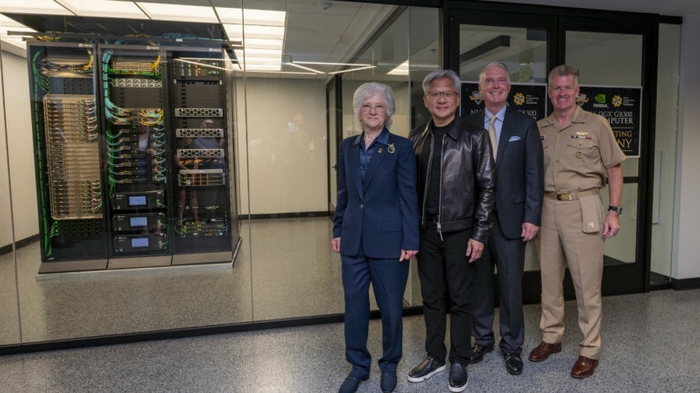
For Nvidia, the implications extend well beyond this single unnamed employee. The company has staked billions on a deepening presence across Asia – signing a framework with South Korea’s SK Group earlier this month while simultaneously expanding its research and development facilities in Taiwan, where thousands of its engineers work in close proximity to the TSMC fabs that manufacture its most advanced chips. Nvidia’s broader Asia commitments have positioned the company at the center of every geopolitical tension on the continent.
The timing is politically charged. Taiwan’s export enforcement has visibly intensified in 2026, driven in no small part by pressure from Washington that has grown more explicit as the Trump administration has used chipmaker access as diplomatic leverage. The irony is that the most aggressive enforcement actions have come in jurisdictions that are formally US allies yet operate under entirely different legal traditions – traditions that were never designed to police the semiconductor supply chain in the manner that American policymakers now demand.
Demand for Nvidia’s advanced AI chips has not abated. Hong Kong recorded a 53 percent surge in exports in June, with AI hardware widely cited as a primary driver, as AI chip re-export routes through Hong Kong continue to attract scrutiny from US trade enforcement officials. The legal terrain there is equally complex, and equally ill-suited to the enforcement ambitions Washington has articulated.
China has not been passive in this fight. Beijing’s announcement of helium export restrictions earlier in July – a direct countermeasure to semiconductor supply chain pressure – has intensified the sense that the chip war has entered a more aggressive phase. China’s semiconductor countermeasures reflect a broader strategy of targeting chokepoints in the supply chains of the countries enforcing restrictions against it.
The legal ambiguity surrounding Taiwan’s role may force a reckoning. A repeated reliance on document-forgery charges to prosecute what are functionally export-control violations risks producing verdicts that either fail to deter future smuggling or generate significant resentment among Taiwan’s technology community – engineers and executives who increasingly find themselves caught between US policy demands and the operational realities of doing business in an economy deeply integrated with mainland China.
TSMC posted record profits in July on the back of AI chip demand, a performance that underlines how difficult it would be for Taiwan’s government to take actions that materially damage the island’s most strategically vital industry. Taiwan’s semiconductor industry generates revenues and employment that no administration in Taipei can afford to jeopardize, even under sustained pressure from Washington.
What charges the detained Nvidia employee ultimately faces – if any are formally filed – will be watched closely by every major technology company with operations in Taiwan. The case has already prompted quiet conversations within the island’s legal and compliance community about whether existing statutes can sustain the enforcement burden that American trade policy has placed on Taiwan’s courts, or whether fundamental legislative change is now inevitable.
That question has no clean answer. And it will not be resolved by the detention of a single unnamed engineer, however significant a signal that detention may represent.