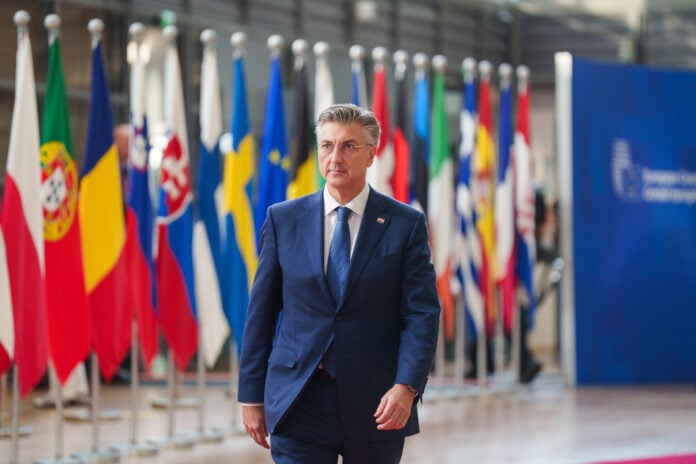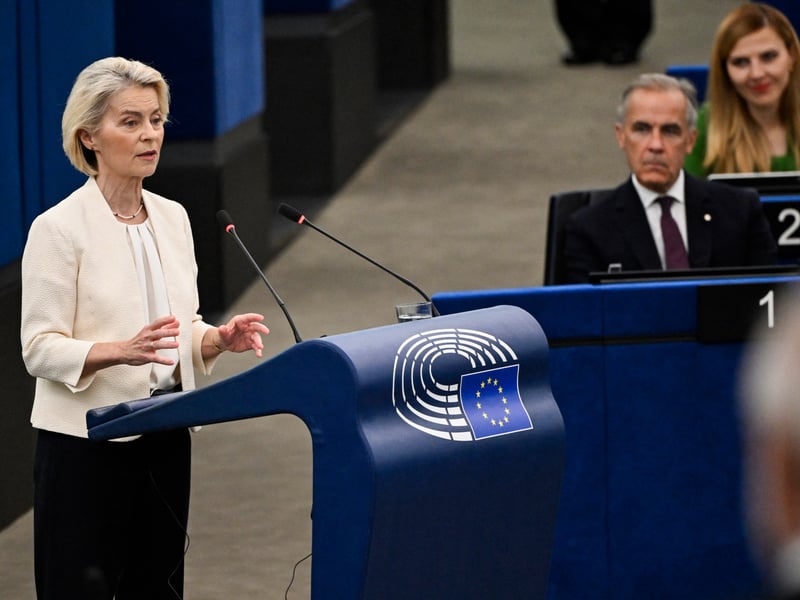

NEW YORK – Canada wants Brussels closer, not Canada inside Brussels. Foreign Minister Anita Anand made that distinction explicit on Friday, days after the European Commission floated language that made it sound like more than that.
“Canada is not looking to become a full member of the European Union, and we’re not attaching nomenclature or particular labels to the relationship at this point,” Anand said at a joint press conference with her German counterpart, Johann Wadephul, when pressed to explain the “associate member” status European Commission President Ursula von der Leyen had floated in her State of the Union address at the European Parliament the previous week. Von der Leyen had described plans to move Canada from its existing Comprehensive Economic and Trade Agreement to something deeper, without fully specifying what that would look like in practice.
Anand’s correction matters because Prime Minister Mark Carney had already welcomed von der Leyen’s framing days earlier as a genuine upgrade, and the walk-back suggests Ottawa is more cautious about the label than Brussels’ own messaging implied. Carney has separately told European counterparts in private that he was not interested in membership, only in what he called a “unique alliance,” a distinction his own government is now working to keep straight in public as the associate-member language spreads.
The substance Anand pointed to instead was practical: artificial intelligence, critical minerals, defense and security are the four areas where Ottawa and Brussels are actually negotiating, she said, describing “so many lines of integration in place now” that a further deepening was underway regardless of what it gets called. That framing lets Canada expand cooperation with Europe without triggering the sovereignty debate full membership would invite domestically, or handing Washington a cleaner narrative about Canada abandoning North American alignment.