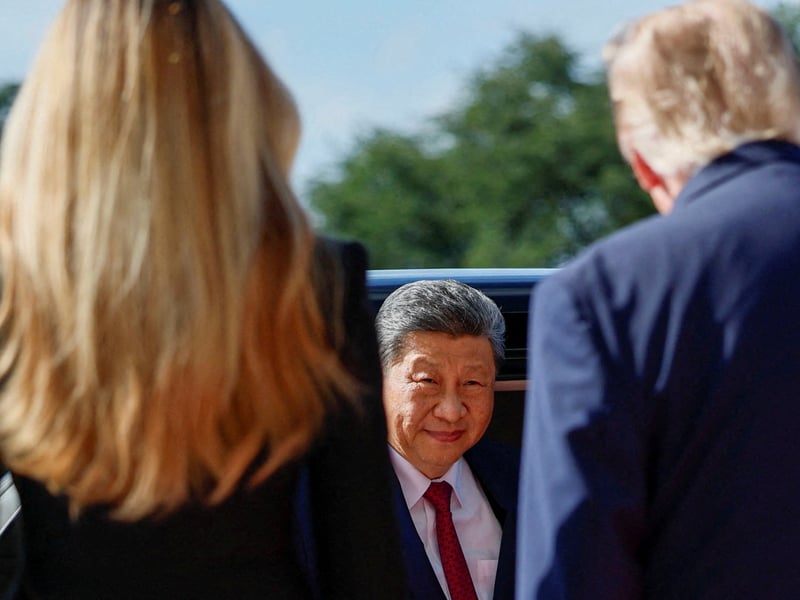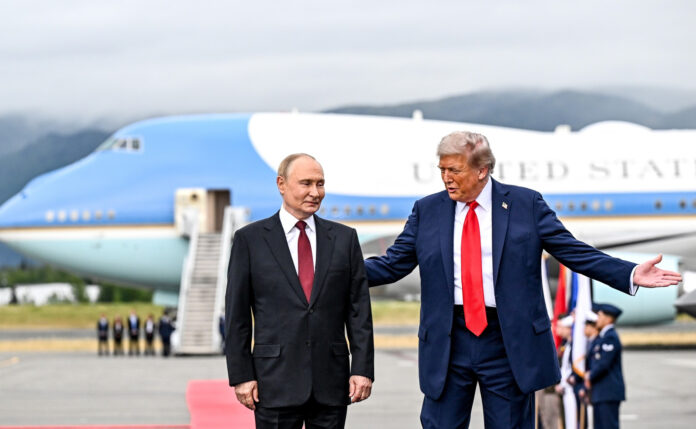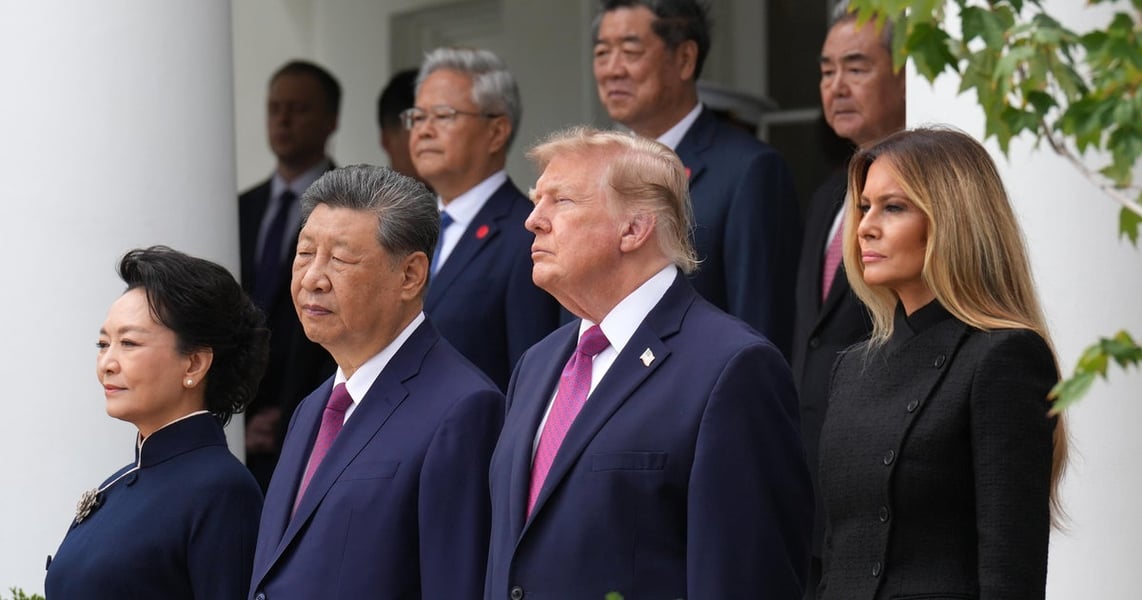

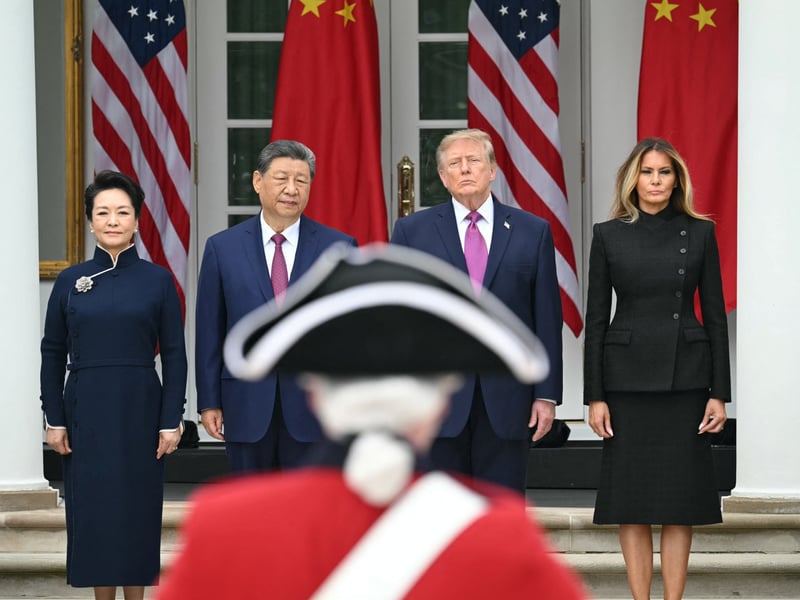
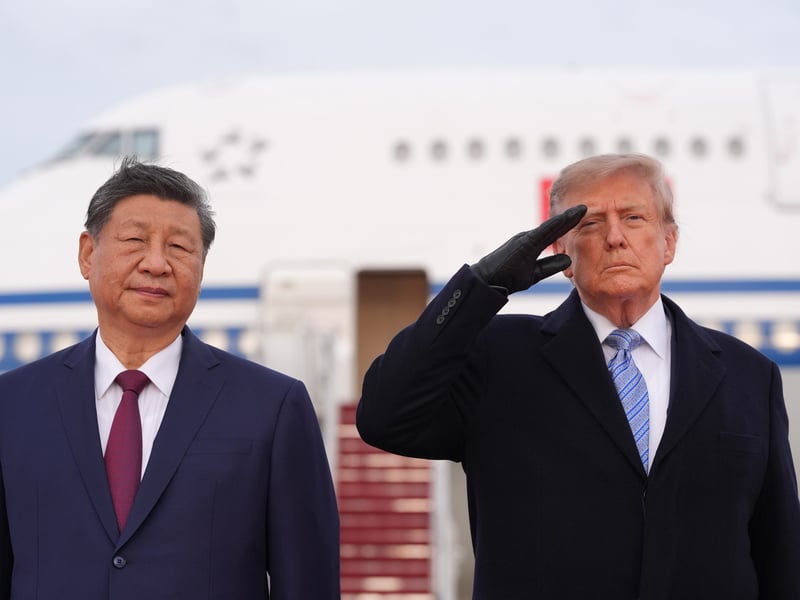
WASHINGTON – A B-2 stealth bomber flew low over the White House grounds Thursday morning, timed to greet a Chinese president who had not set foot in the United States in more than a decade. By nightfall the same grounds held a red carpet, a three-course state dinner built around what the White House called a “subtle Chinese influence,” and two leaders trading warm toasts in the East Room. What the day did not produce, by nearly every account of the three hours of formal talks that preceded it, was much of anything the two governments had not already settled by phone.
President Trump and President Xi Jinping struck noticeably different tones in their public remarks. Trump spoke of a “truly great friendship” between the two men. Xi was less personal and more pointed, telling reporters that “the interests of China and the United States are deeply intertwined” and that the two powers must avoid the “Thucydides trap,” the theory that a rising power and an established one are likely to end up at war. He also pressed Trump directly on market access, saying Beijing welcomed American investment and “hopes Chinese companies are treated fairly here in the United States.”
The closest thing to a deliverable came a day early. Treasury Secretary Scott Bessent said Wednesday night that Washington and Beijing had agreed to extend their one-year trade truce by two months, pushing the expiration from Nov. 10 to Jan. 10. It is the kind of incremental extension that has defined the relationship for a year: neither a breakthrough nor a collapse, just enough to keep tariffs from snapping back before the two sides can negotiate again.
Artificial intelligence occupied a large share of the two leaders’ public remarks, though their framing diverged sharply. Trump has taken to calling the technology “superintelligence,” a rebrand he has offered as national anxiety over AI’s dangers has grown, and has dismissed warnings of an AI-driven extinction risk as a “hoax.” Xi struck a more cautious note, saying any advanced system must remain “always under human control.” The gap echoes one that a bilateral AI safety framework negotiated by Bessent and Vice Premier He Lifeng was meant to narrow before the summit, with mixed results so far.
After the formal talks, Trump personally walked Xi past the site of the $200 million ballroom rising where the East Wing once stood, a project he has said was partly inspired by a grand hall in Beijing. Trump called the Chinese leader “an expert on stone, among many other things,” a line that drew as much attention as anything said inside the White House that day, and one that captured the tour’s real function: less diplomacy than a showcase of Trump’s own construction project for a visiting head of state.
None of it touched the question that mattered most to two American families watching from outside the White House gates. Relatives of Youlin Chen, a seismologist accused of spying while visiting relatives in Beijing in 2024, and U Min Zin, a political scientist arrested in June while attending a conference at the invitation of the Chinese government itself, have spent the week urging Trump to press Xi for their release. Neither name surfaced in the leaders’ public remarks, and it is not clear whether either was raised in private. Taiwan, the trade truce’s fine print, and the fate of the two detained Americans remain, for now, exactly where they were before the bomber flyover: unresolved, and overshadowed by the marble.