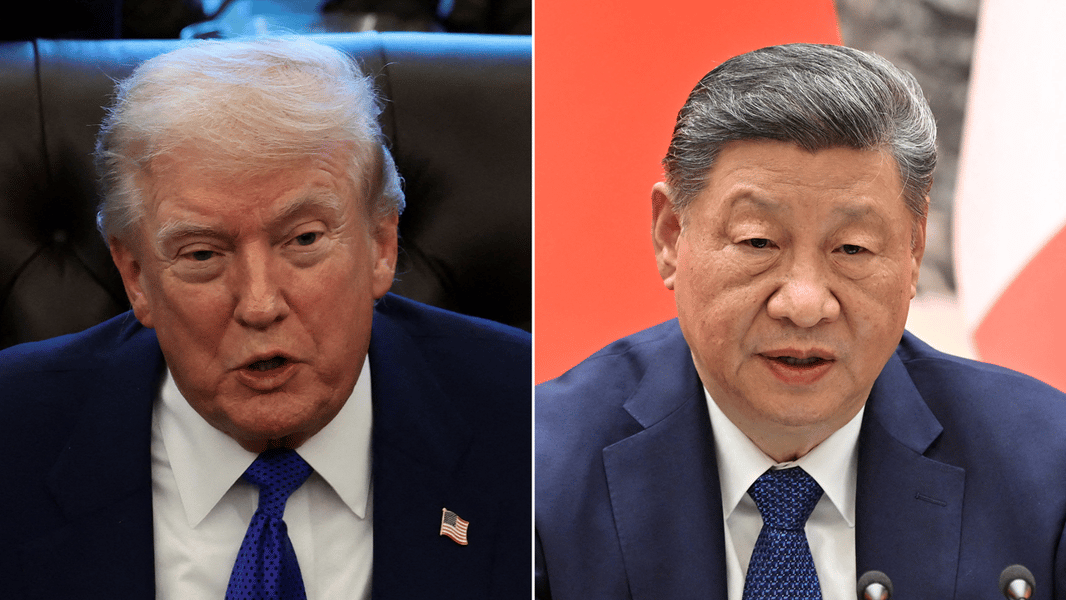

BEIJING — Donald Trump has positioned himself as a dealmaker who can manage both sides of any negotiation. China has decided to test that self-image at the least convenient moment possible.
Beijing has signaled it will cancel the September 24 White House summit between Xi Jinping and Trump if Washington approves a $14 billion arms package for Taiwan that Congress authorized in January but has not received presidential signature. The warning arrived this week through Chinese Foreign Ministry spokesman Guo Jiakun, who described Beijing’s opposition to the arms transfer as “consistent, clear-cut and resolute,” language calibrated to communicate that this is not an opening bid, TRT World reported.
The timing is deliberate. The summit, now less than two weeks away, has served as the anchor of Donald Trump’s foreign-policy calendar ahead of the November midterm elections. His administration has pointed to the prospect of a visit by Xi Jinping—expected to include a fentanyl-cooperation framework, preliminary trade terms, and the optics of a US-China relationship being managed rather than unraveling—as evidence that its approach to Beijing is producing results.
Cancellation would undercut that argument at the moment it is most politically useful.
The $14 billion package is not new. Congress approved it in January after a review of Taiwan policy accelerated in response to Xi’s remarks signalling impatience with Taiwan’s political trajectory. The package includes components for F-16 upgrades, ground-based air-defence platforms, anti-ship missiles, and enhanced surveillance infrastructure along Taiwan’s eastern coast.
Together, those systems are intended to raise the cost of any rapid Chinese military operation and preserve the deterrence architecture that has governed the Taiwan Strait since the 1990s.
Under the Taiwan Relations Act, the United States has a legal obligation to provide Taiwan with defensive arms. What remains a matter of presidential discretion is the timeline for approvals and delivery. Trump has not signed the package. He has also not rejected it. The silence has created exactly the kind of ambiguity that Beijing is now exploiting. It is not the first time Trump has faced this calculation: his administration froze a related Taiwan arms tranche in May under similar pressure, a decision that drew sharp criticism from lawmakers who argued it confirmed the pattern critics had long warned about.
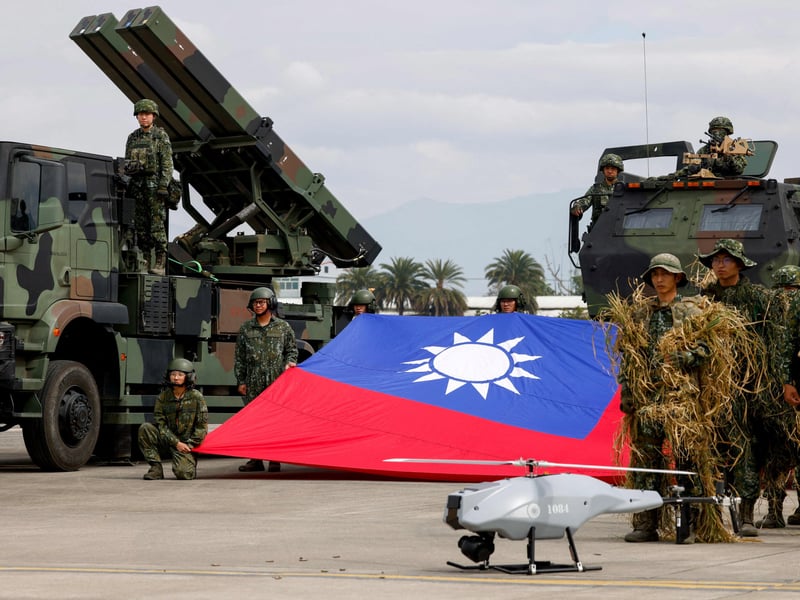
Several congressional Republicans, including senior members of the Taiwan Caucus, have in recent weeks pressed the White House to sign. Their concern is not only strategic. Every month that passes without signature allows Beijing to characterize the delay as a response to Chinese pressure, a reading that, if confirmed, would make future Taiwan arms agreements harder to execute. The argument that Trump views Taiwan as a bargaining chip rather than a security commitment, one critics have pressed since his first term, gains evidence with every delay. Taiwan’s government has declined to comment publicly on Beijing’s latest statements, a restraint from a government with strong reasons to respond loudly that communicates its own anxiety.
The private channel between Washington and Beijing remains opaque. Whether Trump has communicated to Xi, through the back-channels that accompany every exchange of this magnitude, that he will hold the package past the summit date is not publicly known. The Chinese Foreign Ministry’s decision to deliver its warning through a public daily briefing rather than formal diplomatic communication appears designed to force the issue into the open, where quiet management is less available.
China has used this instrument before. Summit cancellations, recalled ambassadors, suspended military-to-military communications: Beijing has refined the toolkit for diplomatic downgrade across decades of managing this relationship and understands that the costs land harder on the American side. The May Beijing summit, which Trump described publicly as a breakthrough, was preceded by a series of quiet accommodations that were never detailed on the record by either side. Beijing has also been consolidating its regional economic relationships in parallel, narrowing the leverage that US-China trade dependency once provided as an implicit stabilizer.
What the coming days will reveal is whether the summit format, the photograph, the joint statement, the claim of productive engagement, has value sufficient to justify the signal that holding the arms package would send to Taiwan, to Japan, to South Korea, and to every other government watching how Washington manages its stated commitments when they become diplomatically inconvenient. Taiwan’s own political position has hardened over the past year, narrowing the space for the kind of face-saving ambiguity that the Taiwan Strait relationship has historically relied upon.
The September 24 date has not been cancelled. The arms package has not been signed. In the space between those two facts, with less than two weeks remaining, the contours of how this administration handles its Taiwan commitment are being settled, not at a press conference, and not with Taiwan at the table.