
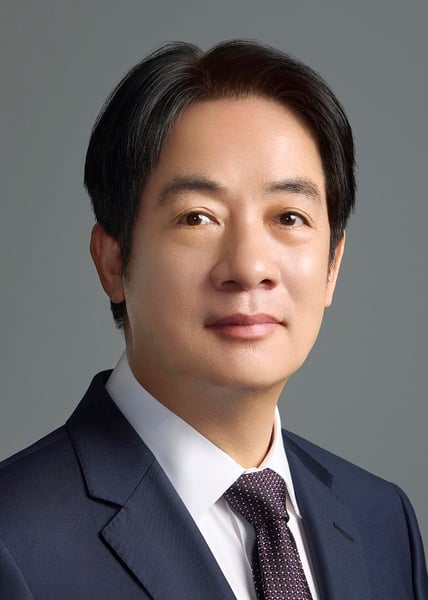
TAIPEI – At the Democratic Progressive Party’s annual convention on Sunday, Taiwan’s President Lai Ching-te told delegates that no external force, and no political accommodation, would be permitted to transform their island into “China’s Taiwan.” The declaration came with Washington simultaneously warning Taipei against any formal move toward independence.
“We must work together to protect our democratic and free way of life, and absolutely never allow ‘democratic Taiwan’ to turn back and become ‘China’s Taiwan,'” Lai said at the convention, his most explicit public articulation yet of where he considers the line to lie between political realism and democratic identity.
Taiwan is already an independent country, Lai reiterated, whose constitutional name is the Republic of China and which is “not subordinate to the People’s Republic of China.” He called on DPP members to “jointly oppose the threat posed by China’s ‘red terror’ to Taiwanese society,” language intended less as a military warning than as a domestic frame against what his government describes as Chinese political infiltration and information operations.
The speech arrived at a complicated moment in the cross-strait equation. In early July, Chinese President Xi Jinping used the Chinese Communist Party’s 105th anniversary to declare Taiwan’s reunification “unshakeable,” receiving congratulations from Kim Jong Un and leaders of the Global South at a ceremony in Beijing. That declaration carried no specific timeline or threat, but left little doubt about Beijing’s stated political trajectory.
Trump’s posture has created a second layer of pressure on Taipei. During his May summit in Beijing, the US president acknowledged discussing Taiwan with Xi Jinping and said a decision on future military support for the island would come “soon,” a statement that caused alarm in Taipei and sharpened fears that Washington was trading Taiwan’s security for trade and technology concessions from China. Trump has since warned Taiwan against formally declaring independence, a position that aligns more closely with Beijing’s red line than with Taipei’s sense of its own sovereignty.
Earlier this year, Trump put a $12 billion Taiwan weapons deal on hold following his Beijing summit with Xi Jinping, injecting new uncertainty into one of the most consequential flashpoints in US-China relations. The freeze, since partially lifted, confirmed what Taipei had long feared: that Washington’s commitment to Taiwan’s defense is conditional on the state of US-China relations at any given moment.
Lai’s “red terror” framing was notable. The phrase is historically associated with political repression under Nationalist rule after 1945, a defining wound in Taiwan’s collective memory. Applying it to China’s contemporary influence operations, including disinformation campaigns, economic pressure on Taiwanese businesses, and attempts to fracture the DPP’s base, is intended to place the current threat within that earlier existential register.
What Lai did not do at Sunday’s convention was make any formal declaration of independence in the legal or diplomatic sense. Taiwan’s constitution already defines the Republic of China as a sovereign state; Lai has consistently argued that a unilateral independence declaration would be redundant given that sovereignty already exists. His rhetoric pushes at the edges of what Washington considers acceptable without technically crossing the line Trump has drawn.
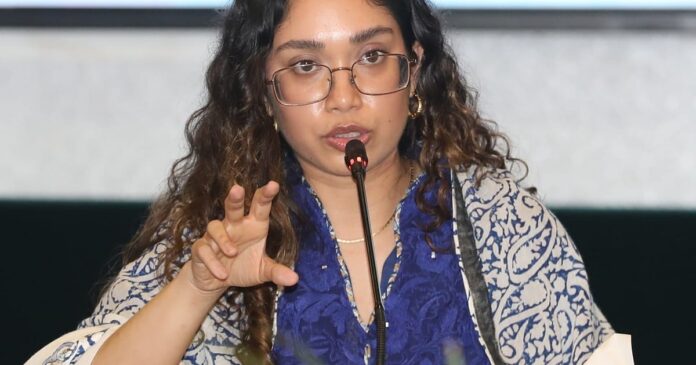
The DPP governs in a divided legislature where opposition parties, particularly the Kuomintang, which takes a softer line toward Beijing, have used procedural mechanisms to constrain the administration. Lai’s strong rhetoric is partly internal politics, aimed at his own base ahead of midterm local elections. Taiwan’s opposition leader Cheng Li-wun had earlier warned in Washington that Taiwan must not become a chess piece or bargaining chip in US-China negotiations, a framing Lai’s own party rejects as insufficiently assertive.
China’s Foreign Ministry typically responds to DPP convention speeches with formulaic condemnations of “independence provocateurs.” Beijing has declined to hold direct dialogue with Lai since his election in January 2024. The pattern has become predictable: a Lai speech, a Chinese protest, no change in the fundamental posture on either side, and the Taiwan Strait continuing to function as the world’s most consequential unresolved territorial dispute.
The European and democratic world’s preoccupation with other crises has left Taiwan somewhat isolated in framing its case to international audiences. The US-Iran war has dominated foreign policy bandwidth in Washington and allied capitals since February. China has not tested Taiwan’s defenses with military exercises since March. That relative quiet carries its own pressure: Taipei’s government has used the interval to consolidate domestic political cohesion, of which Sunday’s convention was one instrument.
What the DPP convention clarified is that Lai intends to hold his framing regardless of external pressure. The exact calibration of what that means, how much the “red terror” rhetoric will be matched by policy substance, and what Taiwan asks of Washington when Trump’s China policy crystallizes, remain the questions his Sunday speech did not answer.