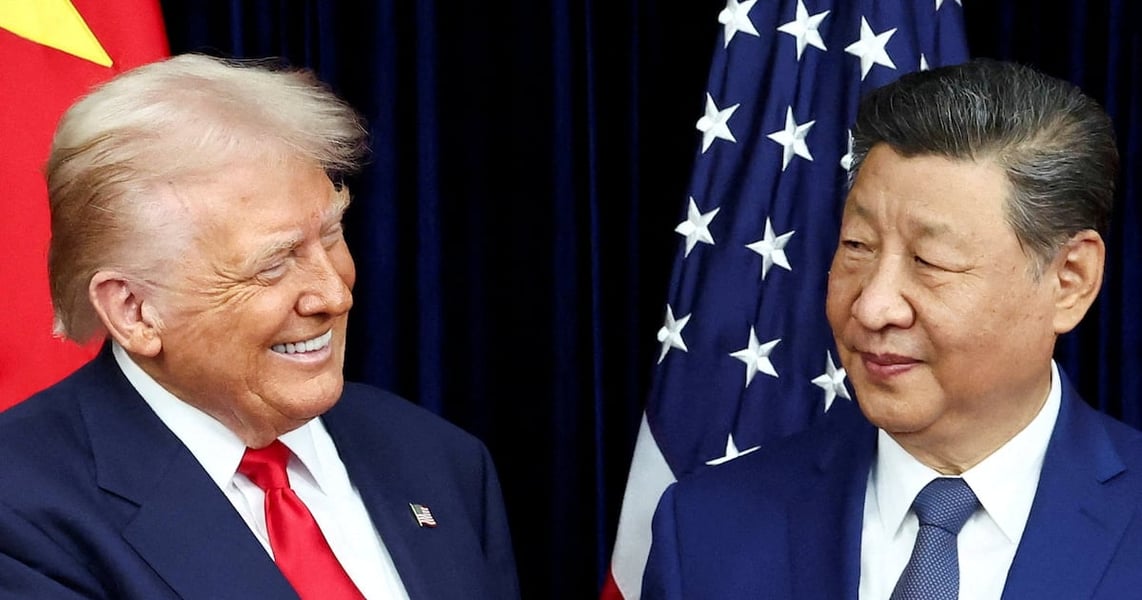

WASHINGTON — The fault line in Silicon Valley doesn’t run between incumbents and upstarts. It runs between the companies that will share a table at a White House state dinner on Thursday night.
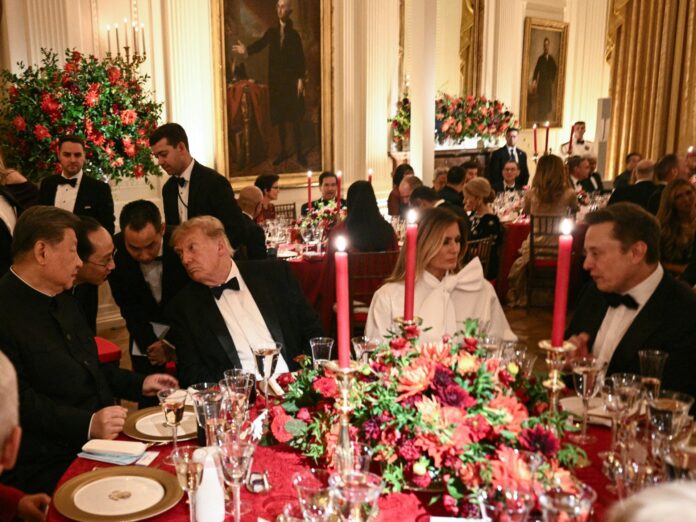
When Jensen Huang of Nvidia, Sam Altman of OpenAI, Tim Cook of Apple, and Elon Musk of Tesla take their seats alongside President Trump and Chinese President Xi Jinping at the East Room dinner on September 24, as The National confirmed, they will not be arriving as a unified bloc. Two months earlier, those same executives and their companies drew opposite conclusions about the single most consequential AI policy question of the year: whether the United States government should restrict access to Chinese open-weight AI models.
That divide, temporarily papered over by the invitation list, is exactly what the summit is meant to address. It is also precisely why Thursday almost certainly won’t resolve it.
The debate crystallized on July 24, when a coalition of 25 technology companies published a letter titled “Open Weights and American AI Leadership,” urging Washington not to crack down on open-weight models from Chinese developers. Nvidia, Microsoft, Meta, IBM, Palantir, Andreessen Horowitz, Hugging Face, Mozilla, and the Linux Foundation all signed. Jensen Huang made his first-ever post on X that same day to share the letter, writing that “the world needs both frontier closed models and frontier open models.” Three companies conspicuously absent from the list: OpenAI, Anthropic, and Google.
The timing was not accidental. A day earlier, the White House had accused Moonshot AI of distilling Anthropic’s Fable 5 model without authorization to build its latest frontier system, and the administration had floated sanctions and export-control blacklisting. The companies that signed the letter were, in effect, arguing that the correct response to suspected IP theft was not to restrict the models that resulted from it.
Sam Altman’s position was more ambiguous than his absence from the list implied. He quoted Huang’s post and wrote that he wanted the United States to win in AI “both in open source and proprietary models,” supportive language that nonetheless stopped short of his company endorsing the coalition’s core demand.

At Salesforce’s Dreamforce conference, Nvidia chief executive Jensen Huang openly rejected calls for an industry-wide pause in AI development. While Dario Amodei and Sam Altman had recently backed proposals for slowing the frontier, Huang told the San Francisco audience: “Run as fast as you can.”
He also argued that AI safety should be treated primarily as an engineering challenge rather than a legislative one. The three executives are now expected to attend the same dinner, despite their sharply different views.
President Trump has reduced the broader technology debate to the slogan, “Whoever wins AI wins.” His administration argues that slowing U.S. development could give China an advantage—a legitimate strategic concern, but one that does not answer what “winning” means, what it costs, or who should establish the rules.
What that framing misses is the parallel infrastructure China is already building. When Xi spoke at the BRICS Summit in New Delhi this month, he proposed an AI open-source community for member nations, offering DeepSeek and Qwen-based tools to the Global South at no cost. The pitch required no American consensus: frontier AI access with no usage restrictions, distributed to more than a hundred countries while Washington debated what to do about it.
NPR reported ahead of the summit that defining global leadership in AI is expected to dominate the Thursday agenda, even as Chinese open-weight models have already established a foothold across the Global South with no American guardrails attached.
That distribution reality is part of what makes Thursday’s state dinner something less than a negotiating session. Huang is attending as the executive whose company manufactures the chips that train Chinese frontier models, who signed a letter opposing restrictions on those models’ distribution, and who has argued that the AI safety debate is being used to protect incumbent business models. Altman is attending as the executive whose company’s models may have been distilled without authorization to produce Chinese competitors, and who has nonetheless said he wants the United States to lead in both open-source and proprietary AI.
Xi’s BRICS proposal is, in structural terms, already an answer to the question Silicon Valley has not yet answered for itself. An ecosystem of open models distributed freely to developing nations does not require American corporate consensus. It requires only that the models work, and that question was settled decisively by the summer’s succession of Chinese frontier releases.
The dinner will be cordial. The seating chart is confirmed. The policy question that will sit at the table on Thursday has no answer that can be arrived at before the dessert course, and every company in that room knows it.