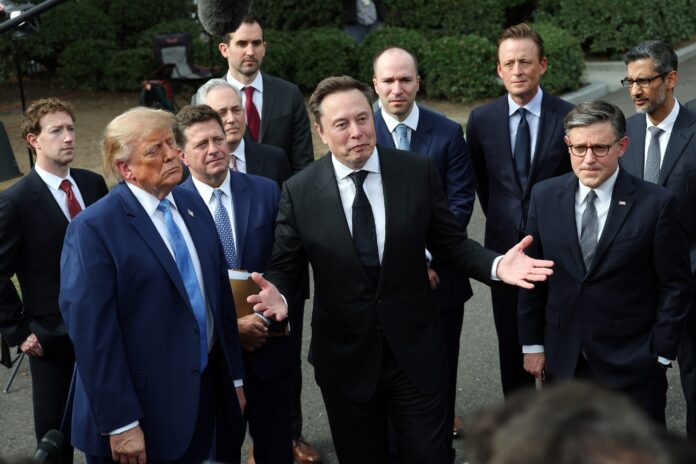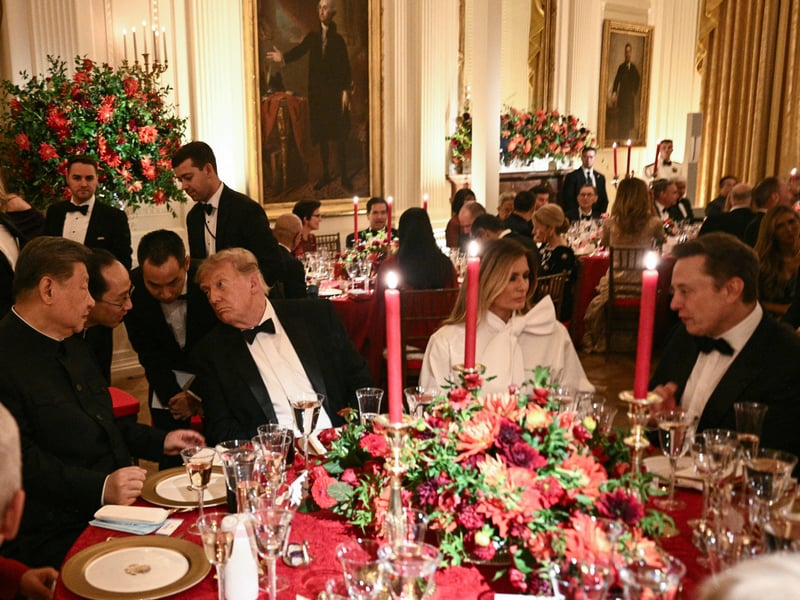

WASHINGTON – Donald Trump and Xi Jinping spent part of a three-day Trump-Xi summit talking about artificial intelligence and walked away having agreed on exactly one thing: neither wants anyone telling their AI companies what to do.
“Super Intelligence (SI) will be a big topic of discussion, but I want to leave it exactly where it is,” Trump wrote before the meeting, adding, “that is China’s position also.” It was a strange way to describe the outcome of a summit built around the fastest-moving technology race on the planet: not a framework, not a safety pact, not even a joint statement on AI, but a president declaring in advance that the two governments had already agreed not to regulate. Trump later called the overall talks “very productive,” according to Al Jazeera, though the specifics he offered stopped well short of anything resembling an AI framework.
The official deliverables were thin. Treasury Secretary Scott Bessent said the two sides discussed a notification system so each government could warn the other about AI incidents serious enough to raise national security concerns, an idea first floated before the summit as an “AI hotline,” reported by Al Jazeera in the run-up to the meeting. China’s government confirmed the first formal AI talks with Washington had taken place. Xi, notably, never adopted Trump’s rebrand of artificial intelligence as “super intelligence,” telling his counterpart instead that the relationship should be “a race of catching up with one another, not a wrestle in which one either wins or loses.” Beyond that, there was no deal.

That absence of a deal is the story, not a footnote to it. Western analysts generally put American frontier models something like six months ahead of China’s best systems, a gap driven almost entirely by one input: access to Nvidia’s most advanced chips. Washington has spent three administrations tightening export controls, and Beijing has spent that same stretch building workarounds, from renting foreign data-center access to standing up its own chip industry through Huawei and, more recently, Alibaba’s homegrown Zhenwu V900.

But the six-month figure measures the wrong thing if the real contest is now about infrastructure rather than model quality. China’s leading labs, including DeepSeek and Alibaba’s Qwen, have made their most capable systems open source, letting developers everywhere build on Chinese code for free. Xi has pitched an open-source AI community to the BRICS bloc directly as an alternative to American platforms. If the best freely available models keep coming out of Beijing, the compute gap starts to matter less than which country’s software the rest of the world builds its own AI on top of.
The other constraint nobody in Washington fixed this week is electricity. American AI companies are running into a wall the chips cannot solve: the grid. OpenAI’s own data-center buildout in Georgia has already strained local power capacity enough to draw complaints from residents, and US firms are increasingly bolting gas turbines directly onto data centers because utilities cannot deliver enough power fast enough. China has spent a decade rebuilding its grid for exactly this kind of industrial demand. A chip advantage that cannot be powered is not much of an advantage.
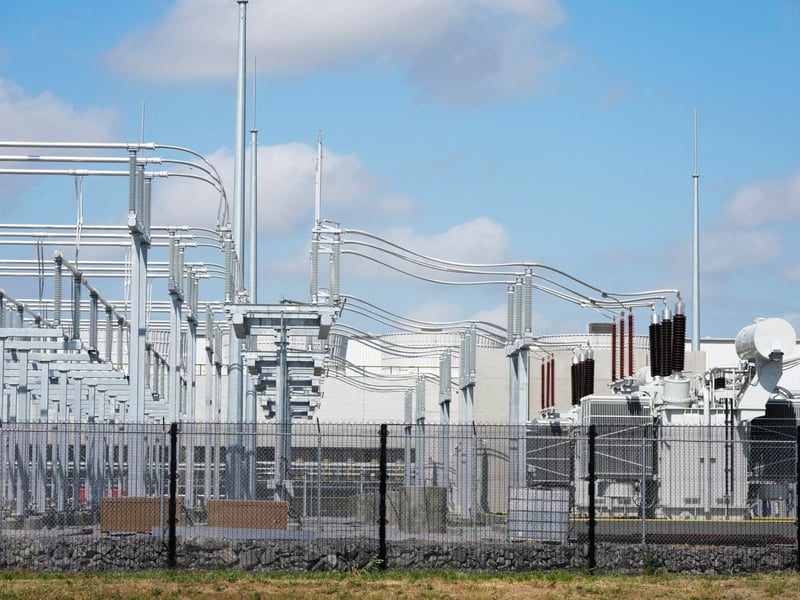
Washington also has a domestic problem Beijing does not have to manage: its own public. A Pew Research Center poll this month found 60 percent of Americans uncomfortable with a new data center opening near them, and AI has become enough of a liability that it is surfacing as a midterm election issue, with lawmakers from both parties now pitching regulation Trump has dismissed as a “hoax.” Some of the technology’s own architects have warned of catastrophic risk even as Washington and Beijing decline to slow down, Al Jazeera reported. Chinese polling, however unreliable it may be, consistently shows the opposite: a KPMG survey of 47 countries last year found 69 percent of Chinese respondents said AI’s benefits outweighed its risks, compared with 35 percent of Americans. A government racing to build AI infrastructure without a skeptical electorate to manage has one fewer obstacle than one that does.
None of this resolves in China’s favor by default. The United States still controls the chips that make frontier models possible, and Chinese companies like Moonshot say chip shortages remain their single biggest constraint even with Huawei’s help. What the summit actually clarified is that Washington and Beijing have converged on a shared interest in keeping the race unregulated internationally, even as they diverge sharply on how to run it domestically, open versus closed, tight compute versus abundant power, a jumpy public versus an indifferent one. Whether that convergence produces the “healthy competition” Xi described, or something closer to two systems racing past every guardrail either country might have built, is a question this week’s summit answered by declining to ask it.