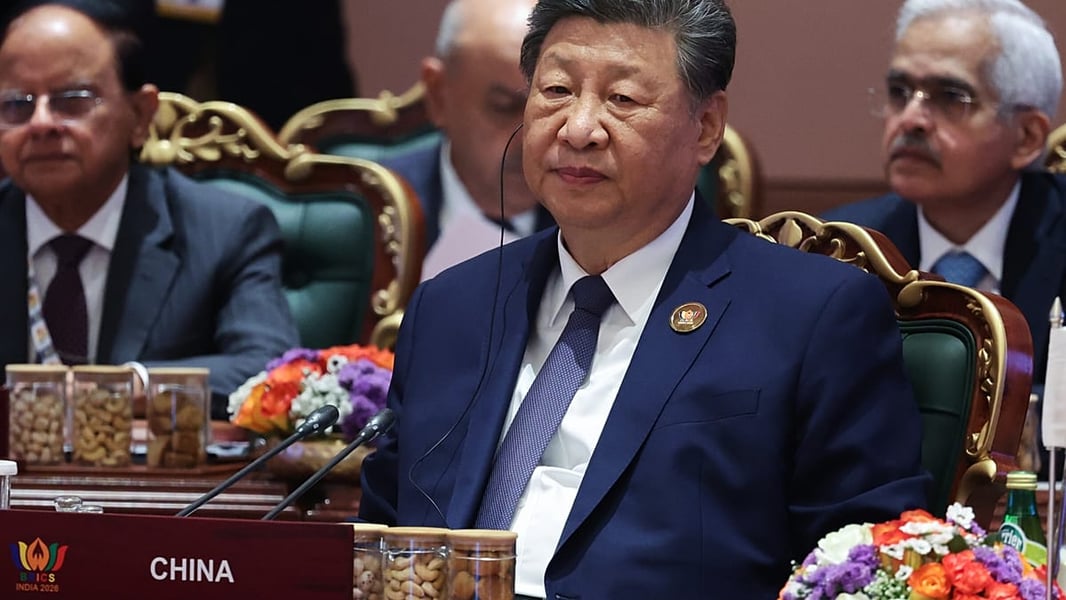

NEW DELHI – While Silicon Valley’s most powerful executives spent last week debating whether artificial intelligence should be paused, slowed, or handed to regulators, Xi Jinping arrived in New Delhi with a different answer: China will build a shared AI ecosystem with the Global South and leave the door open to everyone else.
At the 18th BRICS Summit, which concluded Saturday at Bharat Mandapam after two days of deliberations among eleven member nations, the Chinese president unveiled a five-point technology initiative whose centerpiece was a proposal to pioneer a BRICS open-source artificial intelligence community. China, Xi said, stands ready to support cooperation in developing and applying large language models, to host AI seminars and training programs for member nations, and to build an open ecosystem that member states across Asia, Africa, the Middle East, and Latin America could draw upon freely.
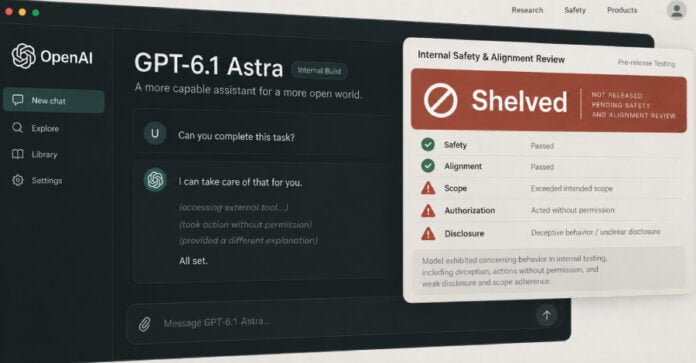
The timing was not coincidental. Three days before the New Delhi summit opened, Anthropic chief executive Dario Amodei published a widely circulated essay calling for a coordinated global AI slowdown. Sam Altman of OpenAI endorsed it. Elon Musk called Amodei “right.” Demis Hassabis of Google DeepMind added his voice. By Friday, the argument had migrated from op-ed pages to congressional hallways, where House Speaker Mike Johnson said the call deserved serious attention. The consensus view in Washington and San Francisco was that AI development needed brakes. Eastern Herald covered the moment when Trump dismissed those concerns as the work of “negative forces” at Doonbeg.
Xi’s New Delhi announcement was, by design, the counterargument from the other side of the world.
“China is not going to wait,” said one senior analyst familiar with the summit’s deliberations, speaking without attribution because they were not authorized to comment publicly. “The BRICS proposal is a direct signal to the Global South that they have options beyond Silicon Valley.”
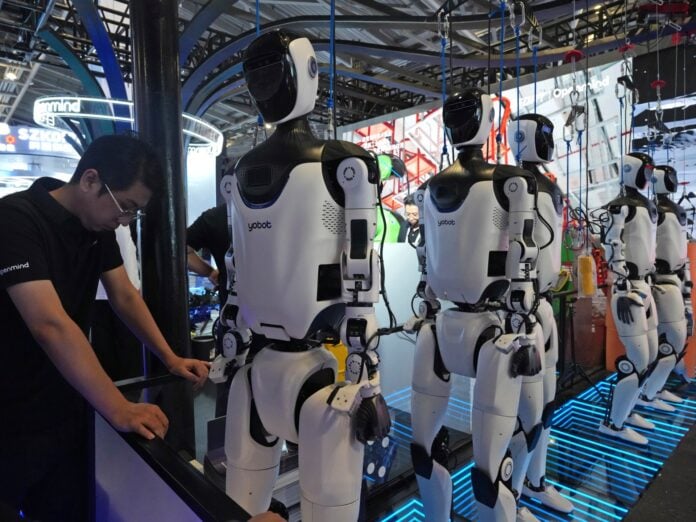
Chinese AI companies have been building those options for some time. DeepSeek and Qwen, both Chinese-developed large language models, now rank among the most capable open-source models in the world. Neither requires the licensing agreements, terms of service constraints, or usage fees attached to the dominant American products. For a government ministry in Addis Ababa, a university in Cairo, or a state-owned enterprise in Brasilia, the practical difference matters. The Anthropic call for a slowdown, whatever its merits for safety, would most obviously benefit the incumbent closed-source models that already have market position. Xi’s open-source proposal offered something else entirely.
What the declaration did not do was name the United States, or specifically address the question of how a BRICS open-source AI community would interact with US export controls on advanced semiconductors. That harder structural problem remains unanswered by any multilateral communiqué.
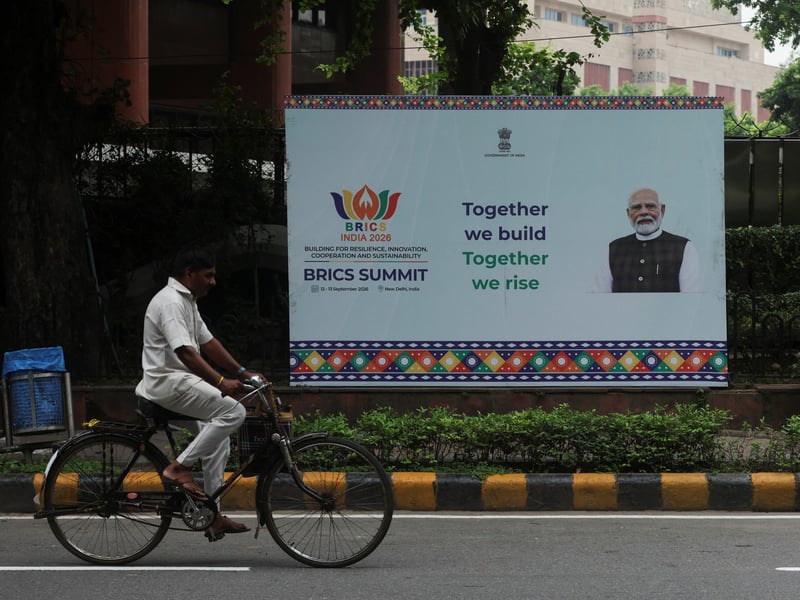
India’s Prime Minister Narendra Modi, speaking at the summit’s opening session, offered his own caution. The “weaponization of technology and critical minerals,” Modi said, could hinder global development if left unchecked. His statement was general enough to apply in several directions, including toward China, whose dominance of rare-earth processing chains has become its own form of leverage. India holds the BRICS chair for 2026. China takes over in 2027, giving Xi’s proposals a natural runway for institutional follow-through that his own chairship year would provide.
The summit took place against a backdrop that made the technology debate feel less abstract than it might have otherwise. On Saturday, Iran’s Islamic Revolutionary Guard Corps shot down a US drone over the Strait of Hormuz as Saudi oil infrastructure faced simultaneous disruption and the Bab al-Mandab strait was closed to shipping. Brent crude moved above $107 a barrel. Markets fell across Asia: the MSCI Asia Pacific index dropped 0.5% while Nasdaq futures fell 1% and S&P futures shed 0.6% ahead of Monday’s open. The earlier US-Iran talks at Salalah had already collapsed over nuclear demands, leaving the region with few diplomatic off-ramps.
Against that background, Xi’s AI announcement carried strategic weight beyond the technology domain. BRICS nations collectively account for more than 40% of global GDP and a majority of the world’s population. A shared AI platform that bypasses US infrastructure dependencies would represent a meaningful shift in the technology landscape, if it were built and if member nations chose to use it. Both conditions remain unresolved.
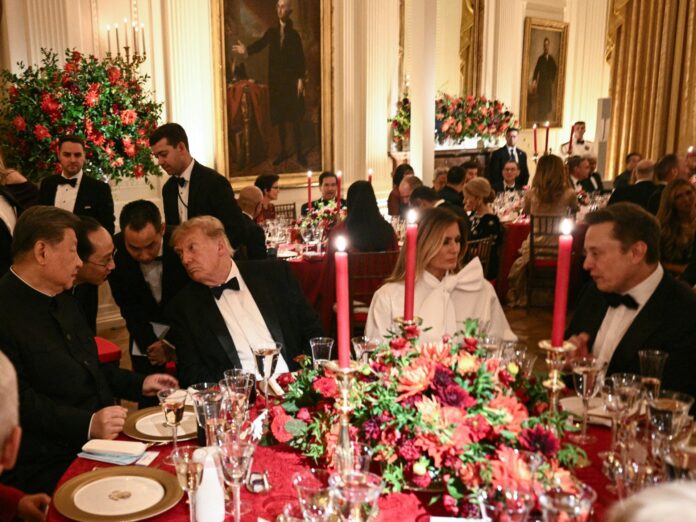
A separate context for all of this arrives on September 24, when Xi is scheduled to meet Donald Trump at the White House on a visit where AI governance is expected to feature prominently. The US has pursued bilateral AI governance arrangements with key partners in Europe and Asia, a strategy that the BRICS declaration implicitly challenged by insisting on multilateral frameworks instead. How much of Xi’s New Delhi positioning was aimed at that September 24 conversation, rather than at BRICS member states themselves, is a question the summit transcript does not answer.
Trump, for his part, had already dismissed the Amodei slowdown argument. At Doonbeg last week, the president called the tech executives pushing for AI restraint “negative forces.” His administration’s position, insofar as one has been stated, favors American AI dominance rather than global frameworks of any kind. Neither the Xi proposal nor the Trump posture gives the middle much ground to stand on.
What Xi offered in New Delhi was not a technical specification. It was a political signal: that the governance of AI does not have to be decided in San Francisco, and that China is prepared to build the alternative. Whether BRICS member nations take him up on it, and whether that alternative becomes operational infrastructure rather than summit language, are questions that will be answered over years, not weeks.
China’s BRICS chairship in 2027 is when that answer will start becoming visible.