
Here’s a strict context-preserving rewrite. I’ve only tightened the prose and rhythm, without changing the facts, chronology, attribution, quotes, or meaning.
MUSCAT – When Oman’s Foreign Minister Badr Albusaidi posted two sentences on X on Sunday evening, the phrase he used — “in the interests of consensus” — was diplomatic language for a breakdown.
The meeting his country had spent weeks arranging, a gathering of Iranian and Gulf Arab officials in the port city of Salalah to draft a plan for reopening the Strait of Hormuz, was off. No new date was offered.
The proximate reason was a quiet piece of news that preceded Albusaidi’s announcement by about an hour: a United States official had told Gulf state representatives, in private conversations, that Washington has no interest in the Hormuz track.
“We don’t want to talk about the strait,” the official said, according to three sources familiar with the matter. “We will only talk to you if you want to talk about the nuclear file.”
That single position, relayed through backchannels to the Gulf capitals whose mediating efforts had made the Salalah meeting possible, was enough to collapse the talks before they started.
Tehran’s condition for entering any nuclear discussion is the lifting of the American naval blockade. Washington’s condition for entering any discussion at all is that the nuclear file comes first. Neither side is prepared to go second, and Oman — which has spent the better part of seven months trying to bridge that gap — was left announcing a postponement with no timeline and a polite expression of continued commitment to dialogue.
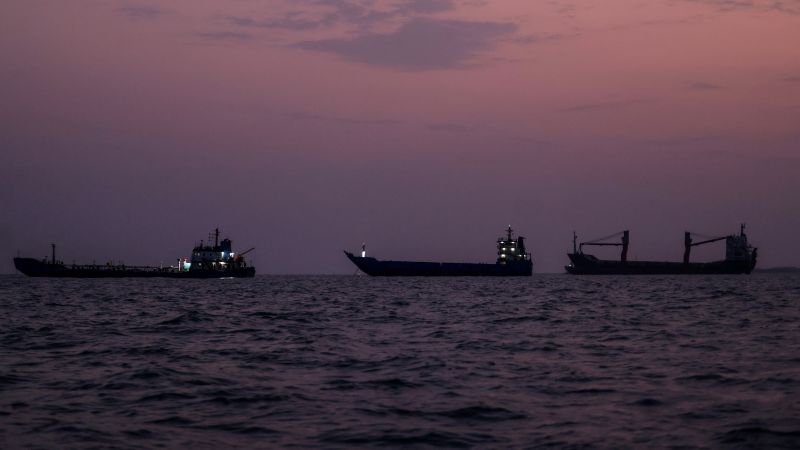
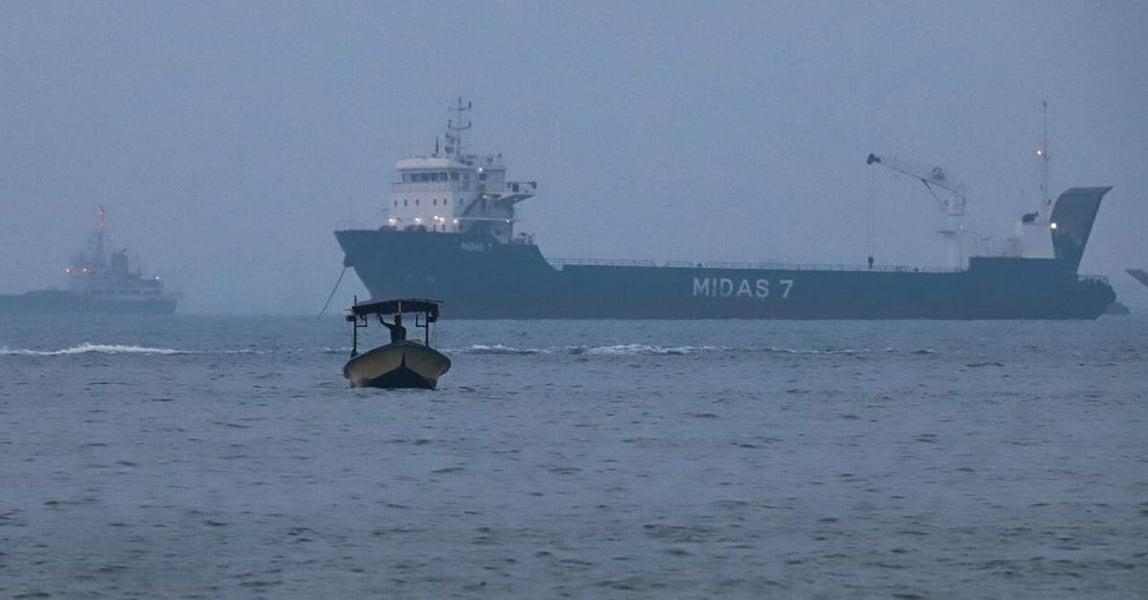
The standstill inside the Strait reflects the standstill in the negotiations. Roughly 130 vessels crossed the Hormuz chokepoint every day before the war began on February 28, carrying approximately a quarter of the world’s seaborne oil and a fifth of its liquefied natural gas. The most recent five-day average for transits stands at 12. On one day last week, three ships passed through, according to Iran International’s live coverage of the shipping crisis. Hundreds of vessels and the sailors aboard them remain effectively trapped, waiting out an impasse that neither Washington nor Tehran has shown a readiness to resolve on the other’s terms.
The Trump administration’s pivot toward the nuclear file is not a new posture, but Sunday’s messaging represented its sharpest public expression. A US official said bluntly that “Iran does not control the Strait of Hormuz and never will” – a statement of maximalist intent roughly one hour before the Omani foreign minister announced the Salalah meeting had been postponed. The sequence – American declaration, then Omani announcement – compressed into a single Sunday evening the question that has dogged every attempt at de-escalation since the ceasefire in April: whether Washington’s goal is to reopen the strait or to use the strait’s closure as leverage for a larger nuclear settlement.
Tehran’s answer to that question has been consistent. Iran has signaled since the ceasefire that it would be prepared to open the Hormuz file to negotiation, but not while the US naval blockade remains in place and not as a precondition for nuclear talks. The sequencing matters to Iran because the two issues carry different weight: the blockade is an immediate economic and humanitarian crisis, while the nuclear file is a long-term strategic negotiation with no guaranteed endpoint. Accepting the American framing would mean relieving the most acute pressure on Iran in exchange for entering an open-ended process with an adversary that launched airstrikes on its territory six months ago.
Among the Gulf states caught between Washington and Tehran, Saudi Arabia’s position has been particularly strained. Riyadh helped broker the early ceasefire framework and has consistently urged a negotiated resolution, even as it faces pressure from Washington over what American officials have characterized as insufficient support for the nuclear approach. The dynamics were explored in an Eastern Herald analysis of the Saudi-Trump rift over the war’s direction; they have not improved since.
The nuclear dimension itself remains unresolved in ways that go beyond the question of sequencing. Iran’s hardest nuclear infrastructure was not touched in the February strikes. As reporting from July showed, the fortified tunnel complex near Natanz that IAEA inspectors have never accessed remained intact after the strikes – a fact that complicates any American claim that the military campaign degraded the nuclear program sufficiently to justify shifting the negotiating focus there now.
What Sunday’s collapse in Salalah reveals is not a breakdown in talks that were close to success. It reveals a fundamental divergence in what each side believes the current moment is for. Oman designed the meeting as a practical exercise – a room where Iranian and Gulf Arab officials could agree on a specific, bounded mechanism for commercial shipping lanes, without requiring a nuclear framework to be resolved first. The United States, by telling Gulf representatives privately that it will not engage with the Hormuz track, effectively refused to let that bounded mechanism exist.
Whether the postponement is a tactical pause – a signal that the Salalah format needs to be redesigned, or that the Gulf states need more time to process the American position – or whether it marks the end of the Oman-mediated Hormuz track altogether is not yet clear. Albusaidi did not say when, or whether, the meeting would be rescheduled. The ships waiting in the Gulf are still waiting.