
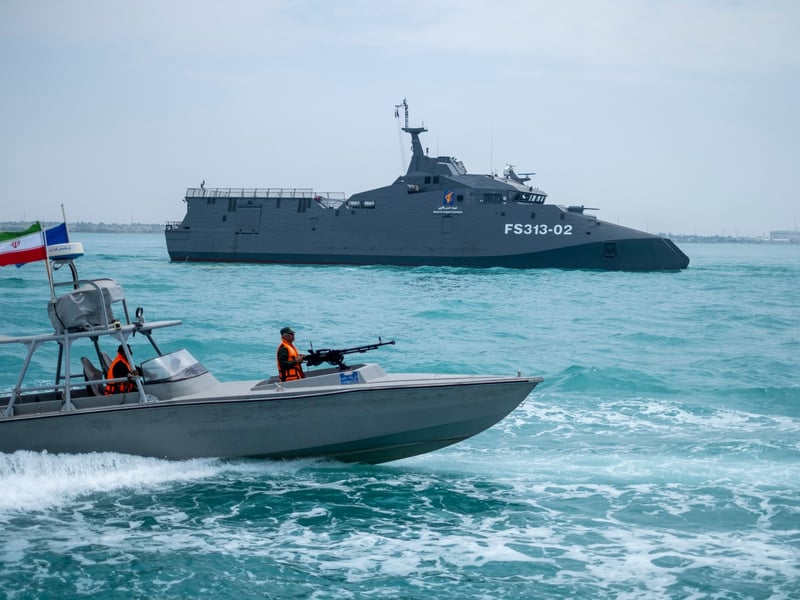
DUBAI — Governments importing oil from the Gulf are running out of alternatives. By Sunday night, Saudi Arabia’s East-West pipeline, a 1,200-kilometre inland conduit that had become the only major operational bypass to the Strait of Hormuz, lay shut after drone strikes ignited pumping stations along its route. Yemen’s Red Sea port of Mokha, the nearest port to the Bab al-Mandab strait, was in Houthi hands. And on Monday, Iran’s Islamic Revolutionary Guard Corps announced it had shot down an American surveillance drone over the strait itself.
The IRGC’s public relations division said its “new advanced aerospace defence system” intercepted and destroyed a US MQ-1 unmanned aerial vehicle, a reconnaissance platform manufactured by General Atomics and historically operated by the US Air Force and the CIA, TASS reported. The American military had not confirmed the loss. A verified intercept would signal that Iran is not only blocking the Strait of Hormuz to commercial shipping but actively contesting American air surveillance over its closure campaign, a significant escalation in a war now entering its seventh month.
The conflict began on February 28, when the United States and Israel launched strikes on Iranian military targets under the code name Operation Epic Fury. Within 48 hours, the strait was effectively closed: shipping giants Maersk, MSC, CMA CGM, and Hapag-Lloyd all suspended transits, and more than 150 tankers anchored outside the waterway rather than risk attack. A ceasefire held briefly in April and June before breaking down in July, when Iranian forces resumed targeting commercial vessels the Revolutionary Guard deemed noncompliant with Iranian demands. Talks aimed at reopening the waterway collapsed last week after Washington insisted on tying any agreement to Iran’s nuclear programme, a precondition Tehran has repeatedly rejected as a change of subject rather than a path to resolution.
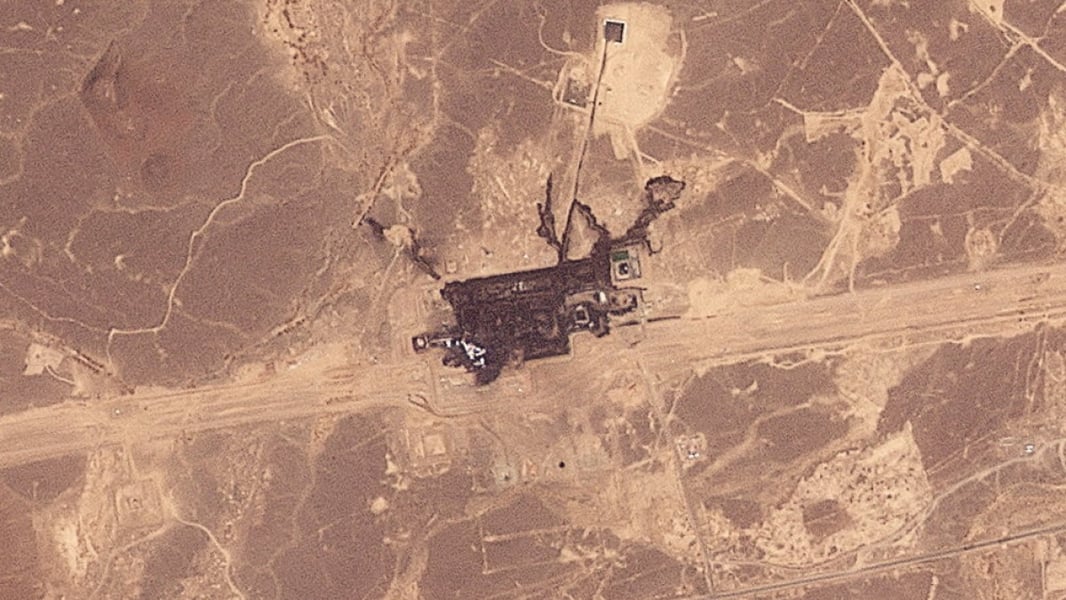
Saudi Arabia responded to the Hormuz closure by rerouting its Gulf crude through the East-West pipeline, pushing an estimated five million barrels per day inland to the Red Sea port of Yanbu rather than through the strait. The pipeline was designed partly for exactly this purpose. On the night of September 10-11, it stopped working. Drones launched from Maysan province in southeastern Iraq, a region near the Iranian border where Iran-aligned militias have long operated, struck pumping stations along the route. Satellite imagery confirmed fires at stations near Al Mesba’ah and Al Dhekla, according to Al Jazeera. Saudi Arabia shut the pipeline as a precautionary measure. Iraq’s prime minister dismissed the military commander responsible for operations in the province, and Saudi authorities said they had chosen not to retaliate at Baghdad’s request, though the kingdom reserves the right to “take all necessary measures.” No group has claimed responsibility.
The Houthi capture of Mokha, also on September 11, was the second prong of what analysts described as a coordinated squeeze. Mokha sits roughly 75 kilometres north of the Bab al-Mandab strait, through which an estimated 12 percent of the world’s seaborne oil historically moved before the war disrupted Gulf shipping patterns. The group also advanced to Yemen’s Perim Island. Combined with their existing position along the Red Sea coast, the Houthis now control the approaches to both sides of the southern strait.
For major oil importers such as India, South Korea, Japan, and China, the arithmetic has become stark: the strait is blocked, the pipeline bypass is unavailable, and the southern Red Sea route is under Houthi control. Spot prices do not yet reflect the full consequences of a prolonged simultaneous closure of all three routes because markets are still pricing in the possibility of a negotiated reopening.
That possibility narrowed substantially this week.
The Federal Reserve is due to meet on Tuesday, September 16. Bond markets are assigning roughly a 90 percent probability to a rate increase that would lift the benchmark US interest rate to 4 percent. Oil prices at or above $100 complicate that decision by raising industrial input costs and threatening to keep headline inflation elevated even as core inflation moderates.
The central bank has limited leverage over a supply shock of this kind. It can raise interest rates; it cannot reopen a strait.
The diplomatic hardening continued Sunday, when Austrian authorities barred Iran’s nuclear chief from attending the International Atomic Energy Agency’s annual conference in Vienna, after Washington blocked the sanctions waiver that would have allowed his entry. The move reflected the same logic Washington has applied to the Hormuz talks: making Iran’s international engagement contingent on nuclear cooperation. Tehran has consistently treated the two tracks as entirely separate, and nothing in Sunday’s sequence suggested that position was changing.
What the reporting cannot establish is whether the September 10-11 pipeline strikes were directed by Iranian command or represent independent initiative from groups whose interests align with Tehran but whose decisions are not always centrally controlled. The Iraqi government’s swift dismissal of its local commander suggests embarrassment more than admission. Saudi Arabia’s restraint may reflect a calculation that the conflict is primarily American-owned, not theirs to escalate. On the question of who ordered the drone campaign against the pipeline, there is no confirmed answer, and the US has not confirmed losing an aircraft over the strait.