
VIENNA – Mohammad Eslami had already left Tehran when Austria decided he was not welcome.
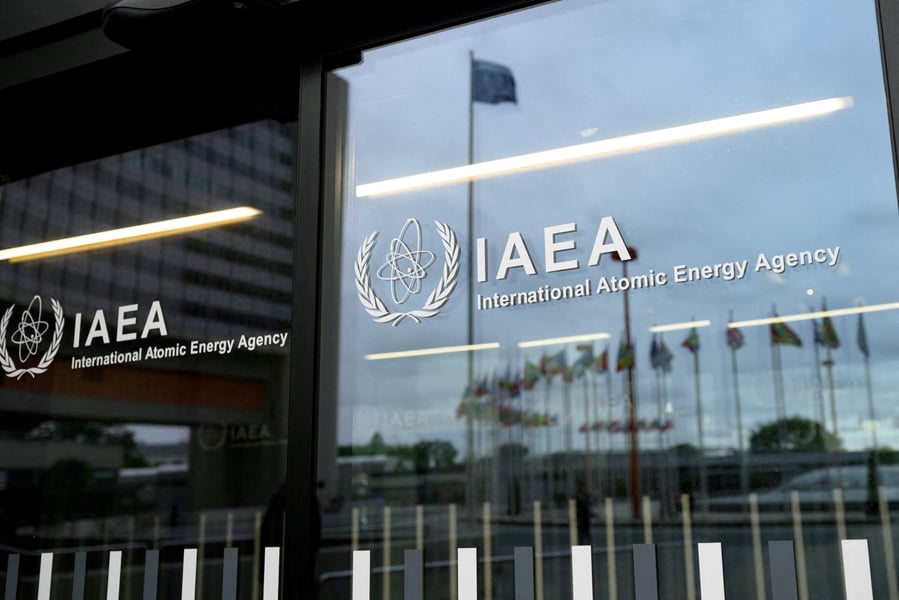
Iran’s vice president for nuclear affairs and the head of the country’s Atomic Energy Organization was in transit to Vienna for the International Atomic Energy Agency’s annual General Conference when Austria denied him entry, according to a report Saturday by Iran’s state news agency IRNA. The denial ended more than four years of uninterrupted Iranian participation at the agency’s highest-profile annual gathering – a streak that survived the 2015 nuclear deal’s collapse, the Abraham Accords, and three US administrations.
What it did not survive was American pressure applied directly to Austria in the days before Eslami’s flight. The United States urged Vienna not to seek a UN sanctions waiver that would have allowed Eslami to travel despite a travel ban reinstated under the snapback mechanism triggered by France, Britain, and Germany last year. Without that waiver, Austria’s hands were tied. The result: the country that hosts the IAEA’s headquarters turned away the nuclear chief of one of the agency’s member states at the door of a conference designed, in principle, for precisely those conversations.
Eslami has attended every IAEA General Conference since his appointment in 2021. Those annual gatherings in Vienna are among the few settings where Iran’s nuclear officials engage directly with Western counterparts and with the agency’s director general, Rafael Grossi – whose own efforts to maintain technical dialogue with Tehran have proceeded in uneasy parallel with the military campaign that has reshaped the region over the past seven months. The IAEA referred Iran’s nuclear file to the UN Security Council earlier this month for the first time in twenty years, a move that formalized the international community’s position that Tehran’s compliance with its safeguards obligations had become untenable.
The snapback mechanism that reimposed UN sanctions on Iran – including the travel ban now applied to Eslami – was a technical instrument embedded in the 2015 Joint Comprehensive Plan of Action for exactly these moments of breakdown. France, Britain, and Germany activated it last year after concluding that Iran had materially breached its nuclear commitments. The sanctions it restored include measures that restrict the travel of senior Iranian officials, creating a legal basis for Austria to deny Eslami entry – and a political basis for the United States to ensure no exception was made.
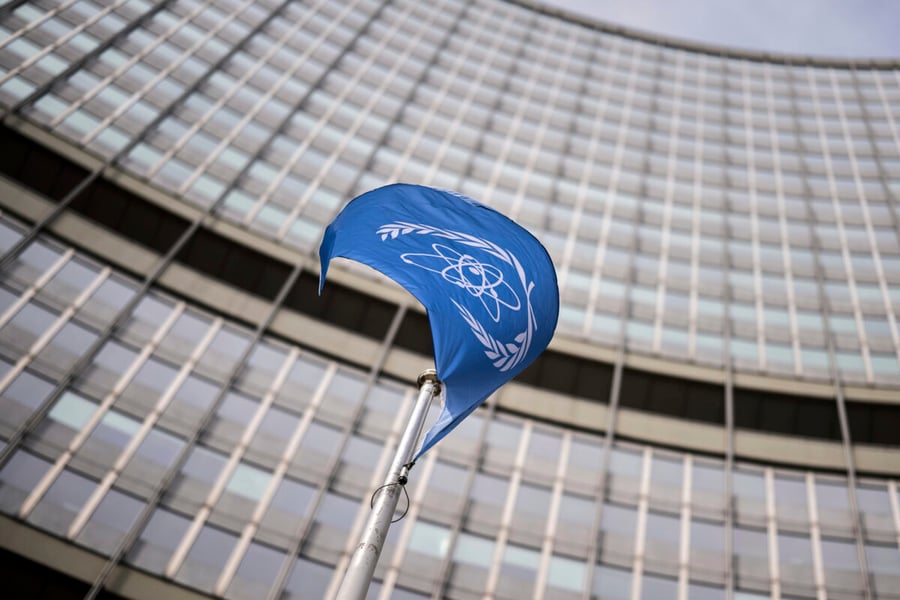
What is less clear is what the United States gains from closing that particular door now. The IAEA’s technical monitoring functions in Iran – whatever remains of them after the strikes on several declared sites – depend on a degree of Iranian cooperation that cannot be extracted through exclusion. The agency’s ability to verify, document, and report on Iran’s nuclear activities requires Iranian officials who are willing to meet with agency inspectors, and Iranian officials who can travel to Vienna. The travel ban applies pressure, but the pressure’s direction is counterproductive if the goal is transparency rather than isolation.
A lower-level Iranian representative is expected to address the conference later in the week. What that representative can negotiate, and whether Iran’s willingness to engage with the agency survives the symbolic humiliation of its nuclear chief being turned back at the airport, is not yet known. Iran’s parliament speaker declared earlier this summer that IAEA access to bombed nuclear sites was a fiction – a position that the exclusion of Eslami from Vienna will do nothing to soften.
The United States’ approach to the IAEA this year has not been confined to Iran. But the pattern at Vienna – using procedural and sanctions tools to limit the participation of states the administration considers adversaries – reflects a broader posture in which multilateral institutions are treated as instruments of pressure rather than forums for resolution. Even within the US military, there were voices earlier this year pushing the administration toward a diplomatic off-ramp. The Vienna exclusion signals that whatever those voices achieved has not changed the administration’s calculus about Iran’s standing at international bodies.
For Eslami, the immediate consequence was a return flight. For the IAEA’s ability to do its job, the consequences are more durable and considerably harder to reverse.