
TEHRAN/DOHA – Three parties addressed the question of IAEA access to Iran’s bombed nuclear sites after the same Doha round produced the same “positive progress” statement last week. They gave three different answers. Iran’s parliament speaker said access is barred by law and the question itself is “false.” The IAEA’s director general said access is “going to happen” and the memorandum of understanding leaves “no room for ambiguity.” Donald Trump said that “denuclearization of Iran is moving along well.” The three accounts describe either the same document or the same diplomatic process from positions that cannot all be correct simultaneously.
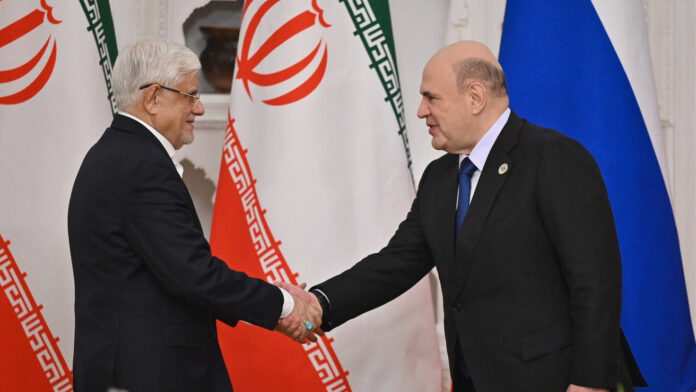
Mohammad Bagher Ghalibaf, speaker of Iran’s parliament, said on July 1 that “talk of IAEA inspectors’ access to bombed sites is false.” The restriction, he said, was established through two separate instruments: a law enacted by parliament and a resolution adopted by the Supreme National Security Council. Under both provisions, inspectors may only access the Bushehr Nuclear Power Plant and the Tehran Research Reactor – the two sites that were not struck during the US-Israeli strikes of June 2025. Every other nuclear facility, including the enrichment and reprocessing sites believed to hold the bulk of Iran’s weapons-usable uranium, is off limits under terms that Ghalibaf described not as a negotiating position but as enacted law.
That is a different reading of the Islamabad MoU than the one IAEA Director General Rafael Grossi offered eight days earlier. Speaking at a press conference in Fukushima on June 24, Grossi said inspections of Iran’s enrichment sites were “going to happen” and that inspectors “will have to inspect.” He cited the MoU text as leaving “no room for ambiguity” on the IAEA’s authority over nuclear activities and materials facilities. Iran’s Foreign Ministry had taken a different line the previous day: spokesperson Esmail Baghaei claimed UN inspectors were not scheduled to examine sites struck by the US and Israel, contradicting what US officials had described as the deal’s terms. Grossi’s Fukushima statement was a direct pushback against Tehran’s June 23 framing. Ghalibaf’s July 1 statement was a direct pushback against Grossi’s.
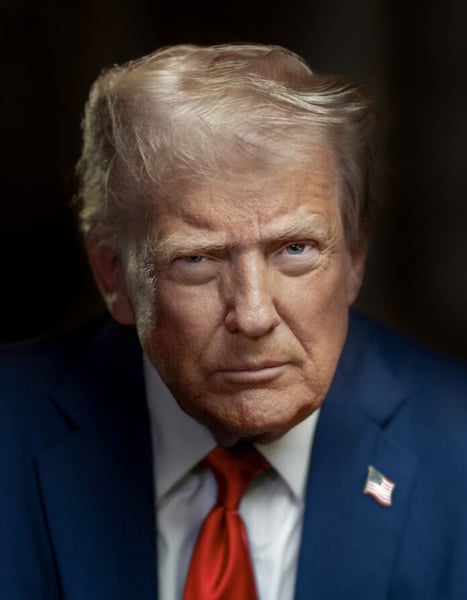
Trump’s contribution to the sequence arrived after the Doha round concluded. “The denuclearization of Iran is moving along well,” he told reporters. The word “denuclearization” does not appear in the 14-point Islamabad MoU. It describes an American objective that Iran’s political establishment – across factional lines, from Ghalibaf on the right to Foreign Minister Abbas Araghchi on the pragmatist wing – has explicitly rejected as a precondition for any deal. Whether Trump’s characterization reflects the actual state of negotiations or is optimistic framing for domestic consumption has not been resolved by anything the Doha round produced.
The reason the bombed sites matter is precisely what makes Iran’s access ban consequential. Iran moved its enriched uranium stockpile in the days before the June 2025 strikes. The IAEA’s last verified measurement of Iran’s stockpile – 9,874.9 kilograms as of June 13, 2025 – was recorded before the 97-day monitoring blackout that followed the strikes. The enrichment sites where that material was processed are under rubble. The IAEA does not know the current size, composition, or location of Iran’s weapons-usable material. Grossi’s agency has said repeatedly that without access to the bombed facilities, it cannot reconstruct what happened to that stockpile during the gap – and the evidentiary chain cannot be restored even if Iran opens every door tomorrow. The sites are where the verification question lives. Ghalibaf’s law is what keeps the doors closed.
The structural problem is that Ghalibaf’s access ban is not a negotiating position the Doha round could have addressed. A law passed by parliament requires parliament to act to repeal it. A Supreme National Security Council resolution requires the SNSC to rescind it. Neither the Doha round’s agenda – which covered the communications hotline, frozen assets, and the Hormuz framework – nor the US negotiating team’s public posture has yet specified a mechanism by which the parliamentary law could be modified as part of a diplomatic settlement. The Doha round explicitly deferred the nuclear inspection question, which means the parties agreed not to put it on the table, not that they bridged any of the distance Ghalibaf described.
Iran’s formal position on the bombed sites has been consistent since the war ended in June 2025. The SNSC resolution was enacted in July 2025. The parliamentary law followed. Ghalibaf’s July 1 statement was not a new policy announcement – it was a clarification that the policy had not changed despite the Islamabad MoU, despite the Doha talks, and despite Grossi’s June 24 insistence that it would. The consistency of Iran’s position is itself a data point: when a government uses its own legislative machinery to formalize a restriction, the restriction is designed to be harder to remove than a ministerial instruction or an executive-branch posture would be. The parliament is in the loop. The SNSC is on record. Walking that back requires political decisions that have not been made.
The next Doha round cannot begin until after Ayatollah Khamenei’s burial in Mashhad on July 9. With 43 days remaining on the Islamabad window, the round that has yet to be scheduled is the one that will have to confront the nuclear file directly or acknowledge that it cannot be resolved before August 21. A deal that leaves the IAEA without access to the enrichment sites – sites that held near-weapons-grade uranium before the strikes and whose post-strike contents are unknown – is not a deal the United States has publicly described itself as willing to accept. Ghalibaf’s law is not the only obstacle between the current framework and a final agreement, but it is the one that has been most clearly articulated. “Moving along well” is one description of where the nuclear file stands. “False” is another.