
DOHA – When the latest round of US-Iran negotiations concluded on Wednesday, the two governments announced what they had agreed: a communications hotline, partial release of frozen Iranian assets, and confirmation that discussions would continue. What they did not announce was equally significant. The nuclear inspection file – the question of whether IAEA inspectors can access the sites destroyed by US and Israeli airstrikes in February – was explicitly deferred to a future round. The Strait of Hormuz toll question, which the United States had designated as the primary focus of the Doha session, ended without agreement.
The outcome is what both sides can characterize as progress and what neither can characterize as a breakthrough. Qatar’s foreign ministry, which co-mediated the talks alongside Pakistan, called the results “positive progress.” The description is accurate as far as it goes: the framework is still standing, the talks are continuing, and neither side walked away. It does not go far enough to describe what the 60-day window requires before August 16.
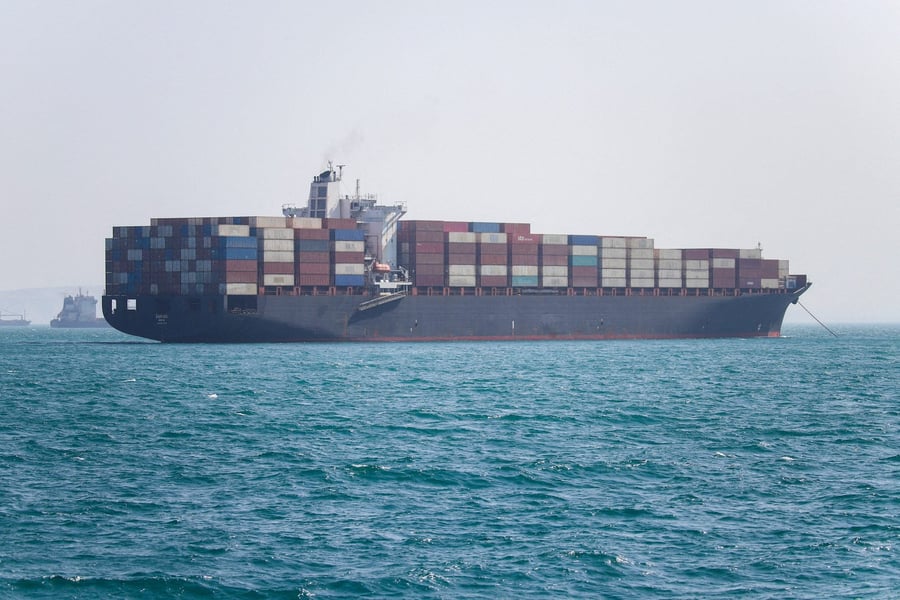
The maritime industry has not recalibrated. Despite the Islamabad MoU, the June 17 ceasefire, and two weeks of Doha negotiations, the Strait of Hormuz remains classified as a warlike operations area – a designation that directly affects war-risk insurance premiums on every commercial vessel transiting the waterway. The classification reflects what underwriters assess, not what diplomats announce. Their assessment is that the political resolution required to end the elevated risk designation has not been reached.
Iran and Oman have been building a joint Hormuz management framework through a bilateral committee that directs commercial traffic to a designated corridor near Iran’s northern shore. The Iran-Oman structure operates independently of the Doha process and excludes Western involvement. The warlike-operations classification and the Iran-Oman corridor are operating simultaneously – one reflecting the risk that remains, the other reflecting the architecture Iran is building to manage the strait on its own terms regardless of what Doha produces.
Pakistan’s emergence as a co-mediator alongside Qatar adds a dimension to the negotiating architecture that the MoU itself did not anticipate. The Pakistani channel is distinct from the Qatari one: Islamabad has maintained working relationships with both Tehran and Washington through prior nuclear negotiations and carries credibility with Iranian interlocutors that Gulf states do not share. Whether Pakistan’s involvement reflects a tactical broadening of the mediation framework or an acknowledgment that the Qatar channel alone cannot resolve the Hormuz and nuclear questions is not clear from the Doha readout. The session that produced the communications hotline and $3 billion in unfrozen Iranian assets did not produce a position on the two questions most likely to determine whether the MoU survives to August 16.
The nuclear deferral is the more consequential outcome. By Iranian accounts, the Doha session was focused on implementation questions – the asset releases, the communications channel, ceasefire compliance modalities. The inspection of the bombed nuclear sites was not on the implementation agenda because it has not been agreed in principle. Sputnik reported that Parliament Speaker Mohammad Bagher Ghalibaf stated on July 2 that Iran would grant the IAEA “no access beyond what has been authorized by the Supreme National Security Council.” The United States has not accepted that position. Iran’s refusal to allow IAEA access to the destroyed sites is the point on which Washington’s ability to claim a non-proliferation win and Tehran’s ability to claim sovereignty over its own territory are directly incompatible.
Deferring the nuclear file has a logic. Establishing a pattern of compliance on smaller questions first may create conditions under which the harder question becomes addressable later. It also has a risk the deferral cannot paper over: the 60-day window does not pause with it. Seventeen days have elapsed since the MoU was signed. Five more will elapse during the Khamenei funeral period before the next Doha session can begin. That leaves roughly 38 days to resolve IAEA access, Hormuz tolls, and the Lebanon all-fronts clause – three issues each of which involves parties whose interests are not aligned with a clean settlement.
Qatar’s position as both the venue and co-mediator places it in a structurally unusual role. The emirate is the host of the Doha sessions, the co-author of the mediation readout, and simultaneously a state that depends on stable Hormuz navigation for its liquefied natural gas exports. Qatar is not a neutral observer of the Hormuz question; it is a direct commercial stakeholder in the answer. Whether that interest is pulling the mediation toward a faster resolution or merely toward an appearance of progress is a question the Doha readouts do not address.
The architecture the Doha talks have so far produced is real but reversible. Iran closed the Strait of Hormuz once since the MoU was signed, on June 20, citing Israeli activity in Lebanon as a violation of the all-fronts clause. The maritime industry’s continued warlike-operations classification reflects exactly that reversibility. Until the Hormuz toll question and the IAEA question are resolved, the classification accurately describes the risk the strait carries – and no Doha communiqué changes the underlying calculation shipping underwriters are making every day. What the next round needs to produce is a workable position on IAEA access that both governments can defend domestically and that the agency itself will accept. Whether that position exists anywhere between Washington’s demand and Tehran’s refusal is what 38 days remain to find out.