
PARIS – The buffer that has kept global oil markets from fracturing under the weight of the Middle East conflict has, in the space of five months, nearly run out.
The International Energy Agency said on Wednesday that it now expects a global oil deficit of 1.8 million barrels per day in the third quarter of 2026, more than double its estimate of around 800,000 barrels per day published just one month ago. The revision captures what has unfolded since June: a sustained collapse in observed inventories driven almost entirely by oil held on tankers disappearing from global accounting as transit routes through the Gulf and the Red Sea became unreliable.
“The global oil balance is now expected to show a deficit of 1.8 mb/d in 3Q26, more than double the estimate of around 800 kb/d in last month’s Report,” the IEA said.
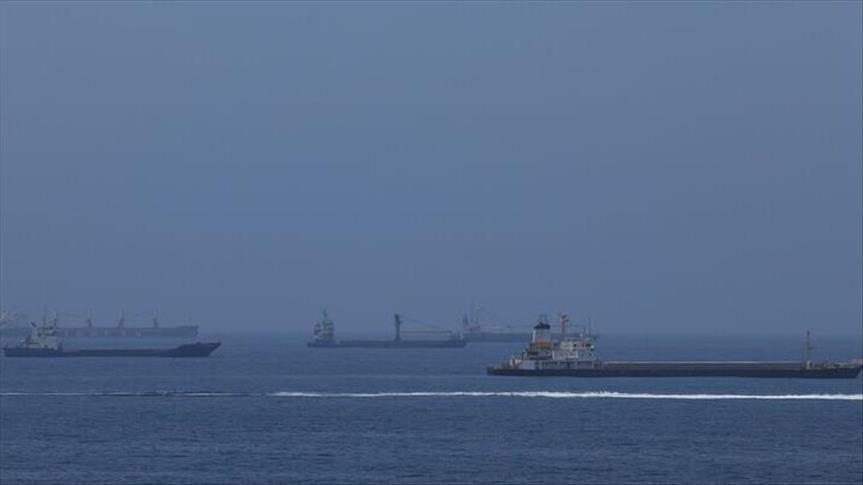
After a brief improvement in June, observed global oil inventories fell by 69 million barrels in July. The decline was driven almost entirely by a decrease in oil held on tankers: crude that should be in transit between producers and consumers is no longer appearing in the data because transit has become erratic, delayed, or physically blocked through key shipping corridors. By the end of July, observed inventories had fallen below 7.9 billion barrels for the first time since April 2025.
The total inventory decline between the end of February and the end of July reached 410 million barrels, an average drawdown of 2.7 million barrels per day sustained across five consecutive months. That number represents the pace at which the strategic and commercial cushion that the global market has been drawing on is being consumed without meaningful replenishment.

The IEA’s assessment is explicit about the mechanism: the Strait of Hormuz must reopen if the market is to stabilize. Previously available buffer stocks, the commercial and strategic reserves that have historically absorbed supply shocks, are being depleted faster than the agency’s models had projected. Once those buffers are exhausted, a disruption that might once have been manageable becomes immediately structural, with no reserve capacity left to absorb the next shock.
The agency said the market is forecast to return to a surplus by the end of 2026, a projection that rests on a set of assumptions: that the Hormuz situation is eventually resolved, that tanker transit through the Gulf and Red Sea returns to something approaching normal, and that OPEC production is not curtailed further. Each of those assumptions is uncertain, and the IEA does not attempt to attach a probability to any of them.
Saudi Arabia has been producing at elevated rates, 8.2 million barrels per day in July, but that additional output is not reaching buyers. Strikes by US Navy forces on commercial vessels in the Gulf of Oman alongside Ansar Allah’s Red Sea campaign have effectively stranded a growing portion of Gulf production in onshore storage. The supply exists. The transit does not.
That distinction matters for how the deficit is read. This is not a production shortfall in the conventional sense. It is a logistics failure at a geographic scale that individual producers cannot address through output decisions alone. OPEC has room to increase production. What it does not have room to do is move additional output reliably through transit corridors that major military actors have made dangerous.
Brent crude has been responding to these dynamics in ways that defy simple interpretation. A supply deficit of 1.8 million barrels per day would ordinarily drive prices sharply higher. The more muted price response reflects the countervailing force of demand softness, particularly from China, whose economic trajectory has moderated the appetite for crude at the volumes global producers had planned for. The deficit is real but its price signal competes with a demand story running in the opposite direction.
What is not competing with anything is the pace of inventory drawdown. The 410-million-barrel decline since February is a fact, not a forecast. The question the IEA cannot answer, and that markets are currently trying to price, is how many additional months of that drawdown pace remain before the buffer is fully exhausted, and what happens to supply chains and oil prices on the day it runs out.