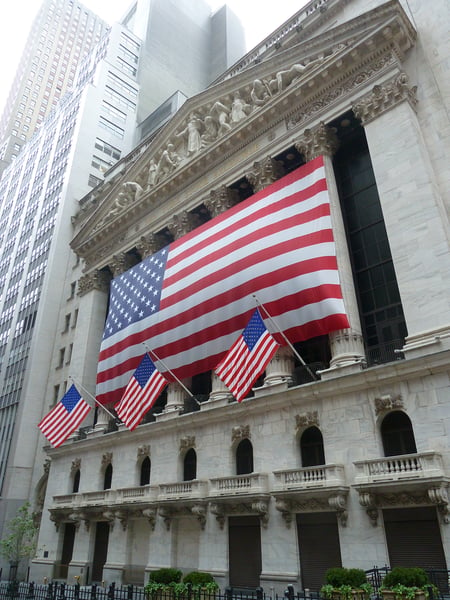

NEW YORK — The decision that mattered most to equity traders on Tuesday was made hours earlier, in Washington. By the time US Central Command announced strikes on seven sites along Iran’s southern coast, the S&P 500’s trading session had already sorted itself into two economies: the one that benefits when oil and missiles are in demand, and the one that does not.
Raytheon Technologies rose roughly 2.4%, Lockheed Martin climbed 2.1%, and Northrop Grumman advanced 1.9% as investors processed CENTCOM’s announcement that it had hit air defence sites, radar systems, maritime facilities, mine-laying infrastructure, and communications nodes at Bandar Abbas, Jask, Chabahar, Konarak, Minab, Sirik, and the island of Qeshm. General Dynamics added 1.7%. Defence stocks have moved in near-lockstep with each escalation since the Iran-US conflict entered its sixth month, and Tuesday’s operation, the first major exchange since a month-long pause that began on August 30, gave the sector another upward push.
Delta Air Lines fell 3.6%. United Airlines dropped 3.2%. American Airlines lost 4.1%. The logic is blunt: each additional dollar on a barrel of Brent crude costs the major US carriers several hundred million dollars in annual fuel expenditures, and Brent settled at $92.63 on Tuesday, up from $88.45 at Monday’s open, after Trump’s August 31 post threatening to strike Kharg Island’s oil export terminals, the first explicit White House challenge to Iranian energy infrastructure, combined with confirmed naval mining in the Hormuz approach. Airlines carry roughly 90 to 120 days of fuel cost visibility in their forward hedging books. At $92 oil, that visibility looks worse with each passing session.
The S&P 500 Energy sector gained roughly 1.8% on Tuesday. ExxonMobil and Chevron advanced as every barrel they produce becomes more valuable at the pump. ConocoPhillips and Occidental Petroleum, which carry relatively higher leverage to the oil price through their production-heavy business models, outperformed the sector. The EIA reported on Tuesday that US commercial crude inventories had posted a seventh consecutive weekly decline, leaving stocks 12.4 million barrels below the five-year seasonal average, a physical market reality that supports the price floor Hormuz disruptions have created.
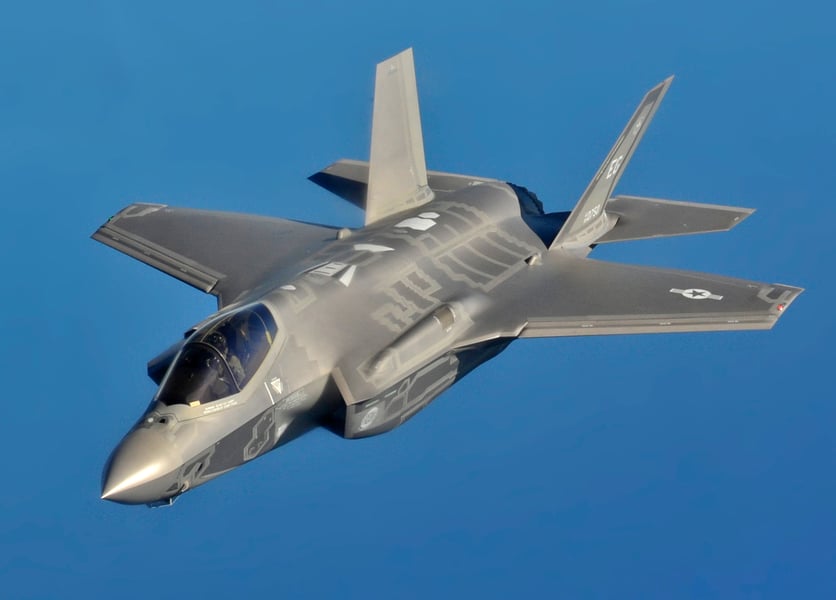
What defence and energy stocks share is a single underlying variable: the duration of the US-Iran conflict. A longer war means more missiles expended and more defence contracts; it also means oil remains above $90 and the physical market stays lean. The six-month timeline has produced a sustained elevated-revenue environment for both sectors. The risk that defence investors are not yet fully pricing is that Iran’s promised response, which IRGC-affiliated media described as “several times greater” than Tuesday’s strikes, could shift the conflict from a managed escalation into something that disrupts US military procurement timelines rather than expanding them.
The ten-year Treasury yield held at 4.80% through Tuesday’s session, a 19-month high that has been reinforced rather than relieved by each Hormuz headline. Higher yields compress the present value of future earnings for growth stocks. Nvidia, which fell 2% on Monday, faces this double squeeze from the bond market’s inflation anxiety and from rising data-centre operating costs as energy prices climb, yet the yield’s persistence also signals that the Federal Reserve’s September 17 meeting carries live decision weight. Futures markets placed the probability of a 25-basis-point rate increase at 68% as of Monday’s close, per ISM manufacturing data published Monday. Five major economic data releases fall between now and that meeting. Tuesday added an additional input the Fed’s models were not built to process: a real-world supply shock with no visible endpoint, being generated by a military conflict with no defined off-ramp.
The S&P 500 finished Tuesday modestly lower for a second consecutive session, dragged by airlines, consumer discretionary, and utilities, with the gains in defence and energy not enough to offset broader weakness. Technology stocks were mixed; Apple, which rose 3% Monday on John Ternus’s first day as chief executive and the approaching September 9 iPhone 18 launch, gave back a fraction of that gain as the broader Nasdaq edged down.
The sector divergence on Tuesday is not a prediction about how the war ends. It is a live expression of who wins and who loses while the question remains open. For Delta’s flight operations, every day that oil stays above $90 is a day they burn through the hedging buffer they entered the third quarter with. For Raytheon’s backlog, every CENTCOM strike order is a line item. Both companies are responding to the same underlying event. They just sit on different sides of it.