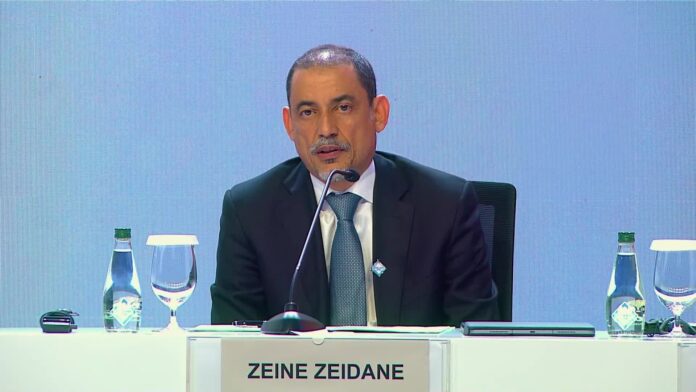

WASHINGTON — The factory number lands today, and it lands into a market that no longer has the luxury of ignoring it. Kevin Warsh returns from Jackson Hole having spent ten minutes reminding investors that the Federal Reserve’s job is not finished, and now the data calendar is handing out quizzes.
The Institute for Supply Management’s August manufacturing gauge, due this morning, is the opening salvo of a five-day gauntlet that will define the September 17 FOMC meeting. Markets have already made their call: CME FedWatch places the probability of a September rate increase at 57.5 percent, up from 35.4 percent before Warsh took the lectern at Wyoming’s annual central banking symposium. The week also delivers JOLTS job openings on Wednesday and the August nonfarm payrolls report on Friday.
For the businesses borrowing at the short end of the curve, those three data releases are not abstractions. If ISM comes in above 50, signaling manufacturing expansion for the first time in months, Warsh’s hawks have their cover. If it misses, the conversation gets more complicated, though not necessarily simpler: Warsh has made no secret that he is watching services inflation, not factory output, as his primary gauge. A weak PMI might not lower rate-hike odds the way it once would have.
The backdrop is not neutral. Brent crude settled Monday at $91.28, up from $90.49 at Friday’s close, as the standoff in the Strait of Hormuz kept global shipping markets on edge. The US-Iran dispute, which has reduced vessel transits through the strait to roughly five a day against a ten-day average of fourteen, according to Al-Monitor, has placed a supply premium on energy prices that the Federal Reserve cannot address through any interest rate decision.
This is the structural bind that makes September so uncomfortable. Monetary policy was designed to suppress demand-driven inflation. Oil at $91 is a cost-push problem, driven by geopolitics and supply restrictions, not by consumers spending too freely. Tightening into a supply shock can slow the economy without fixing the price signal that triggered the concern in the first place.
Treasury Secretary Bessent has signaled that additional sanctions on Iranian oil exports are under consideration, Arab News reported, which could further restrict supply and keep the energy premium elevated through the Fed’s September decision window. OPEC+ meets September 6 to discuss October production quotas, adding another variable to an already crowded week.
Gold held above $4,473 an ounce through August’s final week, a level that suggests investors are still hedging against inflation rather than rotating back into pure risk-on positioning. That premium has persisted even as equity markets posted their fifth consecutive month of gains. The S&P 500 ended August at 7,686, up 2.6 percent on the month. Nasdaq gained 3 percent. The Dow rose 1.3 percent before surrendering 374 points on August 31, the day Warsh’s tone and rising oil collided in the same afternoon session.
The August 31 sell-off illustrated something the calendar cannot fix: the market’s tolerance for hawkish catalysts has narrowed. Five months of gains have left valuations stretched at a moment when the two biggest sources of uncertainty, Fed policy and Middle East energy supply, are both moving in the same uncomfortable direction. A bad ISM print used to be an argument for holding rates. In a world where Warsh has already telegraphed his bias, it may simply be a print that changes nothing.
JOLTS and payrolls will complete the picture by Friday. If the labor market is cooling, Warsh has room to hold. If job openings are still running hot and payrolls beat expectations, September’s rate hike looks close to settled. The Fed chair has made clear he is not waiting for the last piece of data to align perfectly, but the piece he most needs aligned is the one the job market delivers.
Whether the ISM reading this morning moves that calculus at all is the only question that matters today. By Friday, markets will have more certainty about September 17. They almost certainly will not have less uncertainty about October.