
DUBAI — Somewhere in the southern approaches to the Strait of Hormuz there is either a supertanker on fire or there is not, and which of those is true depends entirely on whose government you believe.
Iran’s Revolutionary Guard Corps said on Monday that a noncompliant supertanker attempting the southern route struck two naval mines, suffered massive fires and was brought to a complete stop. It did not name the vessel. It did not give its flag, its cargo, its owner or any word on the crew. Hours later United States Central Command answered on its own account with three words about the Iranian account: this is false. No ships, it said, have hit mines in the Strait of Hormuz.
Brent crude rose 0.87 percent to $91.28 a barrel. West Texas Intermediate added 0.94 percent to $86.57.
That is the whole story, and it is stranger than it looks. A market that spent August pricing the possibility of mines in the world’s most important oil chokepoint was told on Monday that a mine had detonated under a laden tanker, and it moved less than one percent. Either traders do not believe the Guards, or they have concluded that it no longer matters much whether the claim is true.
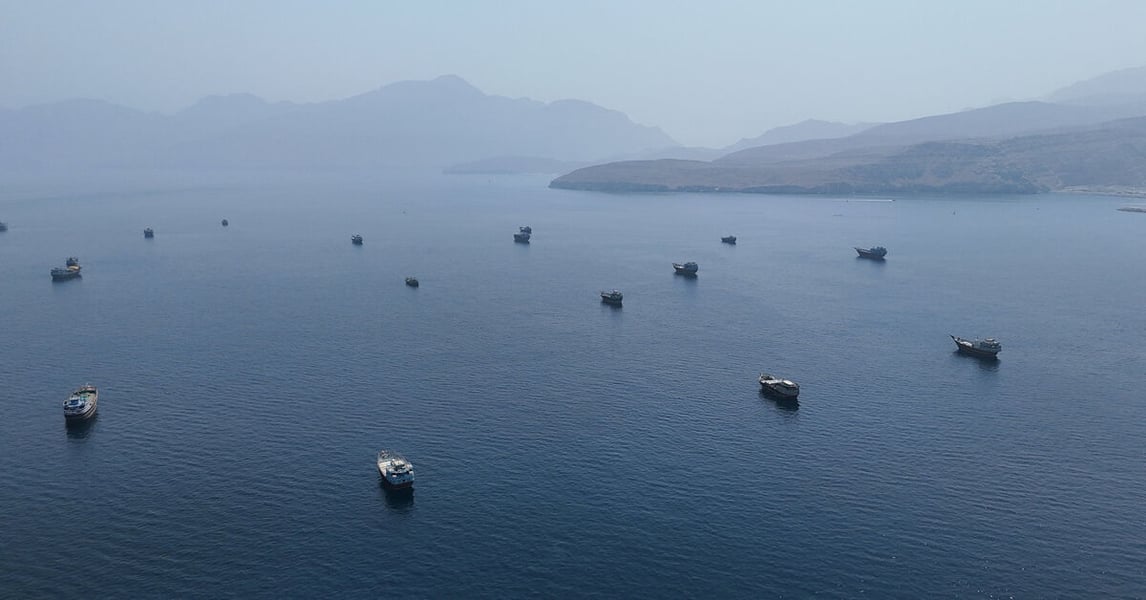
The second reading is the more uncomfortable one, and the shipping data supports it. Around five vessels were moving through the strait on Tuesday against a ten-day average near fourteen, according to Al-Monitor, which tracks the transits. Not one of the ships that sailed on Monday was a liquid tanker. The traffic consisted of an empty gas carrier and three dry bulk vessels. A waterway that once carried a quarter of the world’s seaborne crude spent the day moving grain and ore.
You cannot disrupt what has already stopped. That is why a burning supertanker, real or otherwise, is worth eighty cents on Brent. The premium for a closed strait has been sitting in the price for months, carried less in lost barrels than in the war-risk insurance that now dominates Hormuz economics. What remains in the water is too thin to reprice.
The competing statements are not a detail. They are the market’s actual problem. The Trump administration declared days ago that the navy had cleared Hormuz of mines, and the president warned that any vessel caught laying new ones would be destroyed. The Guards’ account, carried on Iranian state television, is a direct rebuttal of that claim, and it came wrapped in a threat: ships violating its rules for passage would meet the same fate, and compliance was mandatory. Tehran is asserting the right to license traffic through an international waterway. Washington is asserting the water is clear. A ship is either burning or it is not.
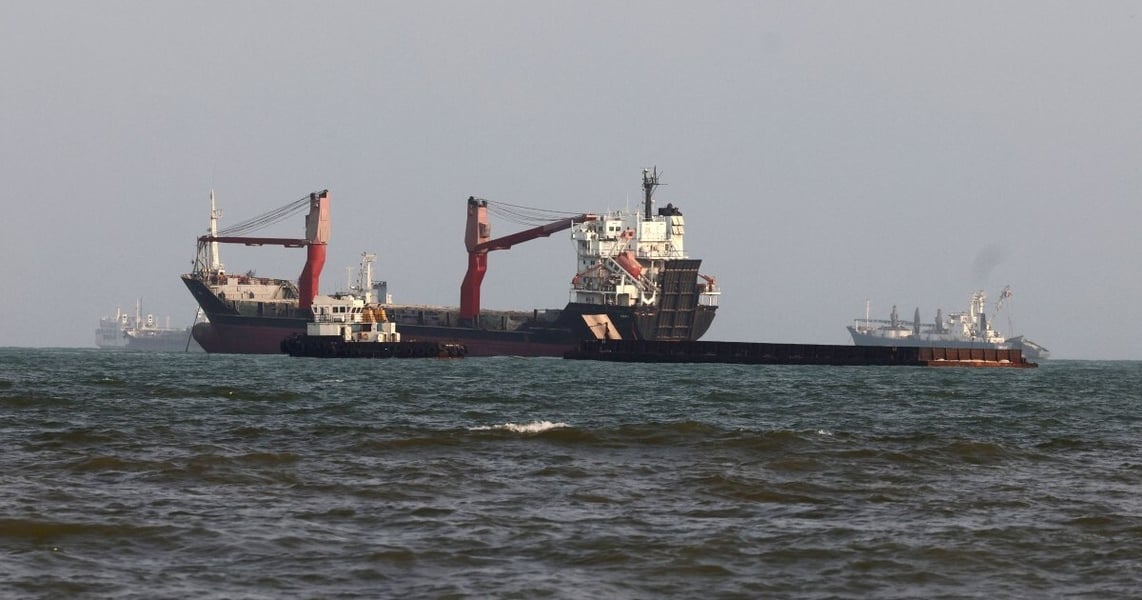
The exchange follows a week in which American forces hit rocket launchers on Larak Island and the Guards answered with missile and drone attacks on two US air bases in Jordan. Iran International carried the Guards’ statement in full, and no independent party has verified either version. No salvage operator, no insurer, no maritime authority has confirmed a casualty. Some vessels in the area are running dark with their transponders off, which makes the absence of tracking evidence weak proof of anything. The honest position, two days on, is that nobody outside the two militaries knows.
Traders have quietly stopped waiting to find out. The reflex that once sent crude up four percent on a Gulf headline has been trained out of the market by six months of claim and counterclaim, and what has replaced it is a kind of exhausted discounting. That is not the same as calm. It means the next genuine shock has to be very large to register at all.
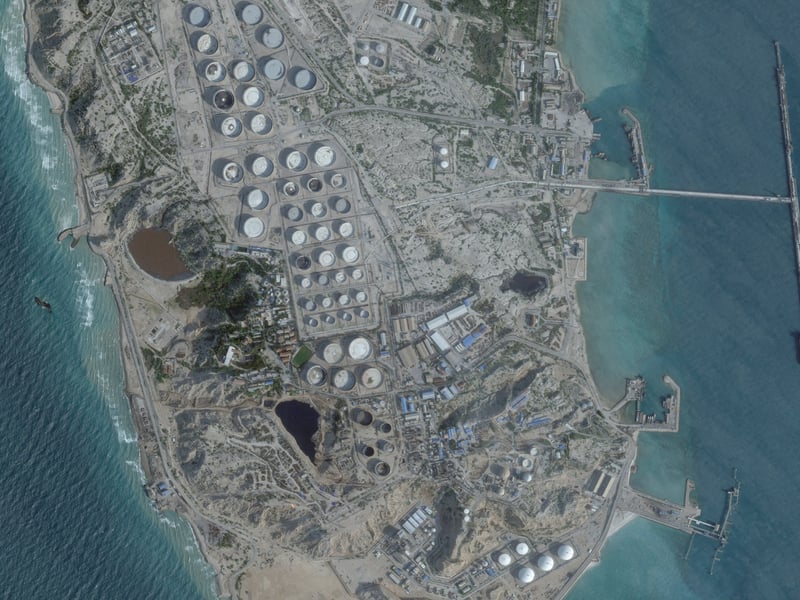
Which brings the risk to Kharg Island. President Donald Trump extended his threats this week to the terminal that handled roughly nine-tenths of Iran’s crude exports before the war, saying it would be blown to smithereens. He has said versions of this since March and has walked it back before, which is precisely why the market treats it as rhetoric. But Kharg is not Larak. Striking a rocket launcher on a garrison island is a tactical act. Destroying the loading infrastructure at Kharg would remove Iranian barrels from the world for years rather than weeks, and it is the one scenario in this conflict that current prices do not appear to contain. Al Jazeera has set out what the terminal does and why hitting it carries risks that run in both directions.
The supply side offers no comfort either. OPEC+ meets on September 6 to set October quotas, and the eight-country group is widely expected to stop raising them, having completed in September the unwinding of the 1.65 million barrels of voluntary cuts agreed in 2023. A pause sounds technical. It is not. It forces the members to reopen the question of how entitlements are distributed, and Iraq has spent the summer pressing for a larger allocation to recover revenue lost during the war, with its oil ministry going so far as to raise, then disown, the language of withdrawal. A cartel arguing about baselines while a chokepoint is contested is not a stabilising force.
Refining is tightening from a different direction. Strikes on Russian refineries have pulled capacity out of the system and pushed product margins to fresh highs, which means the barrel and the fuel made from it are now moving on partly separate stories. That is the number that reaches drivers first, and it is why pump prices have stayed above four dollars a gallon even on days when crude does very little.
None of this resolves the thing that actually happened, or did not, on Monday night. Two governments have made statements that cannot both be true about a vessel neither will identify. Until an insurer files a claim or a hull turns up under tow, the market is pricing an event it cannot confirm, in a waterway almost nobody is using, ahead of a producers’ meeting that may not agree on anything. The eighty cents Brent added is not a verdict on the tanker. It is what doubt costs when the fear has already been paid for.