
LONDON — The cheapest weapon in the Persian Gulf right now is a sea mine, and it does not have to be fired to work.
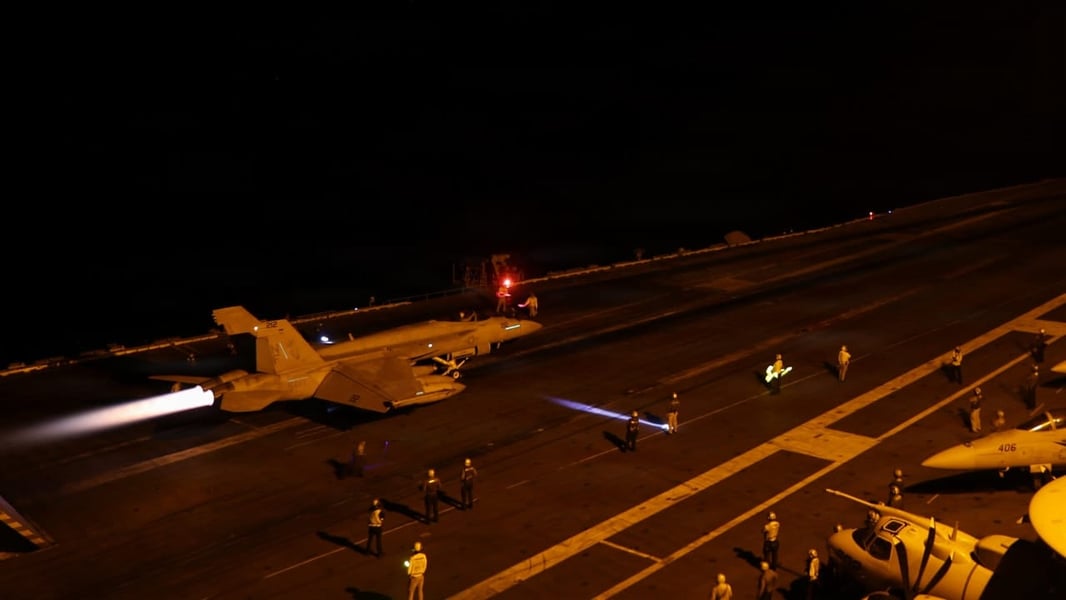
That is the lesson traders drew from a strike that never touched a barrel of crude. American forces hit two Islamic Revolutionary Guard Corps rocket launchers on Larak Island on Sunday after watching Iranian crews fit the rockets with mines intended for the Strait of Hormuz, The Jerusalem Post reported. No refinery burned. No tanker sank. No export terminal went dark. Brent still closed Monday at $90.49 a barrel, up $2.39 or 2.71 percent, after touching $91.52 intraday, its highest print since August 25. West Texas Intermediate settled at $85.76, up $2.36 or 2.83 percent.
Strip the headline away and what moved this market by more than two dollars was not a lost barrel. It was a device that costs a few thousand dollars to build and, if it works, makes the world’s most important waterway uninsurable. That is the trade now. For most of the summer the war premium in crude tracked physical supply, how much Iranian production sat offline, how many cargoes cleared the strait, whether the Iran-Oman revenue-sharing corridor would hold. That arithmetic has quietly stopped setting the price.
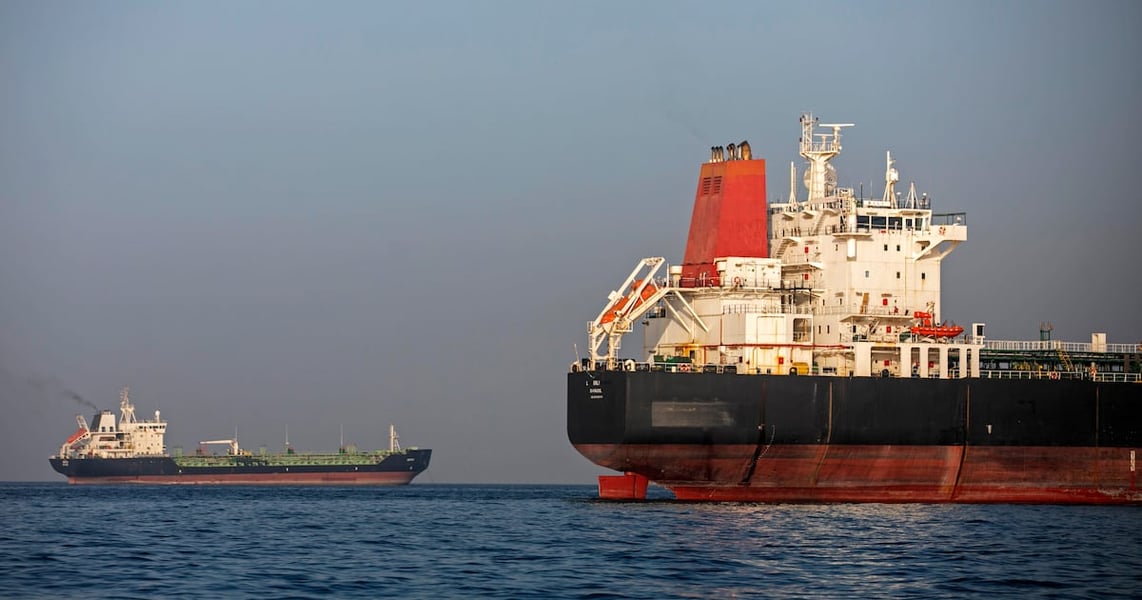
The transmission channel is not the oil market at all. It is the insurance market. War-risk cover for a Hormuz transit has moved to roughly 7.5 to 10 percent of hull value, according to The National, against 1 to 3 percent only weeks earlier and about 0.25 percent before the war began. In cash, a $100 million tanker that once cost roughly $250,000 to insure through the strait now costs between $3 million and $10 million. Underwriters do not need a mine to detonate. They need only to believe one is in the water.
That is the asymmetry Tehran has found, and it is why the strike on Larak registered as escalation rather than reassurance. Iran does not have to close Hormuz. It has to make the people who price risk believe it might.
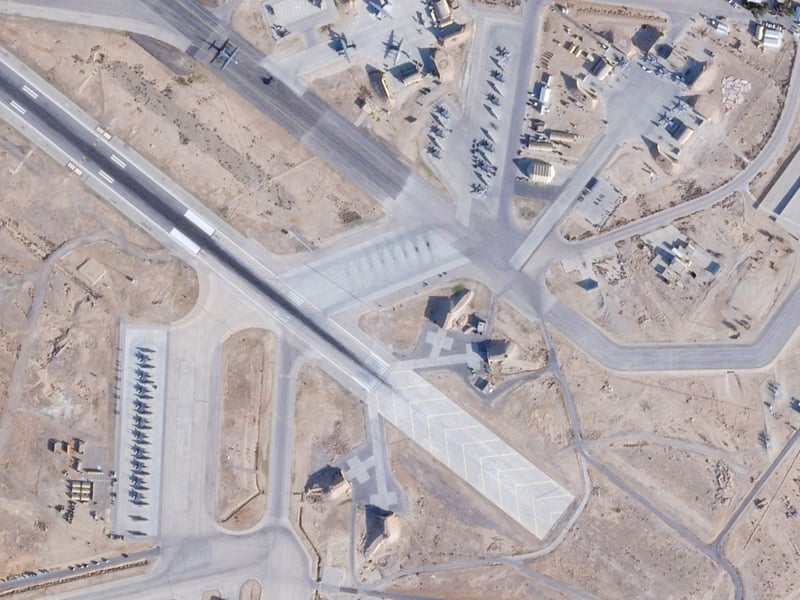
Central Command’s framing was unusually blunt. Responding to an IRGC statement calling the strike an act of aggression, it said the claim was false, that American forces had taken limited and precise action against an imminent minelaying threat, and that Iran created the threat while the US military eliminated it to protect civilian mariners and the free flow of commerce. Iran read the same event in reverse. The Guards said the attack killed and wounded fighters and civilians, without giving a toll, and launched missiles and drones hours later at two American air bases in Jordan in an operation it named Punishment of the Aggressor, Al Jazeera reported. President Donald Trump said Washington would hit back hard.
Here is the thing neither side has settled, and it is the number that actually matters. Central Command says it stopped the mines from being laid. The IRGC has separately claimed that vessels were attempting to pass through what it called the mine-laid route south of the strait, language that implies mines are already sitting on the seabed. Both statements cannot be true. Nobody outside the two militaries knows how many mines, if any, are in the water today, and no independent survey has been published. Mine countermeasure work in a contested strait is slow, and a single unaccounted device can hold a shipping lane hostage for weeks. Underwriters are pricing that uncertainty. So, now, is Brent.
The physical picture is genuinely better than it was, which is what makes the price action revealing. Goldman Sachs estimates Persian Gulf crude exports have recovered to about 15 million to 16 million barrels a day, well above the March trough of roughly 5 million to 6 million, though still some 7 million to 8 million below the 22 million to 24 million that moved before the conflict. Those are bank estimates built on tanker tracking, not customs data, and vessels running dark in a war zone are exactly the cargoes such models miss, so treat the recovery as a direction rather than a measurement. Flows are improving. The price is rising anyway.
Forecasts have split accordingly, and the spread is the story. JPMorgan looks for Brent to average about $86 through the third quarter. Goldman carries $80 for the fourth. Both sit below Monday’s close, which means both houses are implicitly calling the current level a risk premium rather than a fundamental. Goldman’s own scenario work shows how thin that call is: assuming Hormuz stays open, it models Brent at $75 and WTI at $70 next year against a global surplus above 3 million barrels a day. Assume instead that the strait stays materially disrupted into 2027 and the same bank’s framework puts Brent above $120 in the fourth quarter and near $100 across next year. A forty-five dollar range hanging on a single binary is not a forecast. It is an admission that the modelling stops where the minefield starts.
Around 25 percent of the world’s seaborne crude and about a fifth of its liquefied natural gas moved through the strait before the war, which is why a waterway roughly 21 miles across at its narrowest sets the floor under every barrel priced anywhere. Stephen Innes of SPI Asset Management captured the mood on Monday, noting that traders had spent weeks stripping the war premium out of crude before being reminded that quiet in the Strait of Hormuz is not the same thing as peace.
The supply side offers little cushion. OPEC+ has already set September at an increase of 188,000 barrels a day, the final tranche unwinding the 1.65 million barrels of voluntary cuts agreed in April 2023. It is a modest number, and several members cannot physically reach their quotas because of technical constraints, so the headline overstates the barrels. The group’s eight-country committee meets again on September 6, the first genuine test of whether producers treat a mine threat as a reason to hold back spare capacity or to release it.
The cost lands well beyond the futures screen. Brent’s push through $90 on Monday helped drag Indian equities lower, with the Sensex closing down 377 points, a reminder that for oil-importing economies this is a tax collected in rupees and pump prices rather than a line on a Bloomberg terminal. That follows Brent’s August close below $90, a month that had looked like the start of normalisation and now reads as an interruption.
What happens next does not turn on OPEC quotas or Chinese demand data. It turns on whether an unknown number of cheap explosive devices are sitting on the floor of a 21-mile channel, and on whether anyone can prove it either way before an underwriter has to decide. Until someone can, the market will keep paying for the doubt.