
NEW YORK — Two tankers struck in the predawn dark of the Strait of Hormuz were enough, by Tuesday morning, to reset expectations for every major financial market in the world.
Brent crude crossed $92 a barrel for the first time since the spring. The 10-year Treasury yield climbed to 4.79 percent — a level not seen since January 2025. In Japan, the 10-year bond yield touched 3 percent for the first time since 1996. In Germany, a benchmark that anchors borrowing costs across the euro area hit 3 percent for the first time in fifteen years. Stocks fell. The Dow Jones Industrial Average shed 0.70 percent, the S&P 500 dropped 0.33 percent, and even the technology-heavy Nasdaq, which had been trading above its summer high, lost ground.
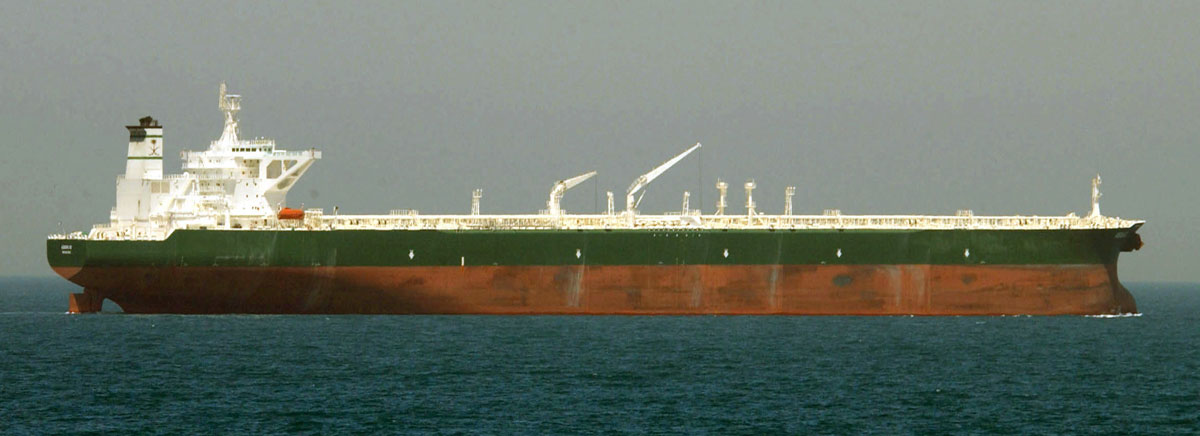
What moved markets was not a battlefield defeat, a sanctions announcement, or a central bank statement. It was two oil tankers — the Saudi-flagged Sidr and the Liberian-flagged Senegal Prosperity, each carrying approximately two million barrels of crude — struck by unknown projectiles minutes apart off the coast of Khasab, Oman. The attacks came hours after the United States launched strikes on Iranian military positions on Larak Island and Iran retaliated against US bases in Jordan. Together, they drove oil’s risk premium higher and pushed bond investors toward a conclusion that central bankers have spent months trying to avoid: the fight against inflation is not over.
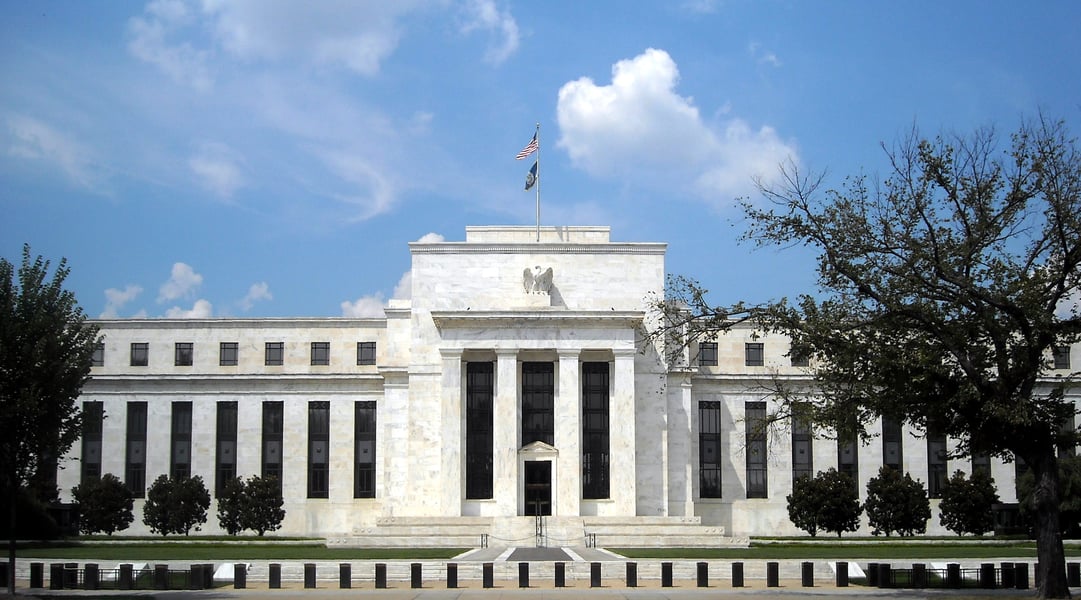
The Federal Reserve’s September 17 meeting now carries a 68 percent probability of a 25-basis-point rate hike, according to futures pricing — up sharply from roughly 40 percent before Federal Reserve Chairman Kevin Warsh’s hawkish address at Jackson Hole last week. For much of the summer, investors had been willing to extend the Fed the benefit of the doubt, betting that a lull in geopolitical tensions would give oil — and by extension, inflation — a chance to cool. Tuesday dismantled that theory.
“The Strait of Hormuz is not a risk that the Fed can model its way around,” a fixed-income strategist at one major asset manager told this reporter. “When a third of the world’s liquefied natural gas and nearly a fifth of global oil supply moves through a single choke point, and that choke point is contested, inflation has a floor.”
The ISM Manufacturing Index for August, released Tuesday morning, put the Fed’s predicament in even sharper relief. At 54.6 percent, the reading missed the 55.2 percent consensus estimate and came in below July’s 55.6 percent — the first sign that the manufacturing expansion, now eight months old, is beginning to lose some of its momentum. New orders fell from 56.7 percent to 53.7 percent. Employment eased to 51.2 percent from 52.8 percent. The backlog of orders contracted.
Under ordinary circumstances, a manufacturing miss of this size would harden the dovish case. A slowing economy is one in which the Fed can afford patience, letting existing rate levels do their work. But the prices component of the ISM report held at 71.1 percent — elevated, unchanged from July, and a reminder that manufacturers are still paying significantly more for inputs than they were a year ago. Energy prices are the primary driver of that stickiness, and energy prices are now moving in the wrong direction.
The bond market’s message was direct: a dovish interpretation of the ISM data is a luxury that a $92 oil environment does not afford. The 10-year Treasury yield has now risen for five consecutive sessions, extending a move that began at Jackson Hole and accelerated through the tanker news.
The global dimension of Tuesday’s sell-off underscored how the inflation trade has become coordinated across sovereign debt markets. Treasury Secretary Scott Bessent used the G20 meetings to talk up the bond market even as yields spiked — a signal that the Treasury Department is watching the move but not yet alarmed by it. Whether that posture holds if the 10-year yield breaches 5 percent — the psychologically significant threshold that is now roughly 20 basis points away — will be a defining question for September, CNBC reported Tuesday.
Oil’s role in the equation is not simply a headline risk. A sustained $10 increase in oil prices adds roughly 30 to 40 basis points to the US Consumer Price Index over six months, according to Fortune’s market analysis. Brent crude is now trading approximately $12 above where Federal Reserve economists had most recently factored energy into their inflation projections. That arithmetic, applied to the Fed’s September modeling, makes a hold — which would require Warsh to reverse the tone of his own Jackson Hole remarks — increasingly hard to justify to markets.
What the OPEC demand picture suggests is that the supply disruption is compounding rather than offsetting a tightening oil market. The group has cut its global demand forecast four consecutive times — a move that would normally ease price pressure — yet Brent settled at $91 the day before the tanker attacks and crossed $92 within hours of the news breaking. Supply disruption trumped demand caution.
For equity investors, the damage on Tuesday was concentrated but not catastrophic. The broader market’s relative resilience — the S&P 500 down only a third of a percentage point on a day when bonds sold off sharply — suggests some investors are still betting that the energy shock will prove temporary. JPMorgan’s recent outperformance is the canary some market observers are watching: when the biggest US bank by assets moves higher while others fall, it is usually because rate expectations are rising and traders expect bank net interest margins to benefit.
What the data cannot yet answer is whether the Fed will follow market pricing into an actual September hike, or use the ISM manufacturing miss as political and analytical cover for a pause. Iranian President Masoud Pezeshkian said Tuesday his government remains open to peace talks if the United States takes genuine steps toward engagement. The Trump administration has given no public indication of what such steps might look like. Bond markets, for now, are pricing the scenario in which risks remain elevated — and in which the Fed will not stand aside while they do.