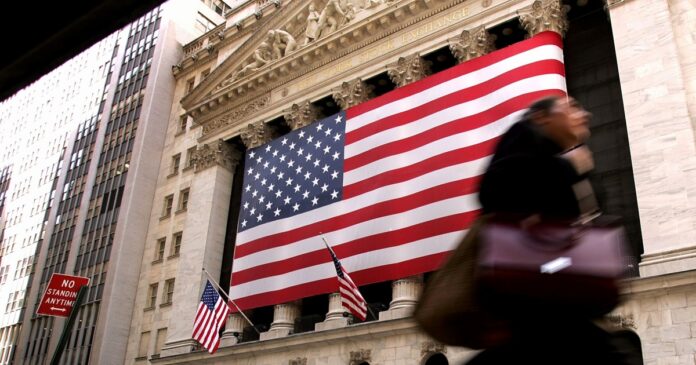

NEW YORK — While Federal Reserve Governor Kevin Warsh’s call for higher interest rates sent most of Wall Street lower on Friday, JPMorgan Chase climbed $3.40, or 0.96 percent, to close at $357.62 on August 28. It was the only major United States bank to finish the day in positive territory, even as the financial sector broadly retreated on warnings from Warsh’s Jackson Hole address that borrowing costs may need to rise further before year-end.
The divergence was not coincidental. JPMorgan’s business model, built on the largest deposit base in American banking, is structurally positioned to benefit from a higher-for-longer rate environment. The bank had already raised its full-year net interest income guidance to $105.5 billion in July, up from $103 billion, betting that rates would remain elevated. Warsh’s speech in Wyoming did not unsettle that forecast. It confirmed the conditions the bank had already priced in.
That confidence rested on a second quarter that stood out even by JPMorgan’s own historical standards. The bank reported net income of $21.2 billion for the April-to-June period, a figure that included a $4.6 billion one-time gain from the sale of its remaining Visa shares. Excluding that windfall, the underlying result remained formidable: adjusted net income of $16.9 billion, return on tangible common equity of 23 percent, and earnings per share of $6.14, beating the analyst consensus estimate of $5.55. Total managed revenue reached $58 billion, up 27 percent from the same quarter a year earlier, according to its second-quarter filing.
The breadth of the quarter’s strength was notable. Equities trading revenue surged 86 percent year-over-year as volatility across global markets gave JPMorgan’s trading desks more to work with. Investment banking fees rose 30 percent, recovering from years in which elevated rates kept corporate deal-making in a prolonged holding pattern. The firm’s consumer and community banking division continued to generate stable fee and deposit income. Chief Executive Jamie Dimon, who has spent years arguing that markets were underpricing the persistence of inflation, did not need Warsh’s endorsement of the higher-for-longer thesis. But Friday’s speech offered something close to one.
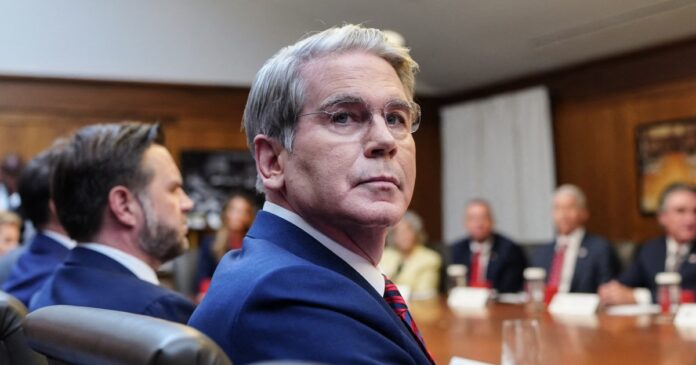
Speaking at the Federal Reserve’s annual symposium, Warsh described persistent inflation as an underappreciated risk and outlined the case for at least one additional rate increase before year-end. Futures markets placed the probability of a September hike at more than 60 percent following his remarks, NBC News reported. That repricing punished banks that depend on advisory revenue and underwriting fees. Goldman Sachs, whose business mix tilts toward deal-making rather than deposit gathering, fell 0.75 percent on the day. The S&P 500 dropped 0.62 percent, and the Nasdaq composite declined more sharply as rate-sensitive technology stocks bore the brunt of the selloff.
JPMorgan moved in the opposite direction for a straightforward reason: net interest income is not a cost of higher rates for the bank, it is the engine. When rates rise, the spread between what the bank earns on loans and pays on deposits widens. The $105.5 billion full-year NII guidance was built on that spread holding. Warsh’s speech suggested it might hold longer than markets had assumed going into Friday.
Whether JPMorgan can sustain that trajectory if rates stay elevated long enough to constrain loan demand remains the central uncertainty the bank’s disclosures do not fully address. Dimon has acknowledged that a prolonged rate cycle eventually compresses borrowing as debt-servicing costs climb. The bank’s guidance accounts for rates staying high. It does not fully account for a scenario where rates stay so high for so long that credit quality begins to erode at the margins. That distinction mattered little on August 28. It will matter more in coming quarters.
JPMorgan also entered that Friday session in the midst of a significant leadership shift. In late June, the bank named Doug Petno and Troy Rohrbaugh as co-presidents, a structural change that filled a vacancy created by Marianne Lake’s retirement from the firm. Petno took charge of the commercial and investment bank; Rohrbaugh assumed oversight of the consumer and community bank. Each received $30 million in restricted stock, scheduled to vest over three years provided the bank sustains at least a 12 percent return on tangible common equity. The succession question that has shadowed JPMorgan since Dimon signaled he would eventually step back grew incrementally more defined without reaching resolution, as CBS News noted in its coverage of JPMorgan’s leadership direction.
The August 28 close pushed JPMorgan’s market capitalization toward the $1 trillion threshold the bank has long approached without crossing. Analysts at Wells Fargo carried a price target of $390 on the shares, implying meaningful upside if the NII forecast proves conservative rather than aggressive. Whether the bank reaches that milestone in 2026 will depend largely on whether the rate environment Warsh outlined on Friday proves durable enough for the guidance to be revised upward.
For most financial stocks, the message from Jackson Hole was cautionary. For JPMorgan, it was something closer to confirmation. The bank rose because its business model treats a prolonged rate cycle not as a threat to manage but as the backdrop it was built for.