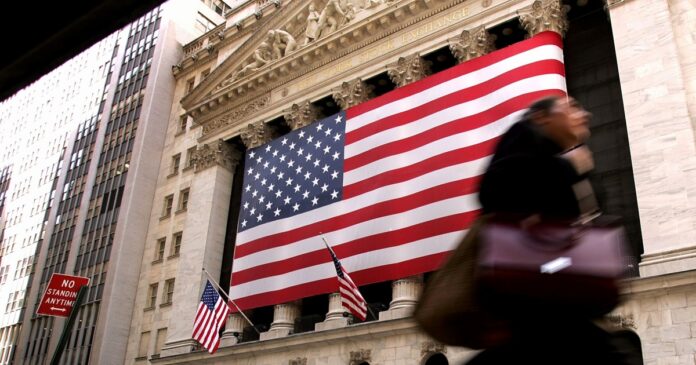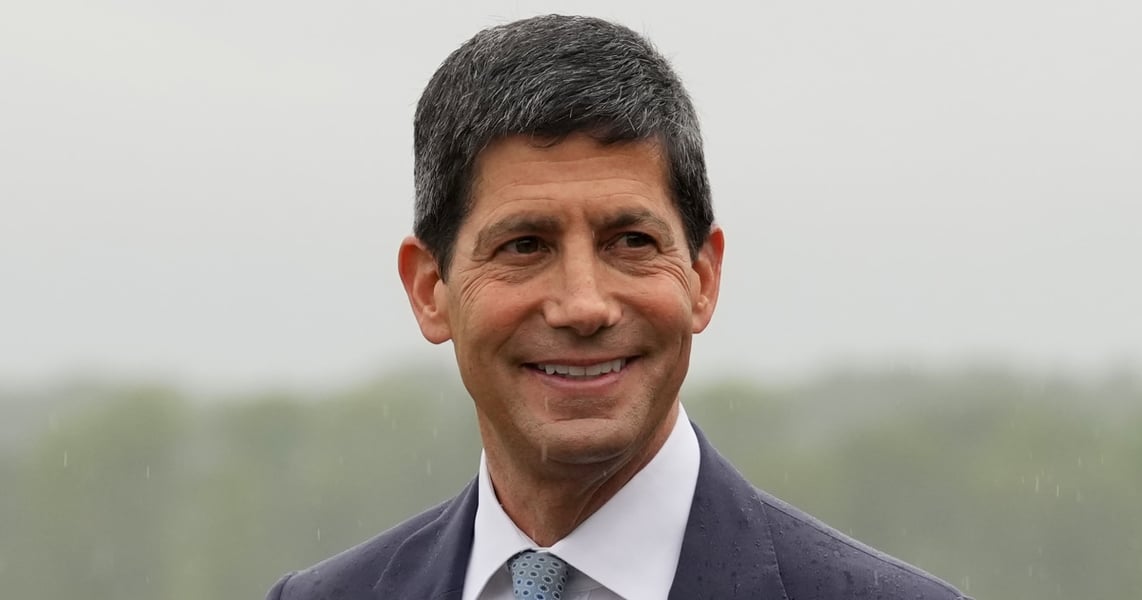

NEW YORK — Of the 30 components in the Dow Jones Industrial Average, Goldman Sachs Group Inc. (GS) sat on August 28 at the intersection of two opposing signals: a second quarter that nearly doubled earnings per share year-over-year, and a rate warning from Kevin Warsh that hit financial stocks across the board before the open. The result was a $7.75 retreat to $1,025.49, a 0.75% decline.
Four days later, the stock goes ex-dividend.
The $5 quarterly dividend Goldman Sachs raised 25% when it reported Q2 results in mid-July carries an ex-date of September 1, 2026. Investors holding GS at the close of August 29 are entitled to that payment. The $1,025.49 entry price on August 28 puts the annualized yield at roughly 1.95%. For institutional holders already sitting on GS’s 17.7% year-to-date gain, which runs well ahead of the S&P 500’s 12.9% advance, the dividend is supplemental income on top of an outsized capital position.
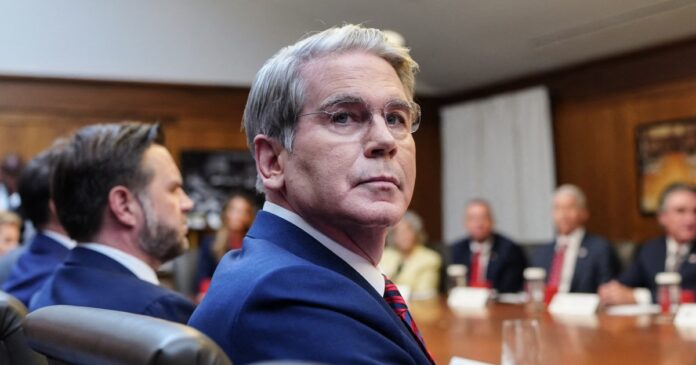
The August 28 pullback had little to do with Goldman Sachs specifically. Warsh’s Jackson Hole remarks laid out a case for holding rates higher for longer and pushed back on market expectations of fourth-quarter cuts. Banks are structurally leveraged to the rate environment, and a higher-for-longer framework from the likely next Federal Reserve chair reshuffles the lending margin and deal economics that make investment banking revenue predictable from quarter to quarter. The market’s response was fast and broadly indiscriminate across the financial sector.
Goldman itself had given little reason for sellers in recent weeks. The bank reported Q2 2026 earnings of $20.98 per diluted share against analyst estimates of $14.48, with net revenues reaching $20.34 billion against a $16.13 billion consensus, a beat that few banks of comparable scale have delivered in recent memory. Net earnings reached $6.63 billion. Annualized return on common equity hit 23.5%, the kind of ROE figure that investment banks spend entire cycles trying to sustain. The Q2 results that nearly doubled earnings year-over-year drew comparisons to the AI-financing boom years, with analysts noting that GS’s equities desk and advisory backlog were each running at levels not seen in five years.
The equities desk generated $7.42 billion in the second quarter, up 72% from the year-ago period, with strength spread across derivatives, cash products on the intermediation side, and prime services. Investment banking fees reached $3.40 billion, 55% higher than Q2 2025, as Goldman captured a disproportionate share of equity underwriting and leveraged finance mandates. The IPO market, where Goldman advised on several large technology and energy transactions, contributed materially to that total.
The investment banking backlog at the close of Q2 was the highest in five years. Goldman described the advisory backlog specifically, the pipeline of confirmed mandates not yet closed, as a record. What that pipeline consists of, deal by deal, remains proprietary. The bank does not disclose individual mandates until transactions are announced or completed. The same logic applies to Goldman’s private markets platform for wealthy investors, launched to channel high-net-worth capital into pre-IPO opportunities: the scale of committed capital is not disclosed, but the product’s existence reflects a bet that private-asset appetite will remain structurally elevated.
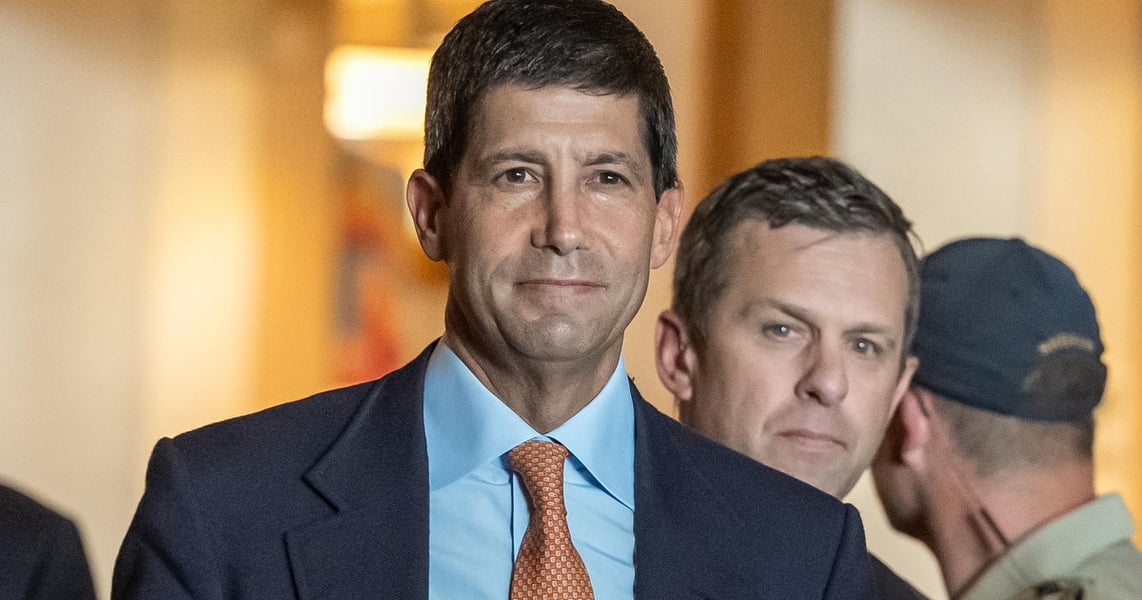
The connection between Warsh’s rate language and Goldman’s specific risk profile is structural rather than coincidental. Higher-for-longer rates raise the cost of leveraged buyout financing and compress the valuation multiples that make M&A deals work on both sides of a transaction. Advisory revenue, which carried a significant share of Goldman’s Q2 outperformance, is the business line most sensitive to deal flow slowing. If Warsh’s framework holds through the fourth quarter, the advisory pipeline that Goldman is booking revenue against will face a more skeptical financing environment. The rate warning that rattled futures across the August 28 pre-market session set that recalibration in motion.
That is the question the $1,025.49 close does not answer. Goldman’s Q2 was a record on nearly every metric that matters. Its Q3 backlog is described as the deepest in five years. But whether the mandates currently in the advisory pipeline close on their projected terms, at their projected valuations, before year-end depends in part on a rate environment that Warsh is now suggesting will be less accommodating than the market priced in through August.
Fox News reported Goldman’s Q2 earnings as a massive profit jump that smashed analyst estimates, highlighting the near-doubling of per-share earnings as the headline result. Alongside the dividend increase, Goldman announced a $4 billion common stock buyback, returning capital on two fronts simultaneously. A management team that raises the dividend 25% and launches a $4 billion buyback in the same quarter is signaling that it sees more capital than it needs for near-term deployment. That posture is its own statement about how the bank reads its balance sheet and its outlook.
The Goldman Sachs quarterly filing with the SEC shows the asset management division also contributed to the quarter ahead of plan, with private credit and infrastructure equity both generating management fee revenue above targets. The bank’s 10-Q discloses the segment breakdown in granular detail, including how much of the equities revenue came from financing versus intermediation.
What neither the filing nor the August 28 close can confirm is how much of Goldman’s advisory pipeline holds if higher-for-longer becomes the base case through Q4. The backlog is record-deep. The rate environment that made deal economics function through most of 2026 is suddenly contested. GS at $1,025.49 is the market’s price for that uncertainty, placed four trading days before a dividend that rewards whoever holds through it.