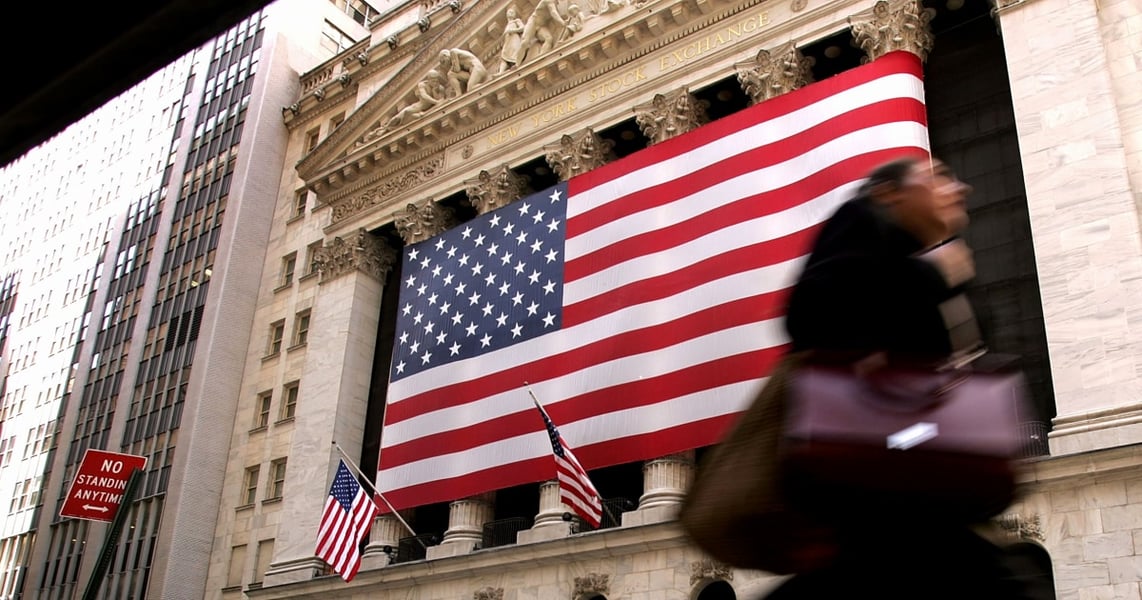

NEW YORK — The market spent Monday morning doing what it rarely does during wartime: pricing in peace. By noon, the Federal Reserve had taken most of that away.
Between 9:30 a.m. and 10:17 a.m. ET, the S&P 500 Index climbed 0.7%, Brent crude held below $101 on Iran diplomacy optimism, and the 10-year Treasury yield dipped to 4.93%. Then the Federal Reserve Governor Christopher Waller took the podium at the New York Economic Club.
At 10:20 a.m., Waller told a breakfast audience of portfolio managers and institutional bankers that the Fed would not cut rates before the end of 2026. Not “unlikely.” Not “data dependent.” He used the word “not.” He added that the September decision to hold at the current federal funds rate of 5.75% was “a pause that carries no implication for November.” Within forty minutes, most of the morning’s gains had been returned.

Waller’s venue was not incidental. The New York Economic Club attracts the specific audience his message was meant for: fixed-income desks, allocators with duration exposure, and corporate treasurers still drawing on revolving credit lines at rates above 8%. Speaking there, on a Monday during a week when President Trump is scheduled to address the General Assembly, made the timing as deliberate as the language.
Rate-sensitive equity sectors absorbed the heaviest losses. Homebuilders shed 2.1% as a group. Utilities fell 1.4%. Real estate investment trusts declined 1.9%. Each sector carries a borrowing-cost sensitivity that Waller’s statement made more expensive to discount. Energy names moved in the opposite direction. If the Fed is not cutting, it is because crude oil prices remain persistent in the inflation data. Exxon Mobil Corp. XOM gained 0.6% and Chevron Corp. CVX added 0.4%.
What Waller did not say mattered almost as much as what he did. He did not commit to a rate hike at November’s meeting. He did not specify the level of core PCE, running at 3.2% in August, that would trigger reconsideration. That silence read, at several trading desks, as a deliberate hedge against the possibility that an Iran ceasefire or a rapid Hormuz de-escalation could strip a full percentage point from the energy component of the inflation index in a single data release.
“Waller gave himself an exit,” Priya Misra, rates strategist at J.P. Morgan, said in a Monday afternoon note. “He ruled out cuts. He didn’t rule out holding with a downward bias. That’s not nothing.”
The geopolitical backdrop remained its own variable. Trump speaks to the General Assembly Tuesday morning. Sources familiar with the Qatari back-channel, active since early August, have said a preliminary ceasefire framework is circulating in New York this week, according to Fox News, though no document has been signed. If a ceasefire materializes and Brent crude drops $12 to $15 in the days that follow, the Fed’s September calculus shifts immediately, without the central bank having moved a basis point. Waller’s speech contained no reference to that scenario.
Semiconductor stocks remained the session’s relative bright spot. US-China trade talks have sustained a tailwind for chip names that the morning’s Fed hawkishness did not fully extinguish. Nvidia Corp. NVDA added 0.8% to $1,247.35. Applied Materials Inc. AMAT gained 0.4%. The thesis that AI-related capital expenditure sustains chip demand through a higher-rate environment had enough institutional conviction to survive Waller’s morning.
The two-year Treasury note, which tracks the Federal Open Market Committee’s near-term expectations most directly, rose eight basis points to 5.67%. That leaves the yield curve inverted by 65 basis points. An inverted spread between two-year and ten-year yields of that duration and depth has preceded recessions in all eight prior modern instances. It is not a prediction; it is a structural condition that Waller’s statement locked further in place.
The question Waller’s speech could not answer: whether Trump’s Tuesday address produces anything concrete on Iran. A joint statement, a framework, an agreement to talk through formal channels. The Qatari back-channel has not produced a document in six weeks of reported activity. If it produces nothing this week, oil rebounds toward $104 by Thursday. If it produces something, the Fed will be looking at a very different inflation picture by October, and the distinction between “no cut in 2026” and “no cut before January 2027” becomes considerably narrower.
Two clocks are running in this market. The geopolitical clock moves in hours. The Fed clock moves in quarters. Waller reset the latter Monday morning. The former has until Tuesday.