
NEW YORK — The most revealing line in Oura’s IPO filing was not the revenue figure, the subscriber count, or the $15.62 billion valuation. It was Eli Lilly’s name. The pharmaceutical company behind Zepbound and Mounjaro has indicated it intends to buy up to $100 million of shares in the offering, a commitment that places a drug giant at the center of a hardware IPO and signals something about where the business of health data is headed.
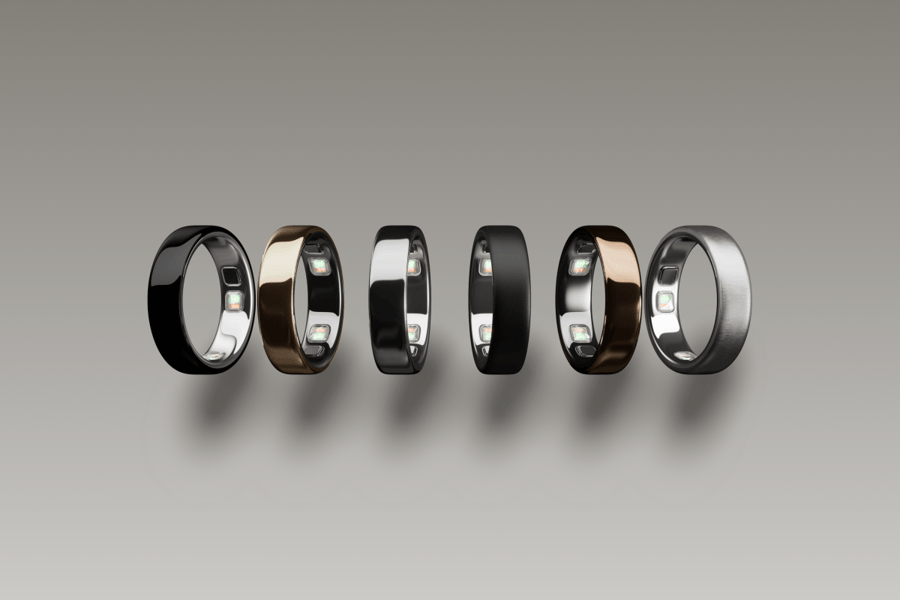
Oura filed its prospectus with the Securities and Exchange Commission on Monday, planning to sell 50 million shares priced between $40 and $44 and list on the Nasdaq under the ticker OURA. The offering values the Finnish wearable company at $15.62 billion on a fully diluted basis, and the deal could raise as much as $2.2 billion. The company launched its Oura Ring 5 earlier this year, its thinnest device yet, adding blood pressure monitoring and sleep apnea detection to a platform that now counts roughly 5.7 million paying subscribers.
Not all of that $2.2 billion is going to Oura. Of the 50 million shares on offer, 36.5 million are secondary, meaning the money flows to existing investors rather than to the company. Forerunner Ventures, which backed Oura in its early rounds, plans to sell its entire stake and collect as much as $1.26 billion in the process. Oura itself is issuing just 13.5 million new shares, enough to raise roughly $540 million at the top of the range. Goldman Sachs, Morgan Stanley, and J.P. Morgan are leading the underwriting. The company’s own cash reserves stood at approximately $372 million at the end of June, which means it is not listing under financial duress.
What makes Eli Lilly‘s $100 million cornerstone position notable is what it implies beyond a financial return. Lilly has spent recent years trying to extend its GLP-1 franchise beyond the prescription pad: into adherence tracking, into coaching platforms, into digital tools that keep patients engaged with drug regimens over the long periods these therapies demand. A smart ring with 89% gross margins on its subscription layer and 74% share of its product category is an obvious data partner. The filing does not disclose whether Lilly’s investment comes with any commercial arrangement, and Oura has not commented on that possibility, which leaves the more interesting interpretation open.
Oura’s growth numbers read like a category that found its moment. The company reported $1.21 billion in revenue for the nine months ending in June, up 74% from the same period a year earlier. As TechCrunch reported Monday, net losses widened to $924.3 million over the same period. The hardware business carries thin margins; the membership business at 89% gross margin is where the unit economics actually live, and subscription revenue more than doubled to $240.5 million. The company is structured so that the ring is the acquisition cost and the membership is the business. Whether public market investors will accept that as a durable model is the question the listing will settle one way or another.

The company has set its total serviceable market at more than $90 billion, encompassing fitness trackers, health coaching, digital therapeutics, and connected biosensors. That figure demands scrutiny. Oura has earned the right to be aggressive about its long-term ambitions because its subscriber growth is real and its gross margins on recurring revenue are excellent. But the path from wearable hardware to clinical-grade digital health is not a straight line. The convergence of GLP-1 therapy management and biometric monitoring is one concrete example: Medicare‘s expansion of coverage for weight-loss drug treatments for seniors created an immediate demand for tools that track patient response without requiring office visits. Whether Oura’s ring becomes part of that infrastructure, or remains a consumer wellness device with pharmaceutical investors, depends on clinical validation the company has not yet publicly delivered.
The timing of the listing carries significance beyond Oura. The company is walking through the first serious IPO window of the fall after a summer in which major technology offerings largely held back. Anthropic pushed its own listing to November; other technology names have remained on the sidelines. Dragoneer Investment Group, which has indicated interest in buying as much as $300 million of the Oura offering, is signaling that healthcare technology can open a window that AI companies are still deliberating over. A successful Oura debut at or above its indicated range would say something about subscription-hardware models that the fall technology IPO market is watching carefully.
What the filing does not settle is the form factor question. The ring is deliberately passive, requiring no attention from the person wearing it, which is a meaningful design choice at a time when health wearables are generating as much anxiety as insight. CTV News reported Monday that the deal sets the stage for a broader fall listings season. But the ring has no screen, no GPS, no cellular connection. At $15.62 billion, investors are buying a data collection business wearing the disguise of a piece of jewelry. Whether the pharmaceutical industry, rather than the consumer wearable market, ultimately defines Oura’s value: that is what Eli Lilly’s $100 million is actually wagering.