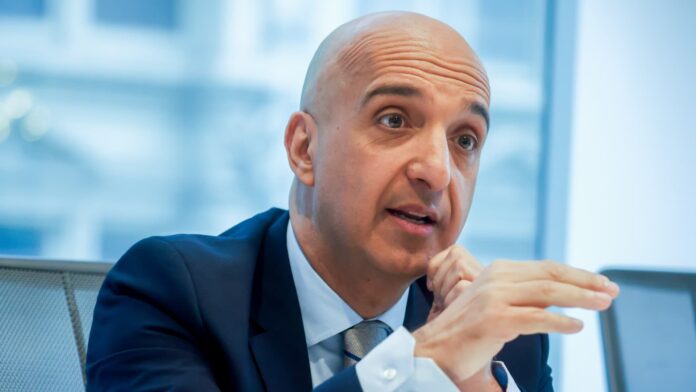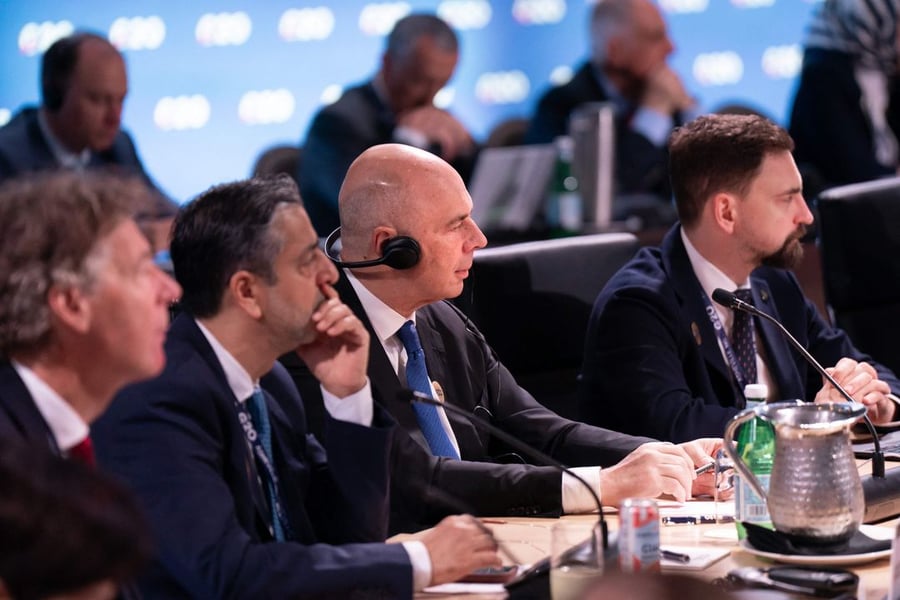

ASHEVILLE — For the first time in nearly four years, Russia’s Finance Minister sat in the same room as the world’s top economic officials, and the West could not agree on what to do about it.
Anton Siluanov, personally sanctioned by Washington since April 2022, arrived in Asheville, North Carolina, on Monday for the Group of Twenty Finance Ministers and Central Bank Governors meeting, his first in-person G20 appearance since Russia launched its military operation in Ukraine. His presence was not an accident or an oversight. It was a deliberate choice by the Trump administration to return Moscow to the multilateral table, over the strenuous objections of European allies who had spent two years treating Russia’s exclusion from such gatherings as a point of principle.
They lost the argument before the summit started. When the traditional G20 family photo was taken Tuesday, Siluanov was absent. European ministers and central bankers refused to stand beside him. But the larger concession had already been made. Russia was in the building, and Washington had put it there.
U.S. Treasury Secretary Scott Bessent met Siluanov on the summit’s sidelines in a bilateral session. By all accounts reaching journalists, the exchange was pointed. When Siluanov raised areas where Russia and the United States might cooperate, Bessent interrupted. Nothing was possible, Bessent made clear, until the war in Ukraine was over. No sanctions relief. No new agreements. No progress on anything, as Al Jazeera reported Tuesday.
Russia’s Finance Ministry described the same meeting in strikingly different terms. The two men, Moscow said, had discussed financial cooperation within the G20 framework. That distance, between an ultimatum and a framework discussion, is where the true condition of the West’s economic war against Russia now lives.
Four years of coordinated sanctions, asset freezes, export controls, and price caps have not forced Moscow to the settlement table, nor have they produced the economic rupture Western policymakers originally projected. The European Commission revised Russia’s 2026 GDP growth forecast to 1.3 percent, as Interfax reported, while the World Bank projected 0.8 percent. Neither figure suggests collapse; both suggest an economy absorbing pressure without breaking. A state truly at the edge of financial defeat does not grow, even modestly, into its fourth consecutive year of coordinated economic assault.

Russia’s energy revenues proved more durable than the architects of the sanctions regime anticipated. When Europe shut the door, China and India opened a larger one. The Centre for Research on Energy and Clean Air estimated in June 2026 that the ongoing Iran war, keeping global energy prices elevated, has inadvertently created fiscal breathing room for Moscow. Higher energy prices mean higher Russian export revenues, and more complex trade-offs for any government considering tighter measures. Brent crude recorded its seventh consecutive weekly inventory draw through the week ending Tuesday, with the contract settling above $91 a barrel, keeping oil markets tighter than most economists had forecast for this stage of the year.
The picture from Asheville is not one of Russian triumph. Russia’s budget is under strain, with first-quarter 2026 spending running past the government’s full-year deficit target. Corporate debt is rising. Inflation remains elevated. But managed stagnation is not capitulation, and Siluanov’s presence at the G20, invited rather than smuggled in, was its own quiet statement about where this conflict’s economic front now stands.
German Finance Minister Lars Klingbeil was less quiet. The US decision to welcome Siluanov sent a signal he called “quite troubling,” Klingbeil told reporters, barely concealing a frustration that ran much deeper. European governments had expected Washington to coordinate on an expanded sanctions package against Russia and arrived in Asheville expecting shared resolve. They left facing a different American calculation.
The Trump administration appears to have concluded that meaningful movement toward peace requires Moscow at the table, even a symbolically diminished table stripped of photo opportunities. According to a US official who spoke to journalists on condition of anonymity, the Bessent-Siluanov meeting was not primarily about sanctions at all. Bessent used it to outline Trump’s peace plan for Ukraine, giving the Russians a direct channel that bypassed the usual diplomatic noise.
None of this will satisfy Ukraine’s European supporters, who see in Asheville the early contours of an American-brokered settlement that may prioritise a negotiated end over the accountability Kyiv has demanded. Trump simultaneously ordered new strikes on Iran this week as the Strait of Hormuz mining crisis threatened to escalate, straining Washington’s bandwidth across two active fronts and giving the White House further reason to want at least one conflict quieted.
The G20’s broader agenda in Asheville, covering growth, private investment, debt, and financial regulation, largely proceeded. Finance ministers identified excessive regulatory burdens, poorly designed tax incentives, insufficient investment, and skills gaps as the primary drags on global growth. But the summit’s defining image will not be a communique about productivity. It will be the photo missing one man, and the bilateral meeting whose contents Moscow and Washington described in such irreconcilably different terms that only one of them can be telling the full story.
What Siluanov said when Bessent finished is not publicly known. Russia’s Finance Ministry offered no elaboration on the financial cooperation framework it said the two men had discussed, and Siluanov himself issued no public statement on the encounter. The silence is curated as carefully as any official communique. Moscow, it seems, is in no particular hurry to clarify.
Xi Jinping’s simultaneous arrival in Cairo, deepening China’s ties across a region whose energy markets continue to sustain Russia’s export revenues, was a reminder that the map these finance ministers are trying to manage from a mountain city in North Carolina keeps rearranging itself in ways that no summit communique can contain.