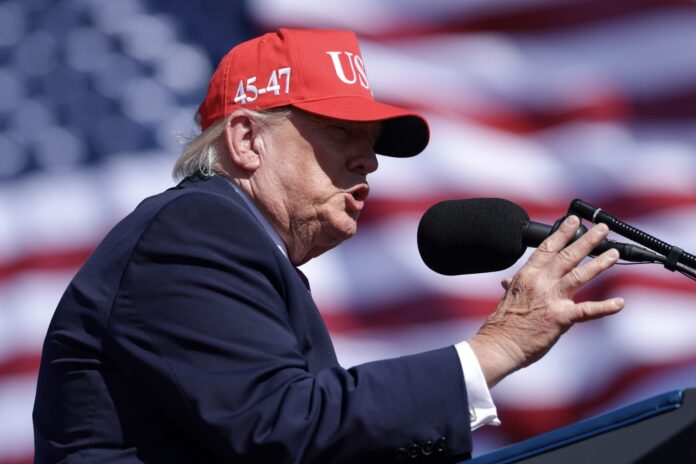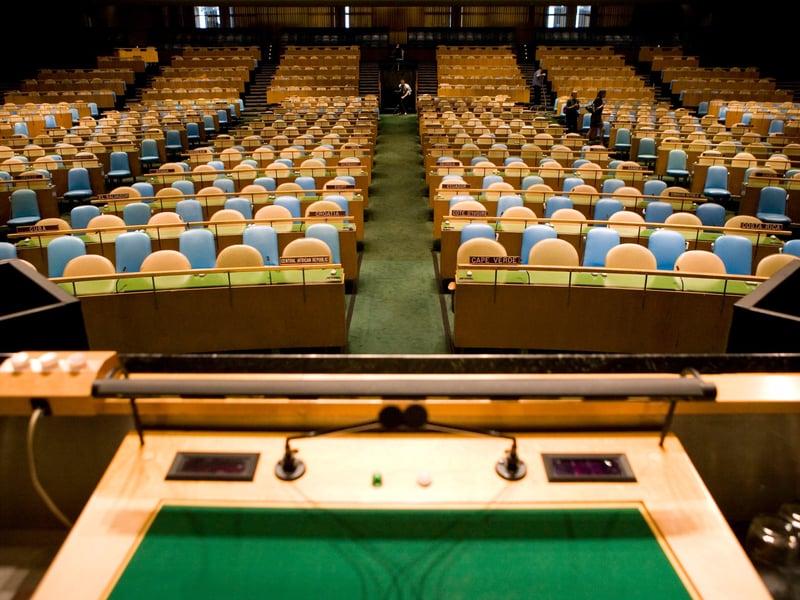

NEW YORK — Donald Trump returned to the United Nations General Assembly on Monday presenting a list of conflicts he said the United States had ended and arguing that the world should recognize Washington’s role.
The setting made that claim more complicated. One floor above, the president of a country that the U.S. government had been bombing for seven months was scheduled to respond.
The juxtaposition framed the speech’s central tension: Trump’s portrayal of American power as a force for peace versus the reality of an ongoing campaign involving the United States.
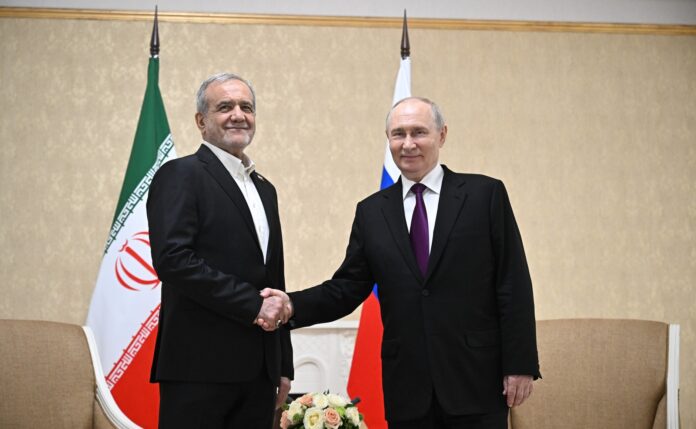
The juxtaposition was almost clinical in its precision. Masoud Pezeshkian, Iran’s president, was scheduled fifth on Tuesday’s speaker list. His prepared remarks, circulated ahead of time, describe the US-Israeli strikes on Iran as “savage aggression” and “a grave betrayal of diplomacy.” He would not yield, he intended to say, to demands his government considered excessive, but Tehran remained ready to demonstrate that its nuclear programme was peaceful.
Trump did not appear to be thinking about Tuesday.
He told the 193-member assembly, gathered under this year’s theme of “Restoring trust, managing transformation: a United Nations that delivers for all,” that the United States had delivered where the institution had not. He listed peace deals his administration claims credit for. He outlined a 20-point framework his team has been promoting as the path to ending the conflict in Gaza, a framework none of the parties with actual leverage over the situation, including Qatar, Egypt, or the remaining Hamas political leadership, has endorsed publicly.

Washington has not paused its financial campaign against Tehran for the duration of the General Assembly. Operation Economic Outcast, the name Bessent’s Treasury gave its sanctions escalation in August, continued its rollout this week even as the Iran war’s primary combatants shared the same Manhattan island.
Benjamin Netanyahu was also at the assembly. The White House confirmed a bilateral meeting with Trump but provided no details. What the two men would say to each other about the Gaza genocide, now past its second year with more than 80,000 confirmed dead, was not announced in advance. Netanyahu’s public schedule included his own address to the assembly, and aides said he would use it to defend the joint US-Israeli campaign and urge further pressure on Tehran.

Russia sent Foreign Minister Lavrov rather than Putin to the assembly this year, but Moscow’s position has not changed: any settlement of the Iran conflict must preserve Tehran’s right to civilian nuclear development and guarantee its territorial integrity. Lavrov was expected to press that line on Tuesday. Whether it finds any purchase with an administration that has spent seven months prosecuting a war against the country Lavrov is protecting is an open question neither Washington nor Moscow appeared eager to answer.

Iran transmitted seven conditions for any diplomatic resolution to the United States via the Qatari backchannel earlier this month; four remain undisclosed. The three known terms were reported to include a verifiable ceasefire, international guarantees against future strikes, and the lifting of sanctions applied since the war began. According to a United States Department of State briefing on the 81st session, no direct formal contacts between the US and Iranian delegations were scheduled on the margins of UNGA. Whether Trump addressed any of Iran’s conditions during his General Assembly speech, the White House had not said at the time of publication.
Trump reportedly told the assembly that the United Nations does not help peace, then added that he backed the institution one hundred percent. The UN press corps did not appear to find the two statements contradictory. Neither, apparently, did Trump.