Iran Peace Talks Hit Fresh Impasse as Trump Sets Economic or Military Choice
Fresh Gulf shipping attacks coincided with Iran-US talks hitting a new impasse as Trump publicly set two options: let Iran fail economically or strike hard.
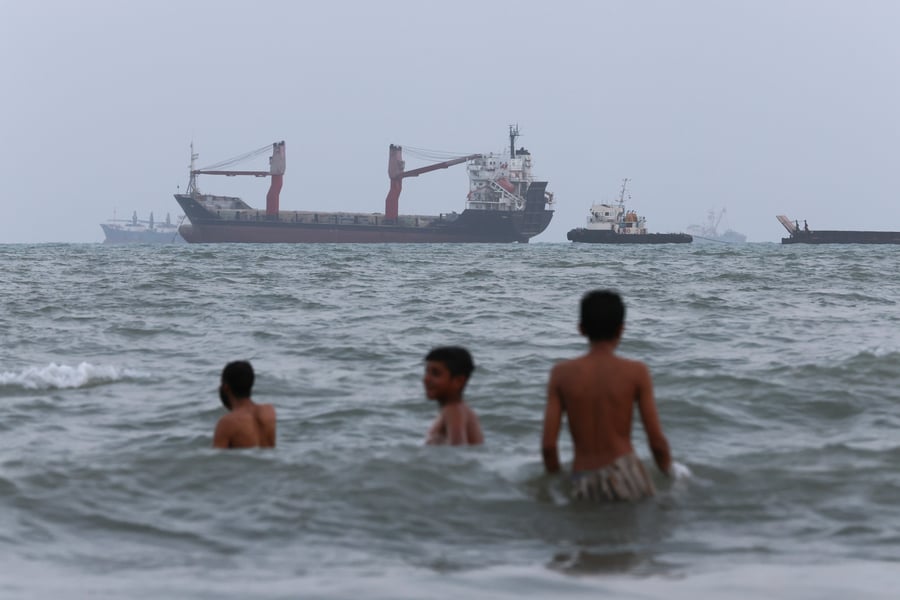
Ships anchored in the Strait of Hormuz, which has been closed to commercial traffic for three consecutive months during the Iran-US conflict. [Image Source: Getty Images via Al Jazeera]
WASHINGTON — New shipping attacks in the Gulf materialized Tuesday night as United States-Iran peace talks reached another impasse, Reuters reported, a sequence that has defined every phase of a conflict now entering its third month without resolution.The attacks came hours after President Trump outlined his theory of the negotiations with unusual explicitness. In a Tuesday interview, he described two options toward Tehran: economic suffocation, letting Iran just bop along and look how bad they’re doing, or military escalation, hitting them, in Trump’s words, really, really hard. Neither formulation accommodated the middle path that three mediating states have spent weeks constructing.Qatar and Pakistan, the principal intermediaries in the talks, had described the negotiations this week in terms that did not align with the president’s public posture. Qatar said discussions over management of the Strait of Hormuz had reached what its officials called an advanced stage. Pakistan said the two sides were approaching some sort of deal. Trump’s Tuesday framing placed the US position nowhere near those characterizations.The divergence between the diplomatic and military tracks is not new, but Tuesday crystallized how separately they operate. While negotiators describe proximity to a framework, the Strait of Hormuz has been closed to commercial traffic for three consecutive months, and attacks on vessels transiting or anchored near Gulf shipping lanes have continued throughout every round of talks that has been described, from at least one mediating capital, as progressing.Trump’s language in the interview reflected leverage rather than urgency. He described Iran as very devious negotiators and framed the frozen Iranian assets held by the United States as a structural instrument: “I’m their banker.” The characterization implies a willingness to hold those assets indefinitely as a pressure tool, a posture that gives Washington theoretical patience but narrows the confidence-building steps mediators have said Iran requires before any Hormuz agreement can take effect.
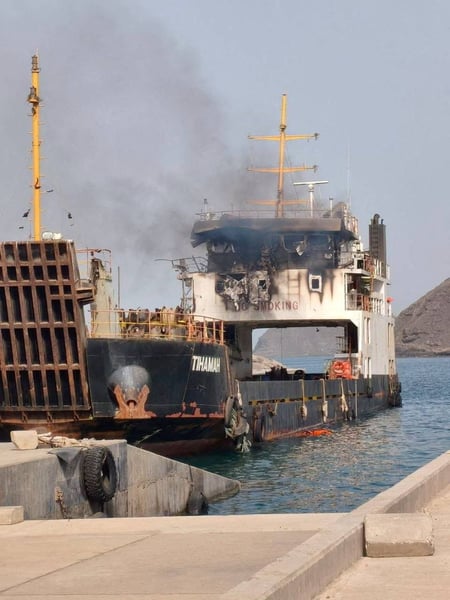
The Tihamah, a cargo vessel damaged in the Red Sea, listing after an attack as Iran’s nuclear negotiations with Europe continued in parallel. [Image Source: Reuters]
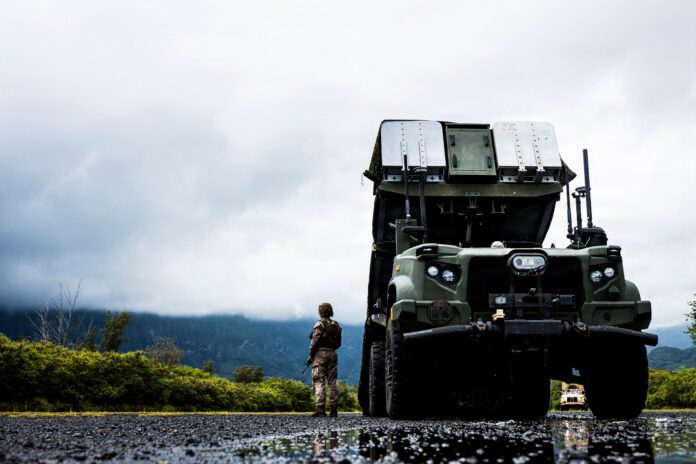
The military arithmetic complicates the patience. Reuters reported earlier this summer that the US Army had depleted much of its long-range missile stockpile during the Iran strikes. Trump disputed the characterization Tuesday, saying the United States is building munitions like crazy and attributed the depletion to his predecessor’s Ukraine policy, claiming Biden had sent $300 billion worth to Ukraine. Neither figure has been independently verified. The more consequential variable is operational: whether Washington retains meaningful escalation capacity relative to the heavy military strike option Trump describes as a live alternative.The Iran strikes paused in late July, which Trump’s White House framed as space for diplomacy, coincided with a classified assessment about depleted Patriot interceptor stocks. The subsequent Iran strike wave ordered August 1 targeted Iranian energy infrastructure and was framed as a pressure tool to accelerate a settlement. The approach has not produced that outcome. What it has produced is a negotiating context in which both sides have demonstrated willingness to escalate and both have tested the limits of the other’s resolve, without either reaching the point where cost compels concession.The impasse reported Tuesday, whose specific content has not been made public, follows a pattern. Previous diplomatic advances have been eroded by what negotiators describe only generally as new demands from Washington. Whether the shift involves Iran’s nuclear program, its support for regional proxies including the Houthis, restrictions on uranium enrichment above civil limits, or something beyond those existing frameworks is not in the public record. What is public is the rhythm: talks advance, demands shift, talks stall.The US-Iran negotiations entered their most intensive phase after Trump’s semi-negotiating characterization of early August signaled that Washington was not yet committed to a concluded deal. That framing gave the White House rhetorical room to keep applying pressure while maintaining the form of diplomacy. Tuesday’s events used that room: the president named the alternative to negotiation publicly, and new shipping attacks registered in Gulf waters within the same news cycle.The costs accumulate regardless of which track dominates a given news cycle. Approximately a quarter of global oil normally transits the Strait of Hormuz. The closure has sustained energy price volatility throughout the summer and contributed to the back-to-back losses posted by the S&P 500 this week as traders repriced the probability of a near-term Hormuz opening. Asian and European supply chains dependent on Gulf energy continue to absorb the rerouting costs of Cape of Good Hope transits. What mediators in Doha call an advanced stage of talks is not yet reflected in any instrument that prices the risk of continued closure.Whether the impasse is temporary or structural depends on a question Trump’s Tuesday interview did not answer: what, specifically, would the United States accept as the basis of an agreement. The two options he described presuppose Iranian capitulation as the endpoint. Whether Iran’s leadership, facing an economy under compounding sanctions and sustained military pressure for months, will reach that endpoint, or whether it will absorb the pressure until US domestic politics or allied patience shifts the calculus, is the open variable at the center of every channel the mediators are managing. Tuesday’s new attacks in Gulf shipping lanes suggest that variable has not yet resolved in either direction.
Dilnaz Shaikh is a journalist at The Eastern Herald covering current affairs, politics, climate and environmental developments, with a focus on major developments in India and around the world.