
NEW YORK — John Ternus arrived at Apple’s Cupertino campus on Monday as chief executive and left with something Tim Cook rarely offered the market in his final months in the chair: a clean 3% gain while every other major technology name on the Nasdaq bled red.
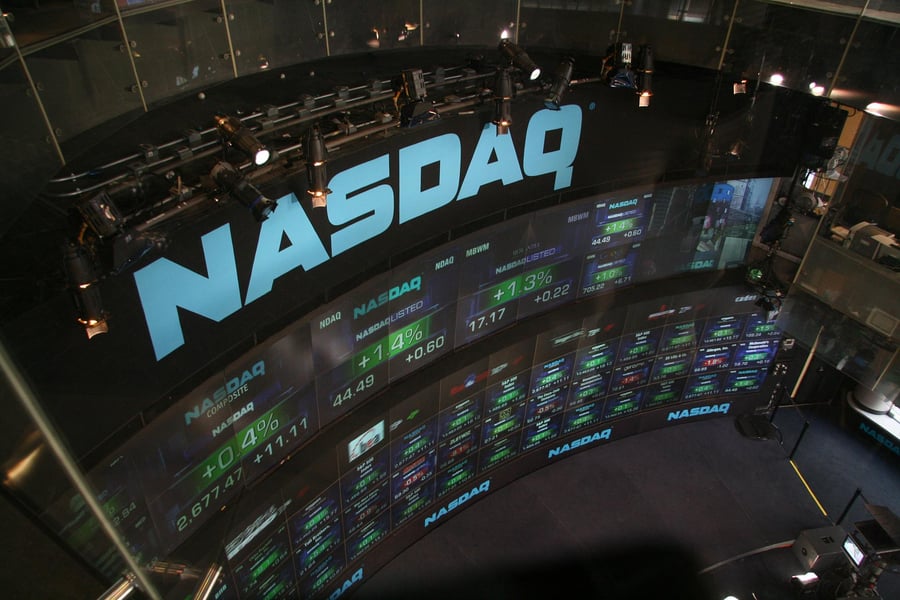
Apple Inc. closed at roughly $325.13 on September 1, up about 3% in a session when the Nasdaq Composite dropped 271 points, or 1.03%, to approximately 26,099, its broadest single-day decline in three weeks. Nvidia fell 2% to $217.18. Advanced Micro Devices slid 2% to $460.52. Intel lost 3%, closing at $86.68. The divergence was not accidental.
The proximate cause of the broader selloff was the same energy-and-yield combination that has been grinding at growth stocks since late August. The 10-year Treasury yield pushed to 4.80%, touching a 19-month high, as oil traded above $91 a barrel following weekend shipping disruptions in the Strait of Hormuz. Higher yields compress the present value of future earnings, and the chip sector, whose most profitable customers are hyperscale data centers burning megawatts of electricity, faces a second-order squeeze: the same oil prices lifting yields are also driving up data center operating costs.
Apple does not run data centers for third parties. It makes devices that people buy regardless of what bond markets are doing in any given week. The business model is a product cycle, not a compute cycle: when yields rise, the premium on Apple shares comes not from rate sensitivity but from the distance between now and the next hardware launch. On Monday, that distance was eight days.
Ternus sent a company-wide memo on Monday morning, his first communication as chief executive, in which he told employees that “we have a huge launch next week that’s going to be phenomenal.” The iPhone 18 event, scheduled for September 9 in Cupertino, has been anticipated since at least June, when supply-chain filings confirmed that Apple’s first foldable iPhone would launch alongside the standard lineup. Ternus led the hardware engineering team that built that device. The market appears to be paying for his proximity to it.
The succession has been structured to preserve continuity. Tim Cook, whose 15-year tenure took Apple’s market capitalization from roughly $350 billion to above $4.6 trillion, moves to Executive Chairman and remains on the board. The formal handoff was disclosed in late July, and Ternus was simultaneously named to the board, giving investors six weeks to assess the transition before it became official. Cook’s elevation of Ternus was widely read by analysts as a signal that Apple’s near-term hardware roadmap, including the foldable iPhone project Ternus shepherded, would not change direction. Apple shares had been recovering steadily through August even as the broader semiconductor complex sold off.
Ternus is 50. He joined Apple in 2001 as an engineer and rose through a series of hardware roles; the transition of the Mac from Intel to Apple Silicon, announced in 2020, was his most consequential project before Cook elevated him to Senior Vice President of Hardware Engineering in 2019. His academic background is mechanical engineering at the University of Pennsylvania. A compensation package disclosed by Apple with the Securities and Exchange Commission set his base salary at $3 million and an equity target of $55 million for fiscal 2027, tying his financial incentives directly to the stock’s performance.
What that hardware background does not obviously cover is the software and services infrastructure that now generates roughly a third of Apple’s revenue. The App Store, Apple Music, iCloud and Apple TV+ collectively pulled in $24.2 billion in the most recent fiscal quarter. Those businesses depend on developer relationships, regulatory navigation (Apple’s App Store faces antitrust proceedings in the European Union and the United States simultaneously), and a platform-level AI strategy that has been described, including by Fortune, as facing structural pressure from competitors who moved into AI infrastructure earlier.
The chip sector’s session on Monday also measured a different kind of exposure. Nvidia’s Blackwell architecture dominates data center AI spending; Intel and AMD are competing for the same market, and Marvell Technology also declined alongside the broader chip group. South Korea’s semiconductor exports hit a record in August, driven by AI memory demand, underscoring how aggressively the rest of the industry is building the infrastructure layer that Apple’s device-first strategy deliberately sidesteps. Apple embeds its Neural Engine in consumer hardware. That keeps it clear of hyperscaler cost pressures; it also keeps Apple one step removed from the primary engine of industry growth in 2026.
Brent crude’s advance above $91 compounded the day’s pressure, reinforcing the inflation signal that has been building since the Hormuz disruptions began. Federal Reserve policymakers face five critical data releases before their September meeting, a window whose implications for the rate path were sharpened by August ISM manufacturing data showing accelerating factory activity.
Ternus does not control oil prices or Treasury yields. What he controls, for now, is the narrative around a product lineup investors have decided to treat as a floor under the stock. Whether that floor holds once the iPhone 18 launch cycle completes, and whether his hardware instincts extend to the services and AI decisions that will define Apple’s next decade, is a question his first memo, deliberately, did not answer.