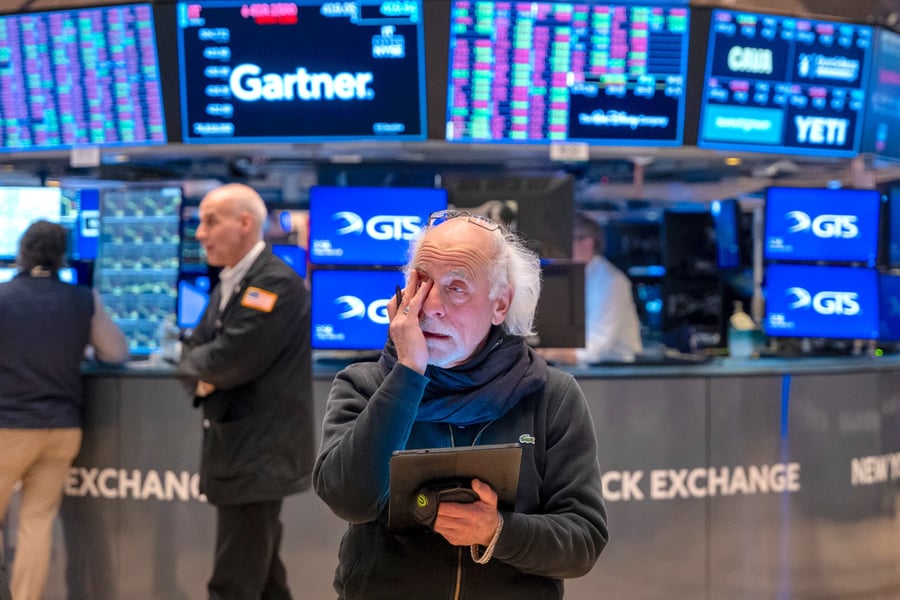

NEW YORK — South Korea’s benchmark stock index fell 7.57 percent on Thursday and at one point triggered a trading halt, and the shock was still travelling west before Wall Street opened.
Nasdaq futures were down about 1 percent, extending Wednesday’s losses, and the S&P 500 had already shed 1.11 percent. Japan’s Nikkei 225 lost 4.9 percent. The 10-year Treasury yield peaked at 5.32 percent, then dropped back to 5.08 percent by morning, a swing that left traders unable to say whether the bond was a refuge or a risk.
What makes the rout hard to read is that the sector’s own news was good. TSMC reported third-quarter earnings that beat forecasts and said it would spend more on capacity over the next two years. Apple closed at a record high, the second company after Nvidia to reach a $5 trillion market value. Anthropic said it was profitable on an adjusted basis, though its $17 billion of quarterly revenue pointed to slower growth than analysts had estimated. The selling came anyway.
Rates offer one explanation. Wednesday’s September CPI inflation report showed consumer prices up 3.7 percent over twelve months, from 3.4 percent in August, with core prices up 2.6 percent. CoinDesk reported that the odds of an October Fed rate increase jumped to almost 47 percent on CME’s FedWatch tool from roughly 22 percent, then slid back to about 26 percent.
The damage landed on the names carrying the AI buildout. Fortune reported that CoreWeave lost 15.46 percent on Wednesday and slid another 5.89 percent overnight, while Oracle fell 8.83 percent and gave up a further 1.57 percent after hours. It is the second violent session for Korean chip stocks this year. In July an earnings miss at SK Hynix produced South Korea’s worst stock market day on record.
Not every market joined in. India’s Nifty 50 rose 1.68 percent and the FTSE 100 gained 0.48 percent before lunch, while China’s CSI 300 lost 1.23 percent. Brent crude traded near $106 a barrel.
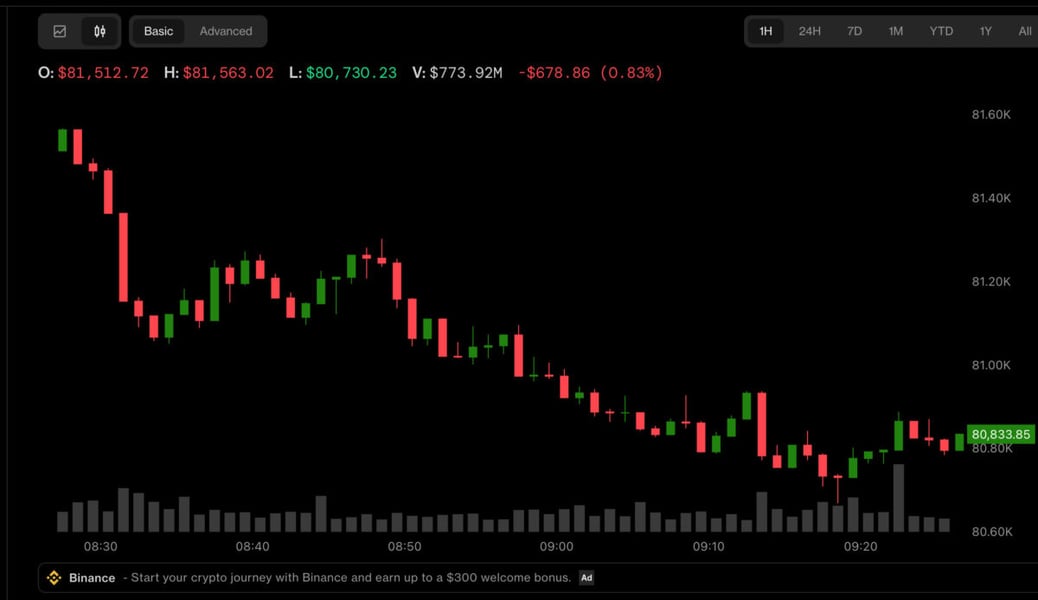
Crypto read the same signal. Bitcoin hovered around $81,000 after dipping close to $80,000 in early Asian trading, and ether, XRP and solana fell 3.5 to 4 percent, CoinDesk data showed. It echoes September, when a hot jobs report sent bitcoin below $80,000. U.S. spot bitcoin funds logged $150.5 million of outflows on Wednesday, reversing the previous day’s $175.7 million inflow. Anderson of market maker STS Digital told CoinDesk that with the next FOMC “a coin flip,” the uncertainty was “damaging liquidity and dampening risk appetite across all asset classes.”
Anderson still expects the Fed to hold this month. The figures here are morning readings and will move once New York opens. What none of them explains is why a chipmaker’s beat and a record Apple close could not hold the line. Traders had two stories on Thursday, a rates scare and a valuation scare, and the numbers fit both.