
NEW YORK — Fed Governor Christopher Waller gave Bitcoin eighteen hours. He said Thursday he was “inclined to support” holding rates steady at the September meeting, and the market moved immediately: Bitcoin climbed to $82,240, its highest price since May, while $730.8 million in fresh exchange-traded fund inflows piled in on top of August’s already-record institutional buying. Then the Bureau of Labor Statistics published the August payrolls figure.
The economy added 162,000 jobs last month. The Reuters consensus was 56,000.
September rate-hike odds on CME FedWatch jumped from 54% to 59% within minutes of the release. Bitcoin fell more than 2% to $78,649 in the same window, abruptly reversing a rally that had been building since early August. By Saturday morning in New York it was trading at $76,656, down another 1.6%, roughly $6,000 below its Friday high.
The blowout number arrived at precisely the wrong moment for a market that had spent August building an institutional case for a Fed pause. Bitcoin gained 25% last month, its strongest monthly performance since a 37% rally in November 2024, as spot Bitcoin ETFs logged $3.52 billion in net inflows, their best monthly total of the year. Total net assets in US spot Bitcoin ETFs reached $99.6 billion at the end of August, up from $76.3 billion a month earlier, according to CoinDesk.
That the labor market would cooperate was the soft assumption embedded in all of it. It did not.
August’s payrolls number also revised July’s figure upward, from a reported loss of 23,000 jobs to a gain of 21,000. The result is a labor market that slowed in early summer, steadied itself, and then accelerated again, exactly the profile that tends to keep the Federal Reserve tightening rather than standing down. Barclays reversed its earlier hold recommendation following the release, now forecasting two rate hikes in 2026: September and December.
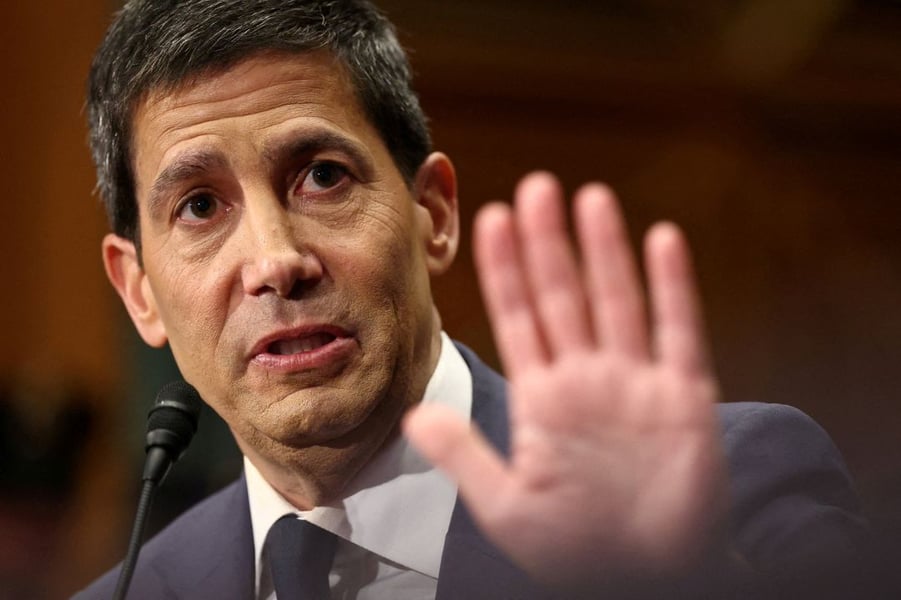
Waller’s nuance had been available in his phrasing. In prepared remarks for a Reuters interview Wednesday evening in Washington, he said: “If this continues in the data due over the next two weeks, I would be inclined to support holding the target.” The conditional was noted at the time. Initial jobless claims for the week ending August 29 had come in at 206,000, inside the range held all year, and layoff announcements in August were the lowest for the month since 2022. Neither figure indicated a labor market softening fast enough to give the Fed clear cover to hold.
The September 15-16 Federal Open Market Committee meeting is now the near-term forcing function for crypto markets. A rate increase at that session would be the first since July 2023, when the Fed ended a tightening cycle that had pushed the federal funds rate to a 22-year high. For Bitcoin, an asset that generates no income and carries no yield, higher rates raise the opportunity cost of holding it against cash and short-term Treasuries directly, and a stronger dollar creates additional pressure on holders outside the United States.
The $730.8 million in spot Bitcoin ETF inflows recorded on Friday, the same session that Bitcoin dropped from $82,240 to $78,649, complicates the selloff narrative. Institutional buyers either did not anticipate being reversed by the payrolls number despite Waller’s conditional language, or some portion of them treated Friday’s drop as the entry point the August rally had denied them. ETF flow data lags by hours, making the distinction difficult to establish from the outside. The pattern echoes August’s broader institutional appetite for crypto ETFs, which saw Ethereum funds log $824 million in a single week as holders accumulated digital assets at scale.
For Indian cryptocurrency holders, the stakes of the September Fed decision extend beyond Bitcoin’s dollar price. A rate increase would strengthen the dollar and likely pressure the rupee, compressing returns for investors holding bitcoin on domestic platforms in rupee terms even if the dollar price stabilizes. Indian retail participation in crypto has tracked US institutional sentiment closely since the spot ETF approvals of January 2024, with domestic exchanges logging volume spikes that correlate tightly with US market hours.
In the United Kingdom, where the Bank of England holds its own policy meeting in early September, the Fed’s move carries weight through the currency channel. A dollar rally triggered by a Fed hike tends to push sterling lower, which means UK holders of Bitcoin absorb the dollar-price decline plus an exchange-rate loss layered on top. The BoE has room to hold at current rates; whether it exercises that option will depend in part on how US policy moves first.
What August made clear is that institutional demand for Bitcoin can move in size quickly. The $3.52 billion in August ETF inflows cut the year-to-date net outflow position by 66%, Fortune reported. What the first week of September has added is the question those August buyers were not paying for: whether the Fed, presented with an economy adding nearly three times as many jobs as expected, still has a rate hike it is prepared to use.