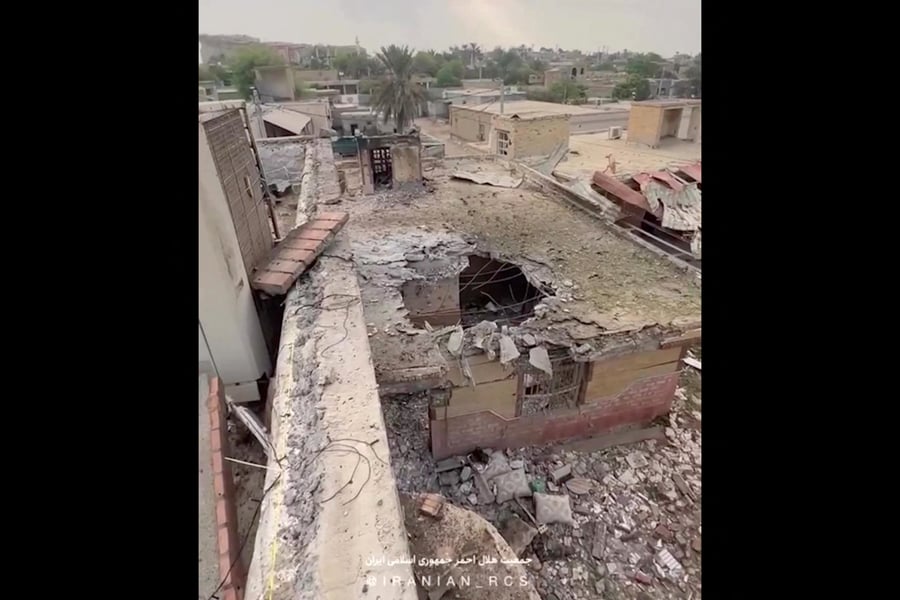

KUHESTAK — Amir Ali Karimi had not turned five yet. He was at the wedding of a family member in a residential building in this small fishing village on the Hormozgan coast when the missiles came in. The building owner, Ali Malahi, had been hosting his daughter’s wedding. By Wednesday morning, his daughter had survived and Amir Ali had not.
Three US cruise missiles struck Kuhestak in the early hours of September 2, killing four people, including two teenagers — Mohammad Malahi, 16, and Amir Ali Karimi, 4 — and two women in their forties. More than sixty others were wounded, many of them children. The attack also struck a telecommunications tower near the shoreline and damaged adjacent residential buildings. A young man wounded in the strike told a camera crew from his hospital bed that he had heard jets, then explosions, and then nothing for a while.
The US Central Command did not confirm targeting the building or the wedding. Spokesperson Tim Hawkins said the US military “never targets civilians, unlike the IRGC,” and referred reporters to Iranian state media for casualty claims. The US account of what was struck in Sirik County on the night of September 1 has not been made public. Fragment analysis cited by investigators tentatively identified the munitions as AGM-84K SLAM-ER cruise missiles, but that identification has not been independently verified.
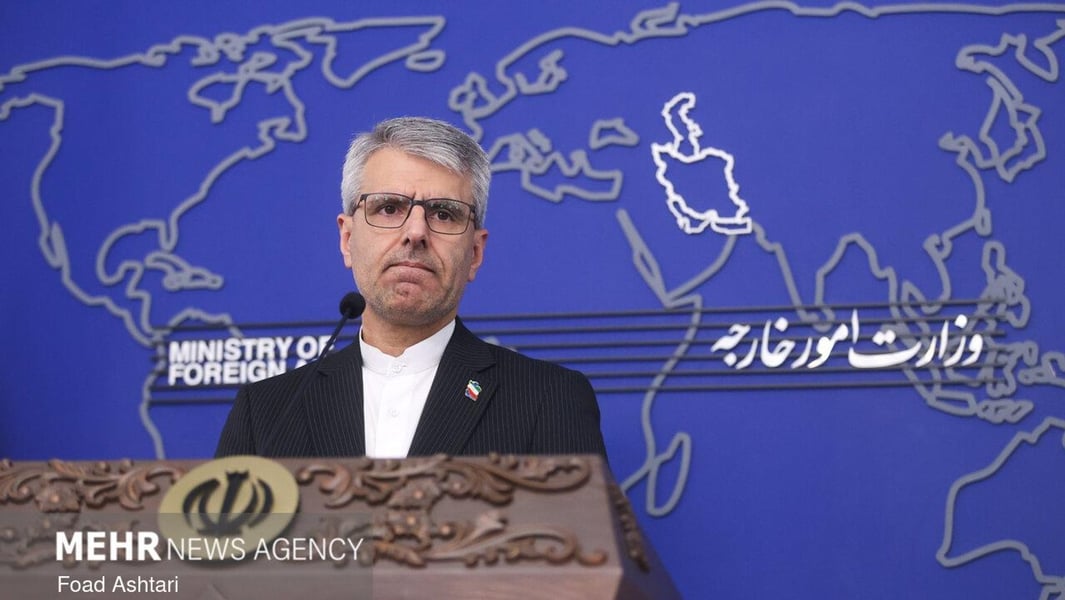
Iran’s Foreign Ministry framed the strike as part of what it called a “catalogue of atrocities.” Spokesman Esmaeil Baghaei referenced three previous incidents that Iran holds the US responsible for: a strike on Minab that destroyed an elementary school and killed approximately 156 people, the majority children; an attack on a sports hall in Lamerd during a women’s volleyball match that killed 21, including four children; and a strike near Qeshm. The US has disputed the Iranian characterization of each of those events without providing its own account of the targeted facilities.
The Sirik attack arrived just as Iran had already announced a retaliatory operation. Following the strike, Tehran launched what it called “Punishment of the Aggressor” against US military positions in Jordan — continuing the cycle that has now killed more than 3,500 Iranians since the war began in February, according to Iranian state media, a figure that the US has neither confirmed nor denied.
The pattern is not in dispute. Whether what is driving it constitutes deliberate civilian targeting — or catastrophic incidental harm, or Iranian military positioning so embedded in civilian infrastructure that the distinction is not operationally meaningful — is precisely the question that neither side has an interest in clarifying. Iran needs the civilian framing to sustain international sympathy and political pressure. The US needs the military-objective framing to sustain legal justifications for the strikes. Both framings cannot simultaneously be fully true.
What is visible from Kuhestak is that four people who came to a wedding are dead. Whatever their homes were near, whatever the US assesses the telecommunications tower to have been, the building hosting Ali Malahi’s daughter’s wedding had no military classification that has been made public.
The International Criminal Court, whose prosecutor’s office has been collecting documentation on civilian casualties in the Iran-US conflict since March, had not commented specifically on the Kuhestak strike by Wednesday afternoon. The court’s jurisdiction over the conflict remains a contested question — the US is not a signatory to the Rome Statute — but Iran has repeatedly lodged communications with the prosecutor’s office drawing attention to specific incidents. Kuhestak will be added to that file.
What connects Minab, Lamerd, Qeshm, and now Kuhestak is not a clear military logic — or at least, not one Washington has articulated publicly. Iran’s strategic leverage in the strait has not diminished despite seven months of strikes. Oil prices remain approximately sixteen percent above pre-war levels. Shipping insurance rates have not normalized. The facilities the US says it has destroyed have not stopped Iran from threatening mine-laying operations — Larak Island, the original justification for the most recent escalation, was assessed by CENTCOM as a mine-staging site, a designation the Iranian military contests.
The gap between the US’s articulated military objectives and the outcomes visible on the ground in southern Iran is the core unanswered question of the war. CENTCOM’s strikes have not ended the threat to Hormuz navigation. They have not restored the month-long pause that ended on August 30. They have killed, by the Iranian count that no independent party has been able to verify or refute, over three thousand people in seven months. On Wednesday, one of them was four years old, at a wedding, in a village called Kuhestak, near the sea.