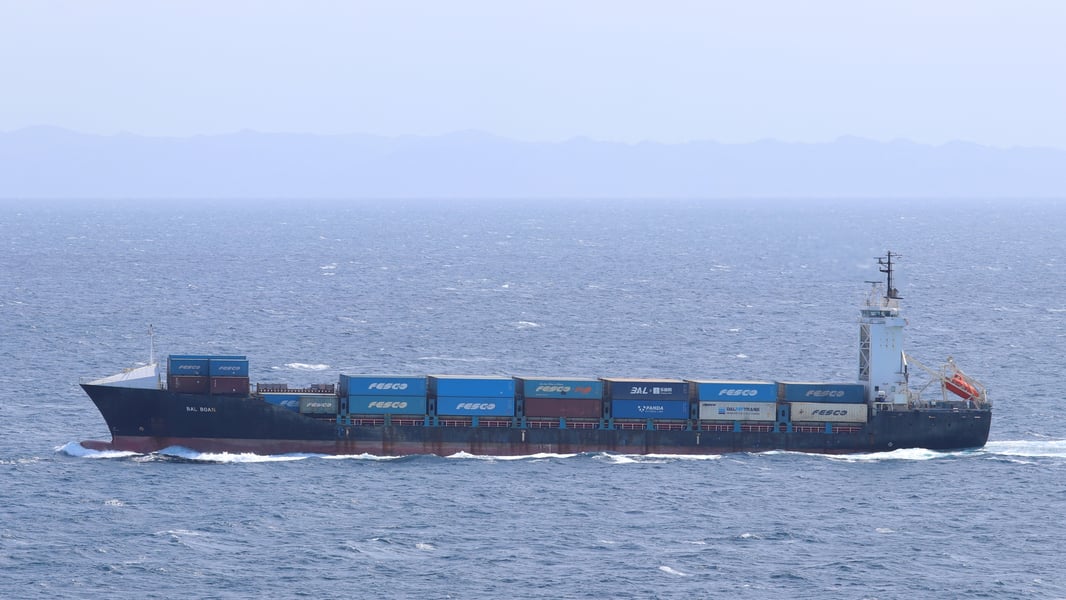

DUBAI — Shortly before dawn on Monday, the Vela Nova was moving quiet through the Gulf of Oman, approximately 71 nautical miles from the Pakistani coast, when the American helicopter caught up with it. The Panama-flagged containership had ignored repeated naval warnings. Two Hellfire missiles later, its engine room was on fire.
The U.S. Central Command confirmed that an MH-60 Seahawk fired on the Vela Nova after the vessel failed to comply with multiple orders to alter course and halt its approach toward Iran. All crew members survived with no injuries reported; they extinguished the resulting fire after the strikes disabled the ship’s engine room and steering gear. “The ship is no longer transiting to Iran in violation of the U.S. blockade, which remains in full effect,” CENTCOM said in a statement.
The Vela Nova is the third commercial vessel to be disabled in the blockade’s enforcement operations, but the first containership. The two prior disabling actions targeted tankers. That distinction carries more weight than it might first appear: tankers move oil, a commodity where shipper identity can be obscured behind layered ownership structures and flag arrangements. Container ships move general cargo: manufactured goods, food, machinery. Their disruption has broader commercial implications across a wider range of industries and trading partners.
Since U.S. forces established the maritime cordon around Iran, they have redirected 55 commercial vessels, disabled three non-compliant ones including the Vela Nova, and boarded two others. The Vela Nova was registered in Panama and managed under an ISM framework by Sino Hellenic Ships Management, with insurance through the London P&I Club, which it had entered on July 8. Its registered owner is listed as Golden Valley Marine INV.
CENTCOM’s statement did not specify what cargo the Vela Nova was carrying, what Iranian port it was bound for, or on whose instruction it had decided to test the blockade’s line. Those questions are not incidental: ships that attempt to reach Iranian ports in defiance of the cordon do so because someone has contracted them to, and the premium that makes the legal and physical risk worth accepting is a direct measure of how much Iran’s import economy is willing to pay to keep supply lines open.
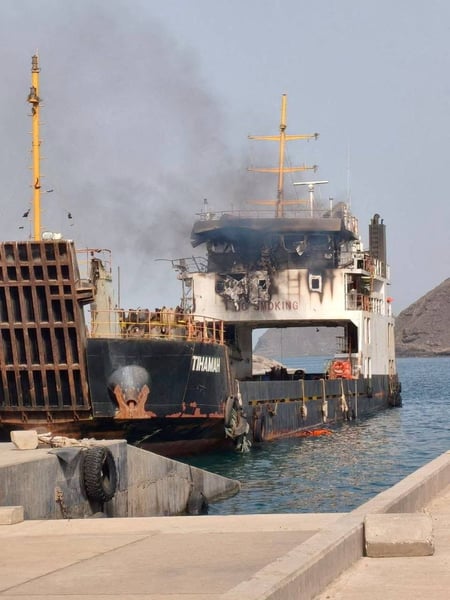
There is no confirmed Iranian response as of Tuesday. Tehran’s foreign ministry has previously characterized American interdiction operations as piracy under international law and called for United Nations intervention. Whether it makes the same argument about a containership disabled by Hellfire missiles 71 miles off Pakistan was not yet clear.
The Hellfire missile, originally designed for anti-armor use and adapted for naval patrol roles, serves as the standard armament for MH-60 Seahawk helicopters operating in contested waterways. The two missiles fired at the Vela Nova struck the engine room and steering gear in a deliberate, calibrated sequence. A ship that cannot steer or move does not need to be sunk; the crew survives while the vessel sits disabled in open water. Unanswered is what happens next: who salvages the vessel, who pays the costs, and which maritime authority holds jurisdiction over an immobilized foreign-flagged ship in contested enforcement waters.
The Iran blockade has drawn sustained legal scrutiny since its imposition. Several European trading partners have argued that the cordon violates UNCLOS freedom of navigation provisions. The United States has not published a formal legal basis for the blockade under international maritime law, and the enforcement approach, moving from warnings to boarding to disabling fire, has not been tested before any tribunal. The Vela Nova’s coverage through the London P&I Club means British maritime liability law is now, in a practical sense, a stakeholder in whatever comes next for the vessel and its owners.
The Iran strike threats of July and the blockade’s escalating enforcement statistics tell a consistent story: each week, the number of vessels willing to test the cordon shrinks, and the American response to those who do grows more decisive. What changed on Monday is not the trend, but the type of vessel. For the first time, the United States has disabled a containership. Whether the Vela Nova is the last depends on how many charterers still believe the run to Iran is worth the risk.